
Landscape
Bangka-Belitung
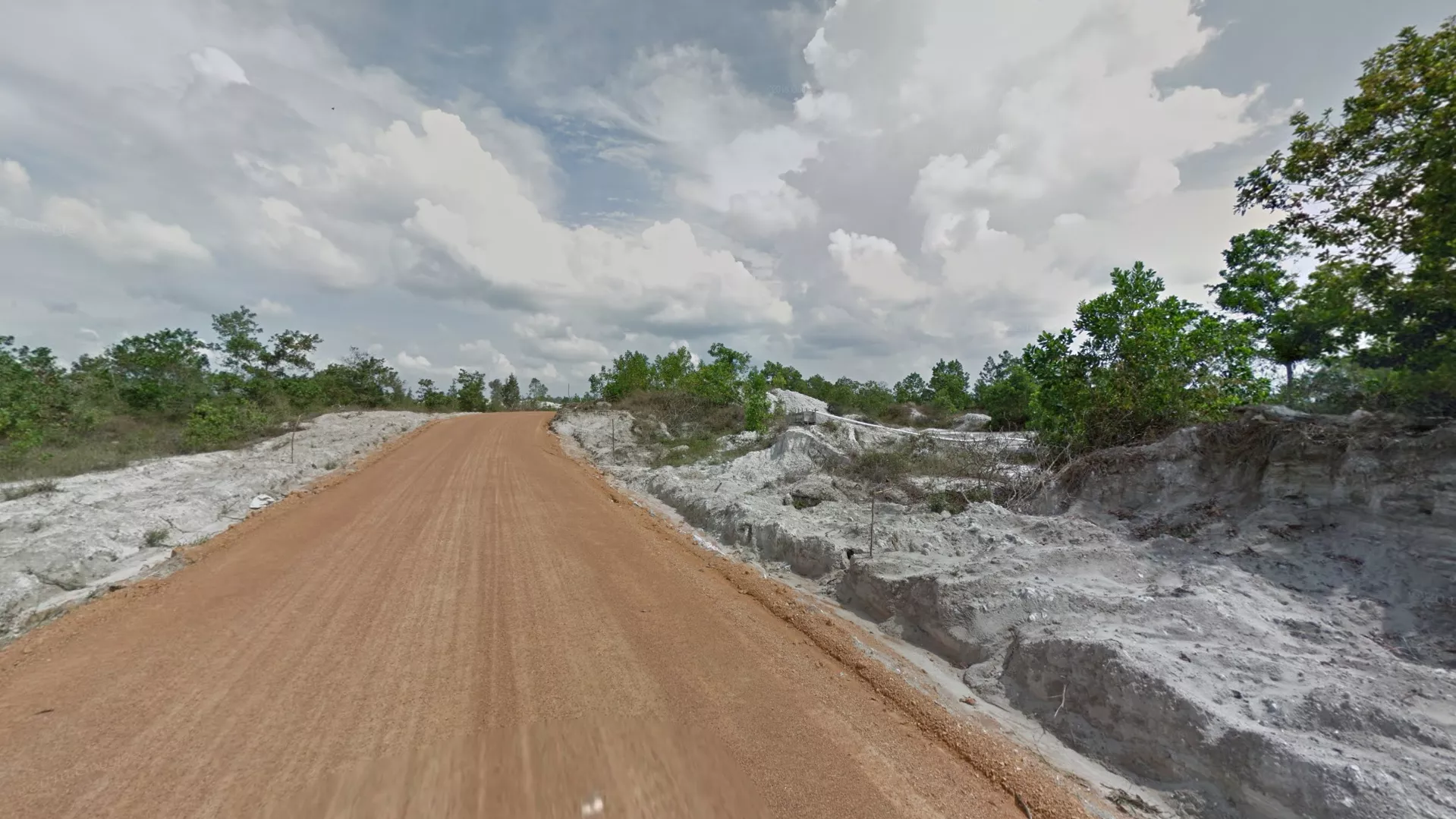
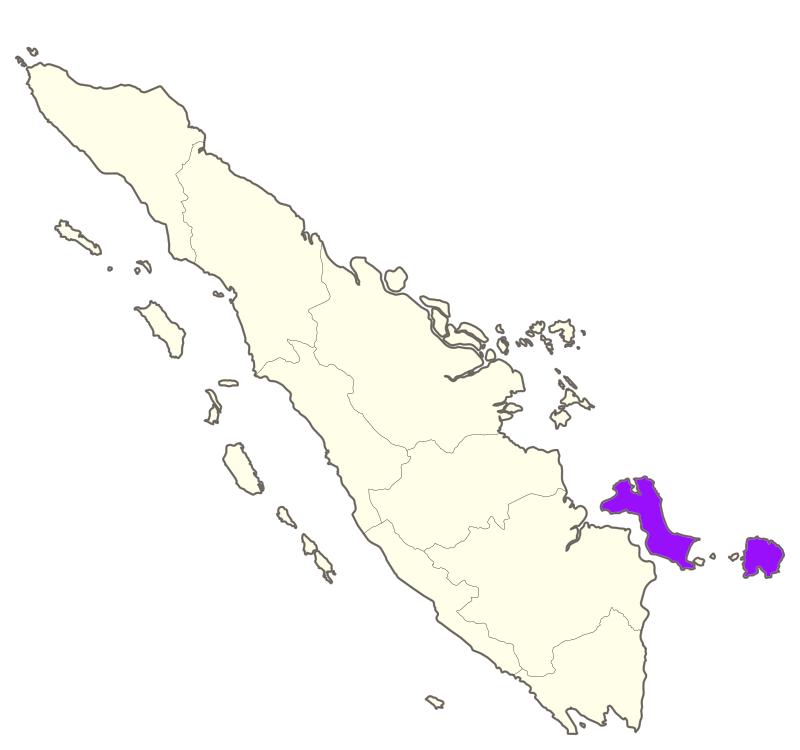
The red soil prevalent on both islands is often mixed with white kaolin (limestone). Kaolin mining areas can be found on both Bangka Island and Belitung Island.
Bengkulu
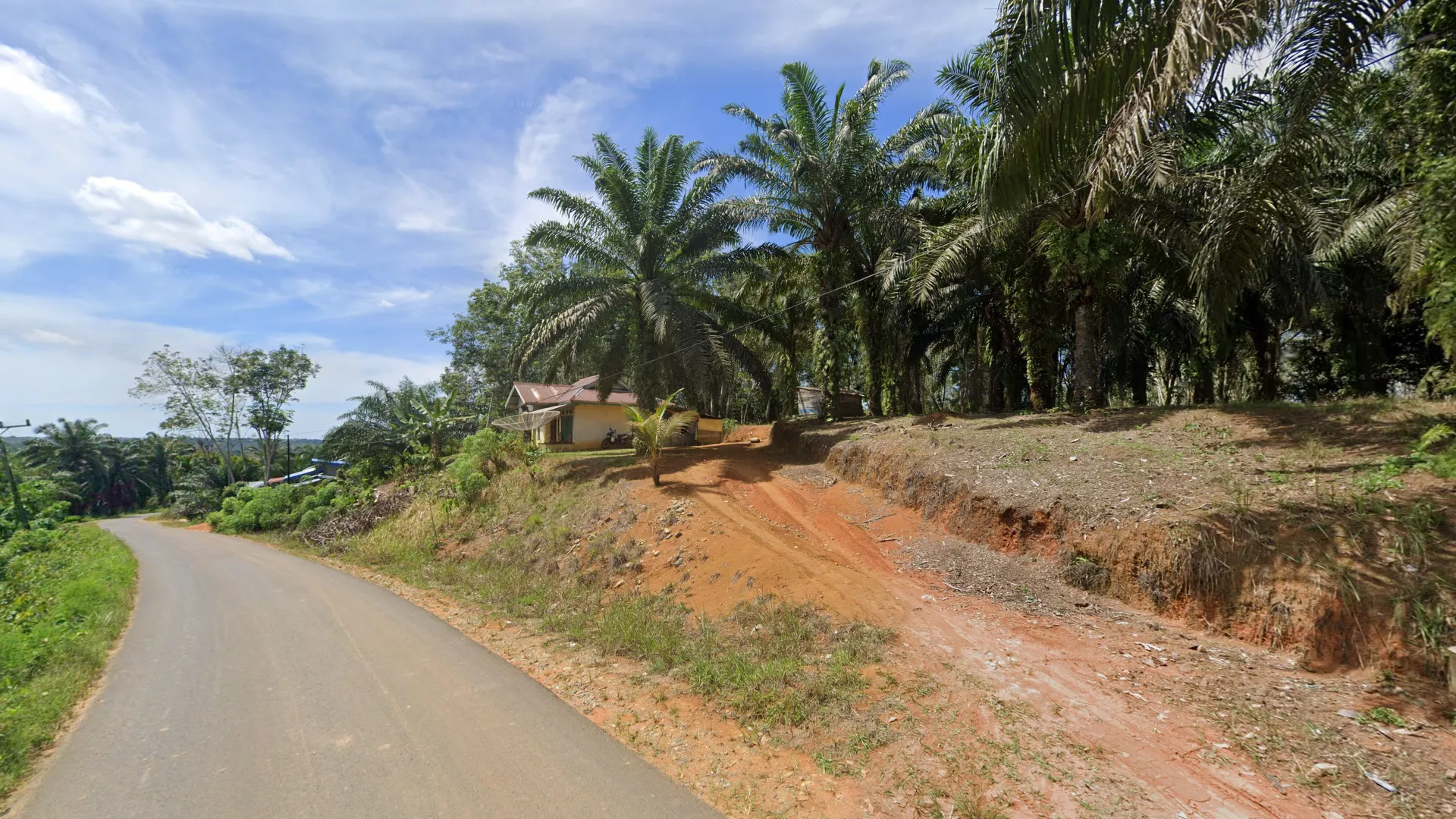
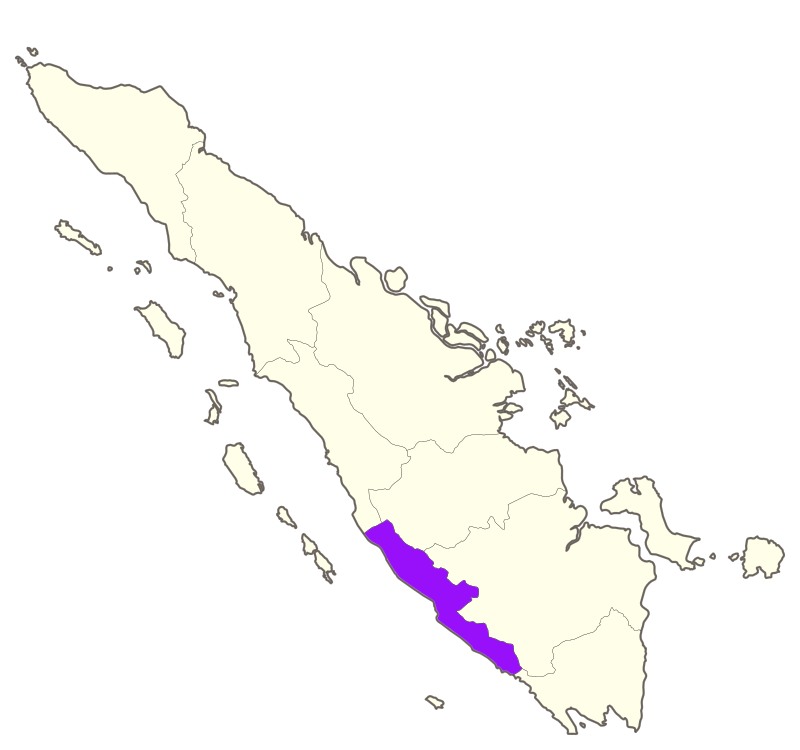
The foothills of Bengkulu are dominated by a series of undulating red-soil hills upon which lie a wave of oil palm plantations and rubber trees.
Jambi
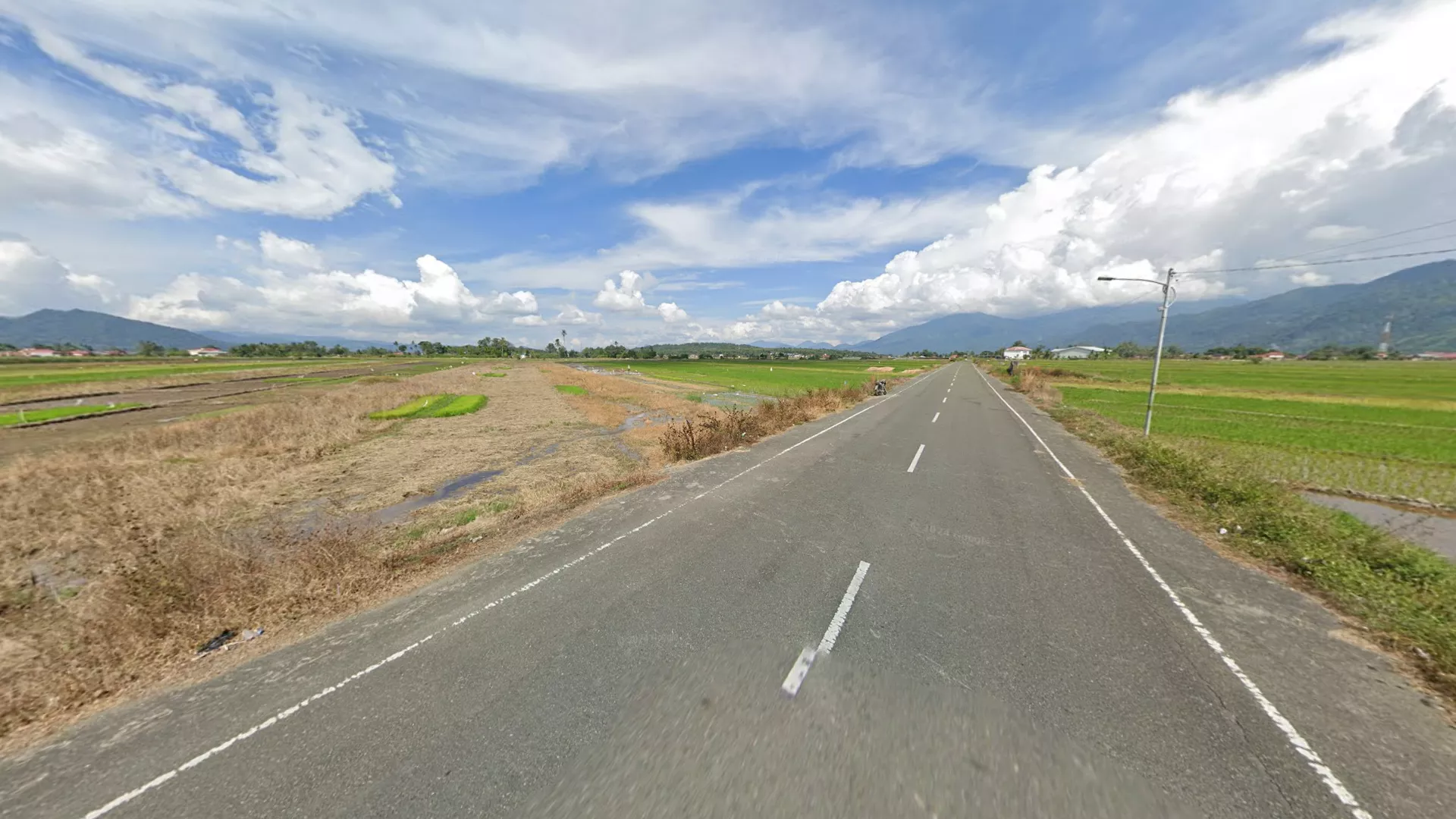
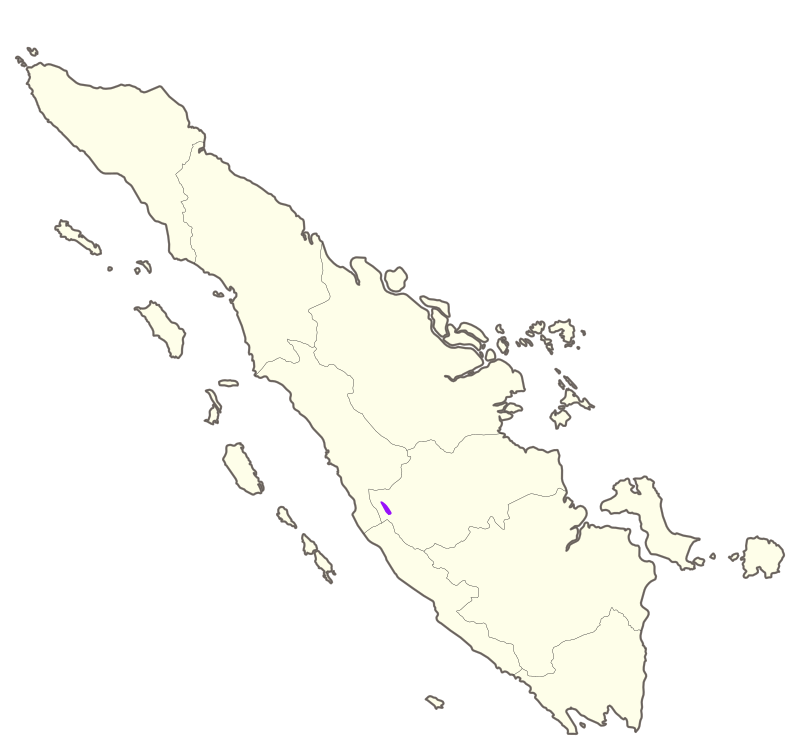
The Kerinci Regency is located in a NW-SE oriented valley with vast expanses of rice fields between mountains on both sides. The region contains a large number of the hip-roof houses commonly seen in the west of Sumatra. Poles here are somewhat similar to those in West Sumatra.
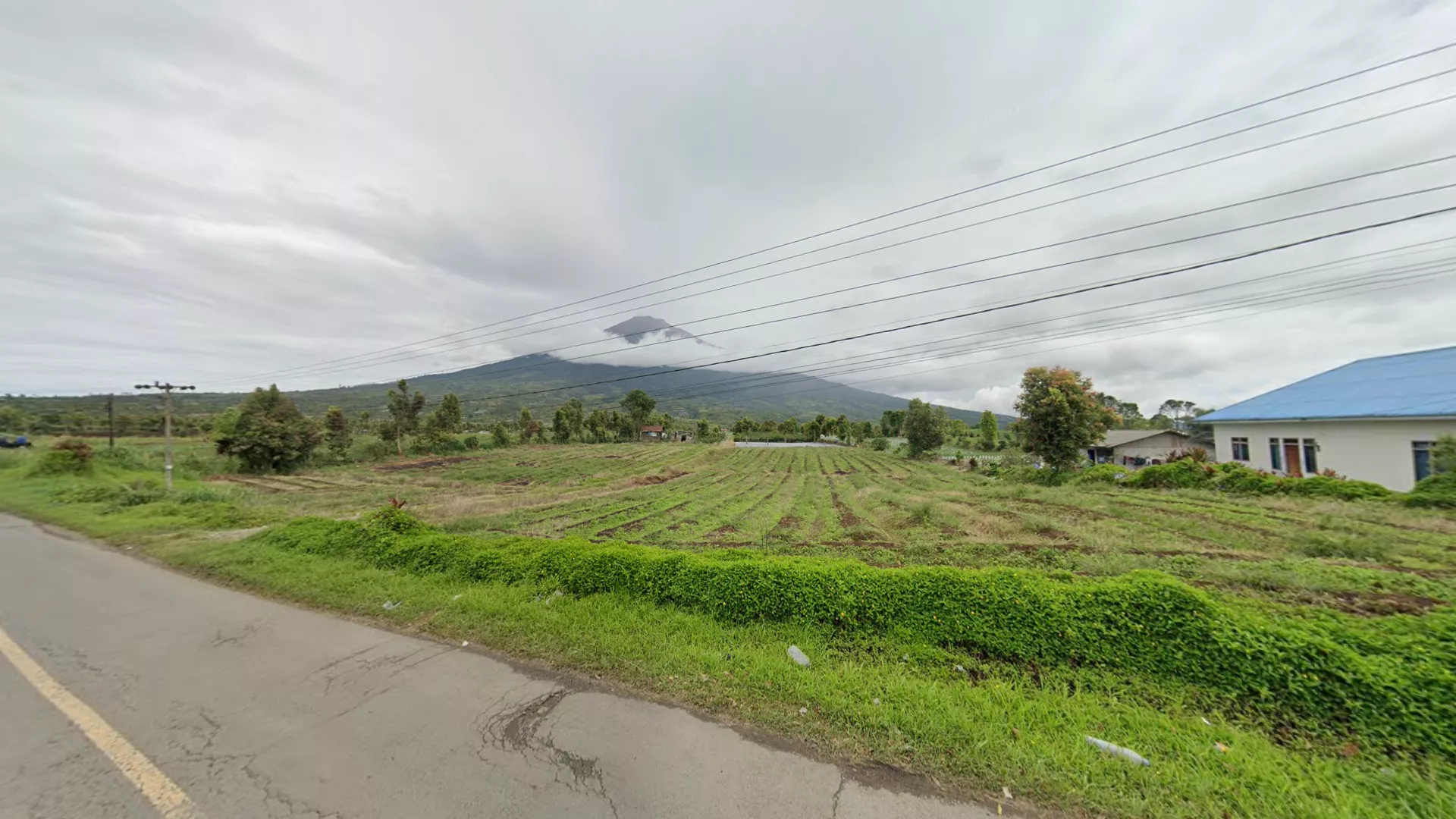
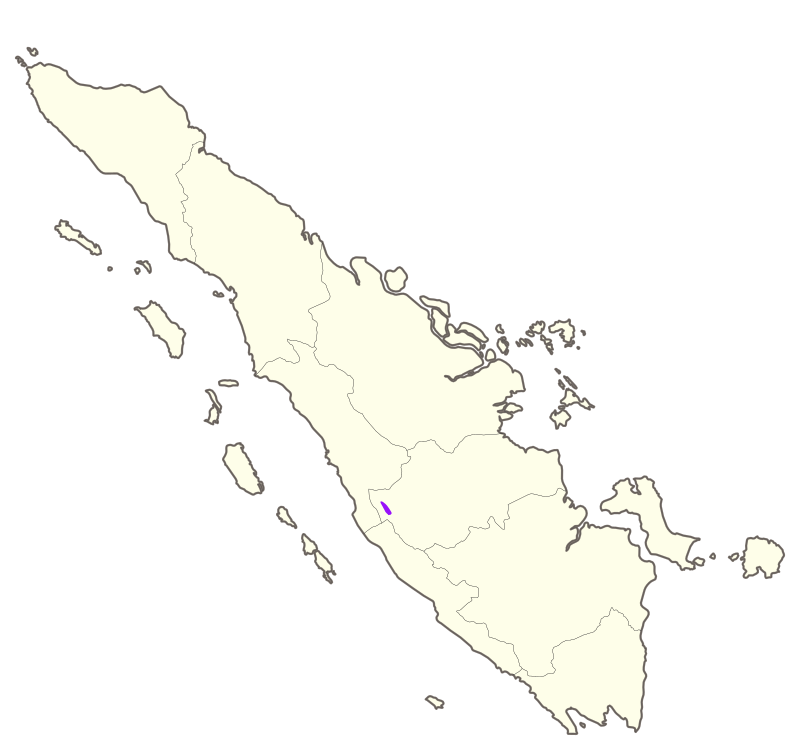
To the north of the regency, you can find the magnificent Gunung Kerinci located in the middle of the Sumatran range on the border between Jambi and West Sumatra. It is surrounded by a relatively flat volcanic field, itself surrounded by non-volcanic hills. Mulch films and tea plantations can sometimes be seen.
West Sumatra
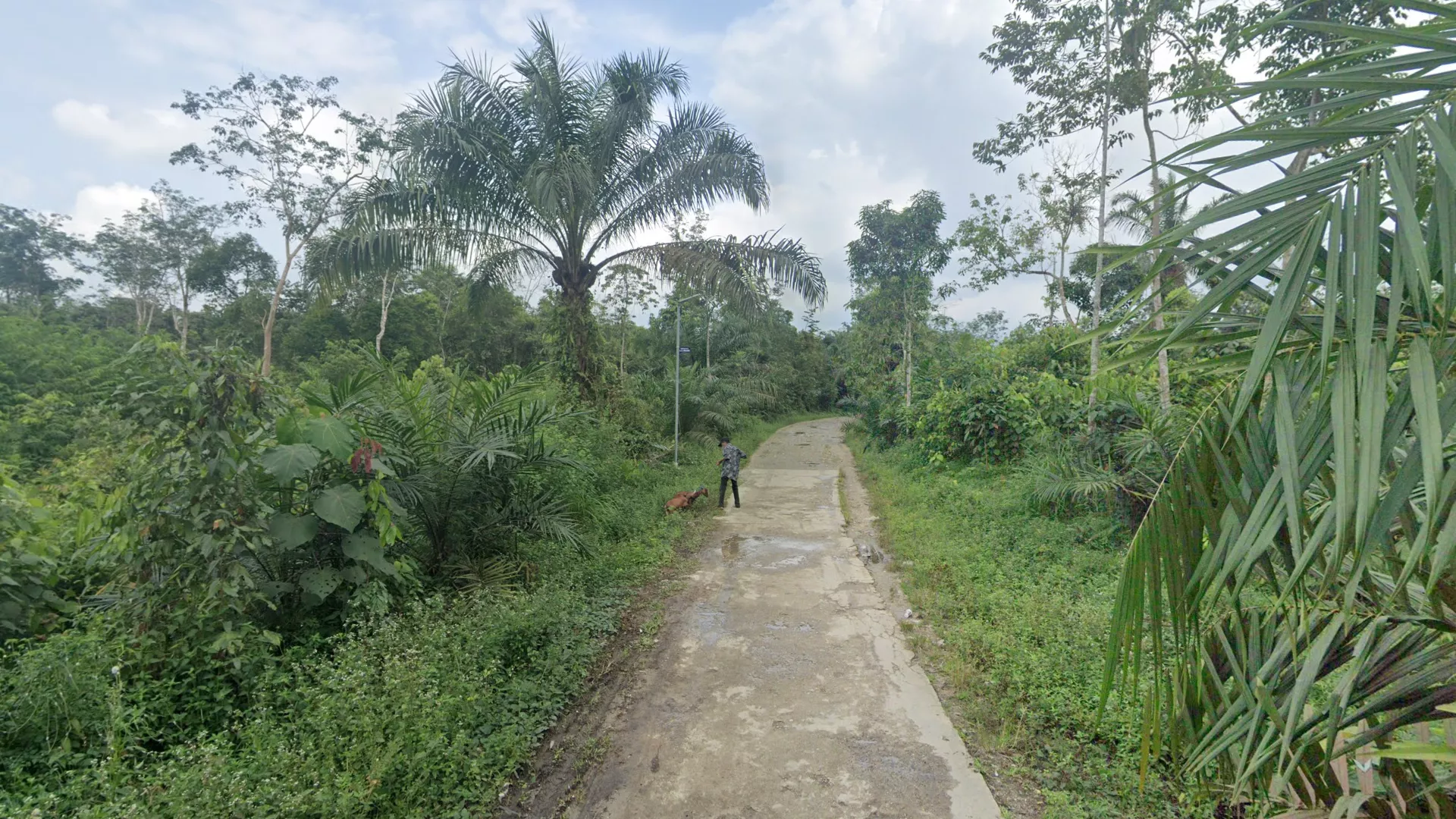
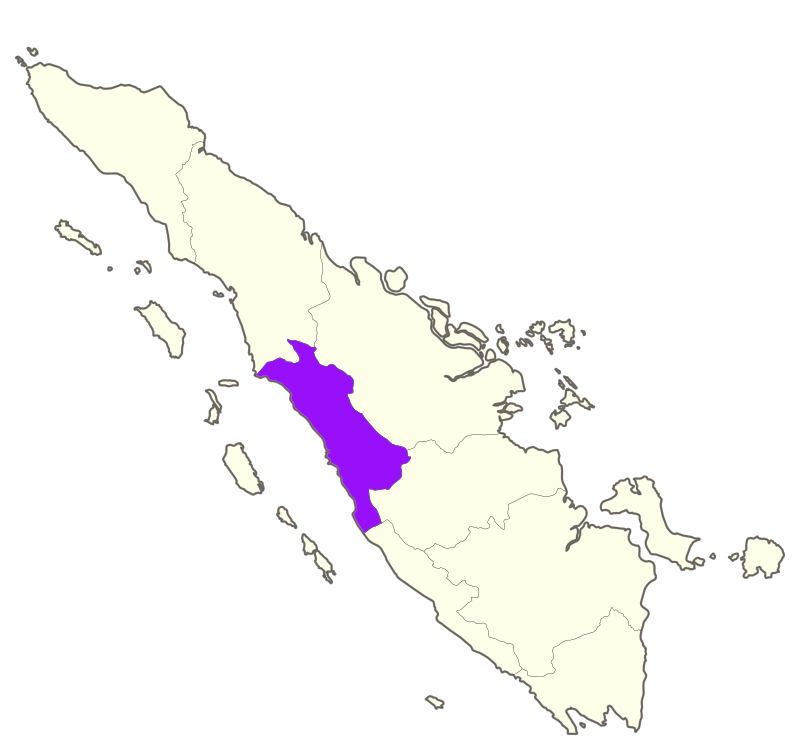
The towering Barisan Mountains in West Sumatra catch most of the moist air currents from the Indian Ocean, creating heavy precipitation on the eastern side of the mountains. The province therefore has some of the highest rainfall in the country, appearing moist in most of the coverage.
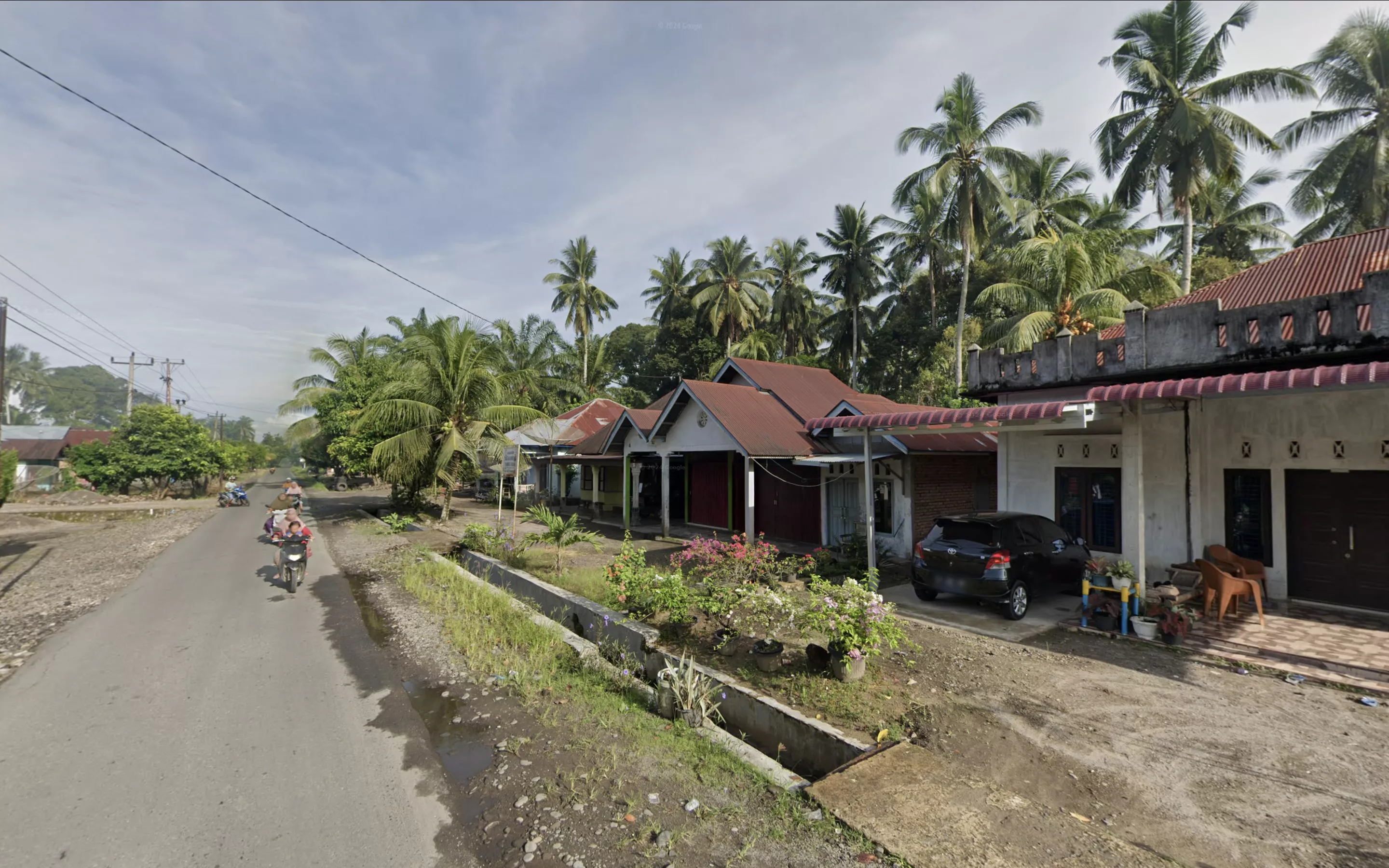
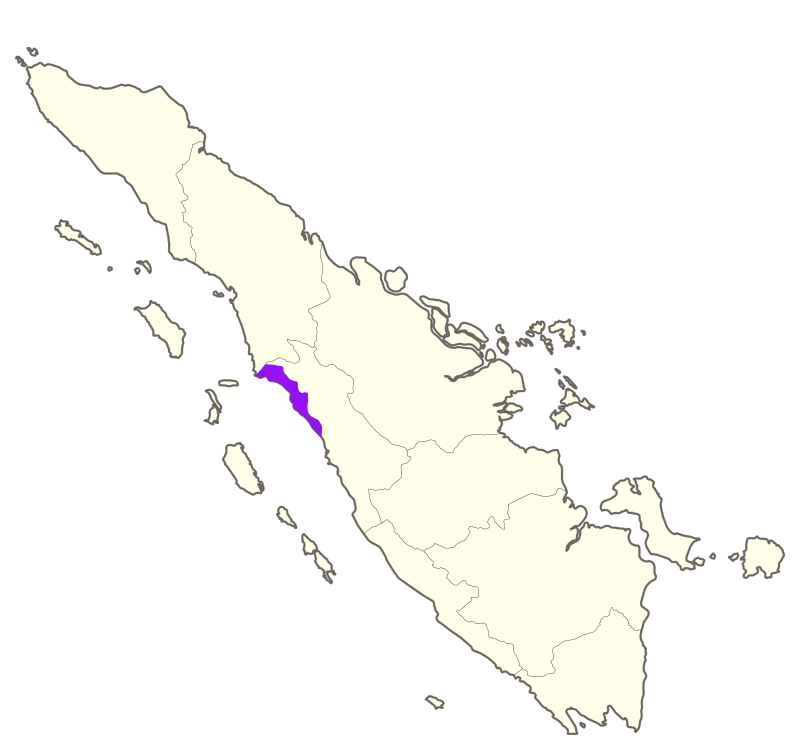
North of Pariaman is a flat plain (uncharacteristic for the west coast), with many oil palm plantations as well as groves of coconut and areca palms.
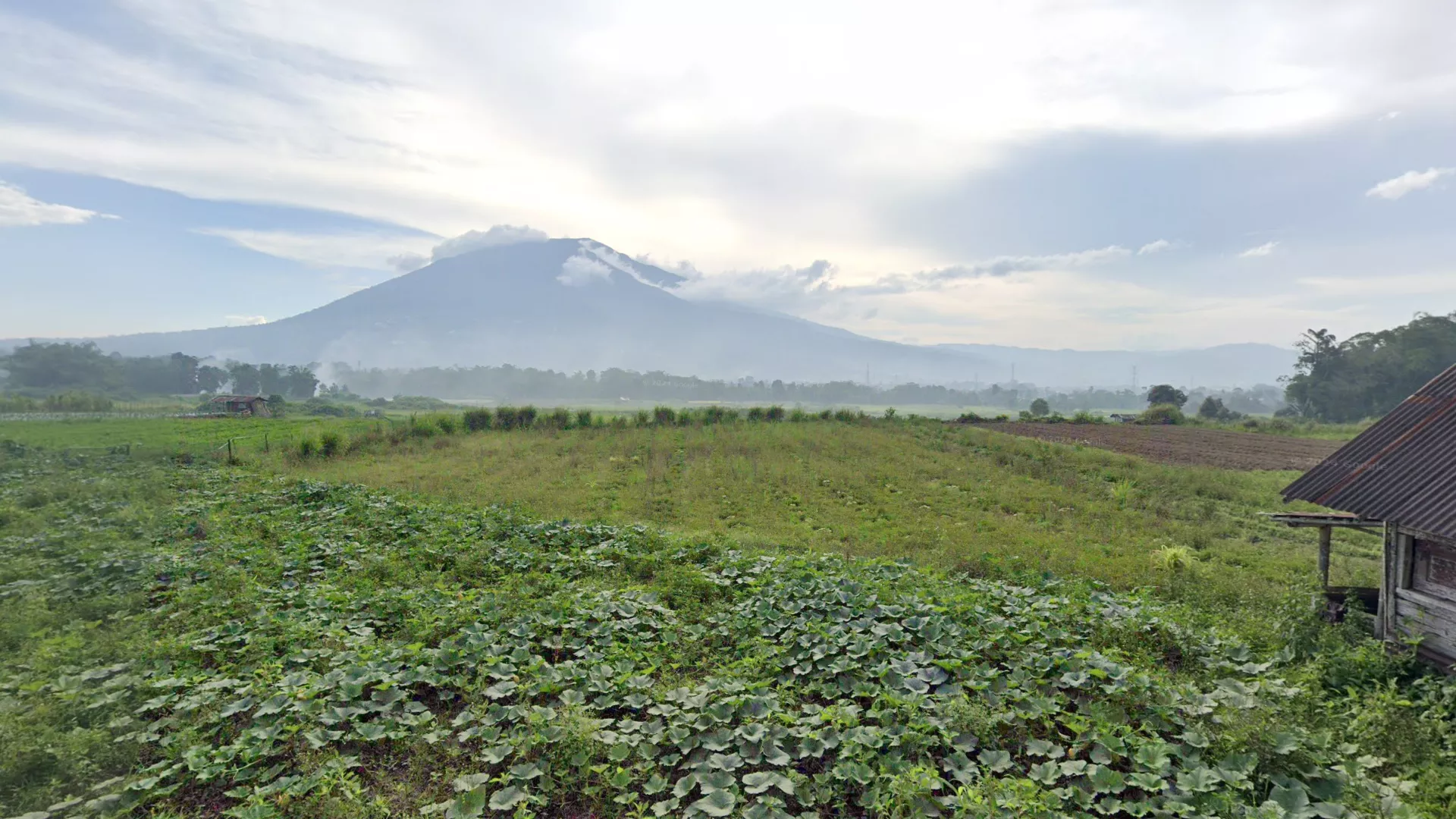
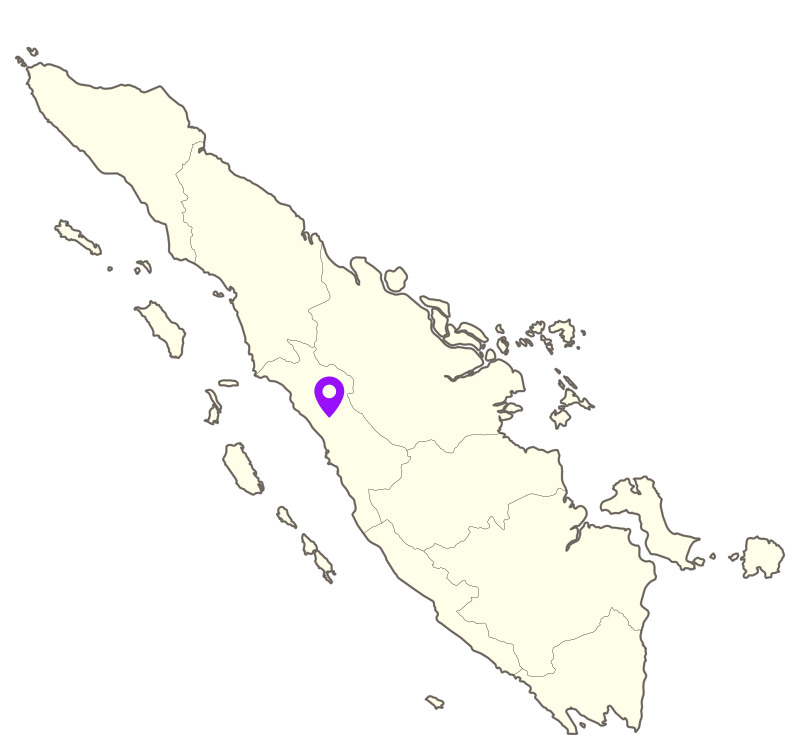
The three volcanoes, Gunung Singgalang, Gunung Marapi and Gunung Sago, stand out from the central uplands of West Sumatra, and can be easily recognised in the nearby area, with Marapi being the tallest one, and Sago being rather less distinctive. Due to the moist climate of West Sumatra, they are often very shroudy.
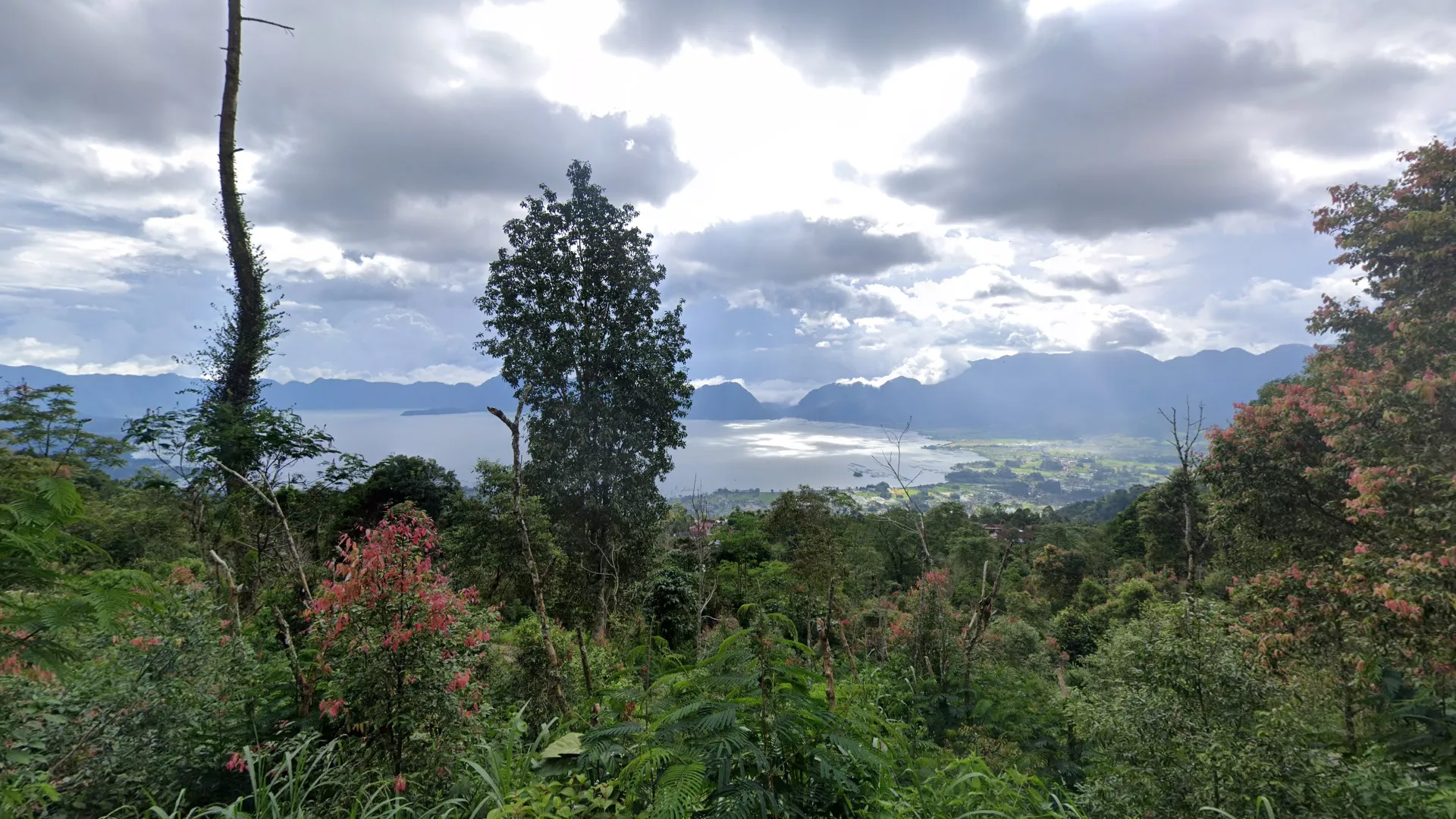
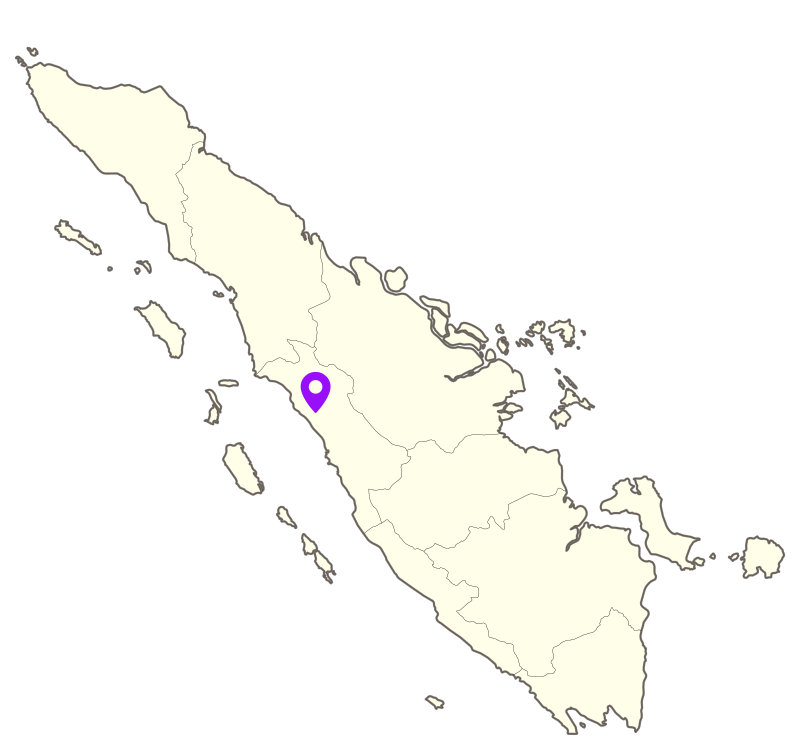
Lake Danau Maninjau west of Bukittinggi is situated inside a large caldera (Maninjau Caldera) surrounded by tall walls of mountains from all sides. It's also a well-known tourist attraction for its distinct scenery.
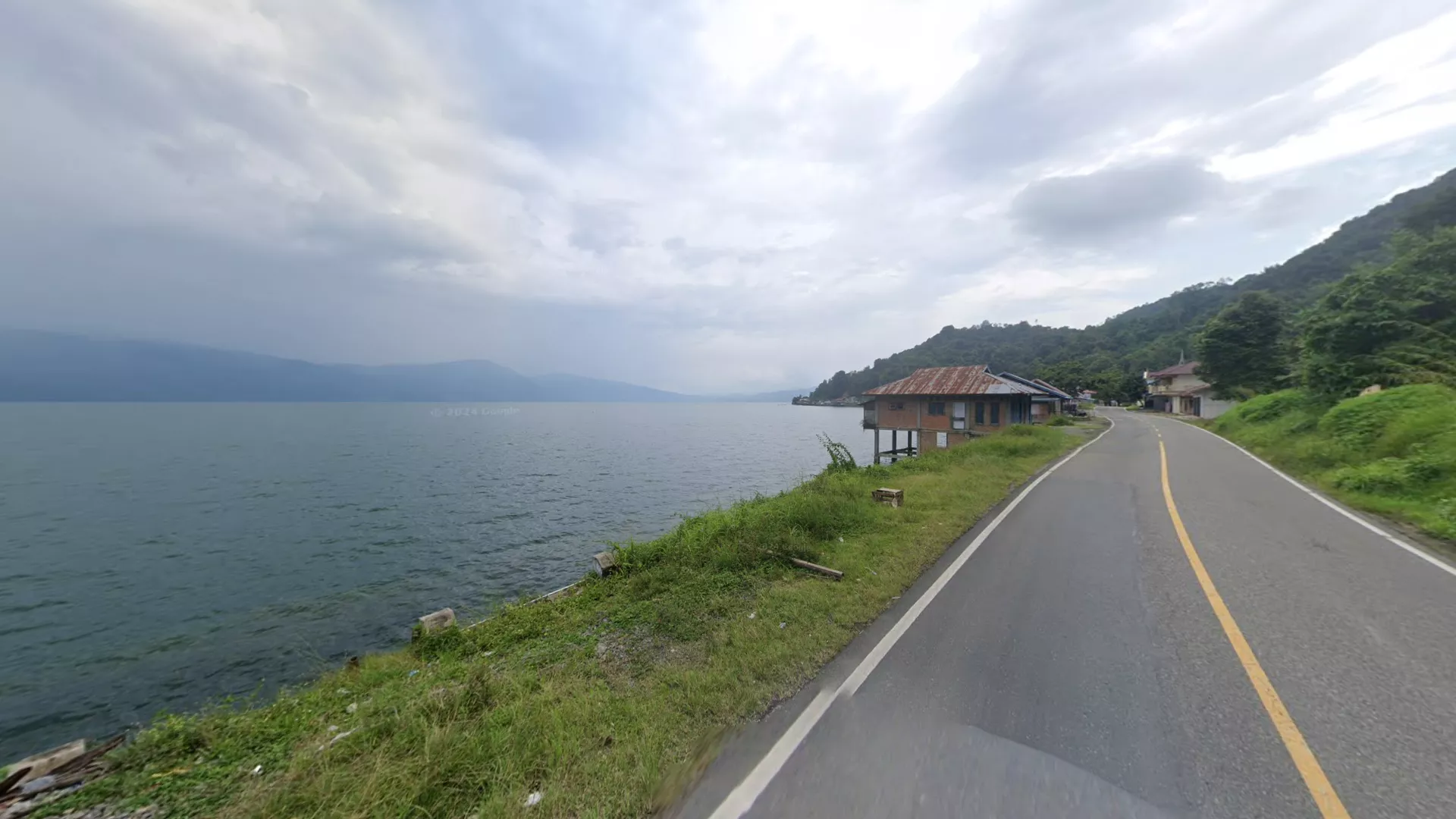
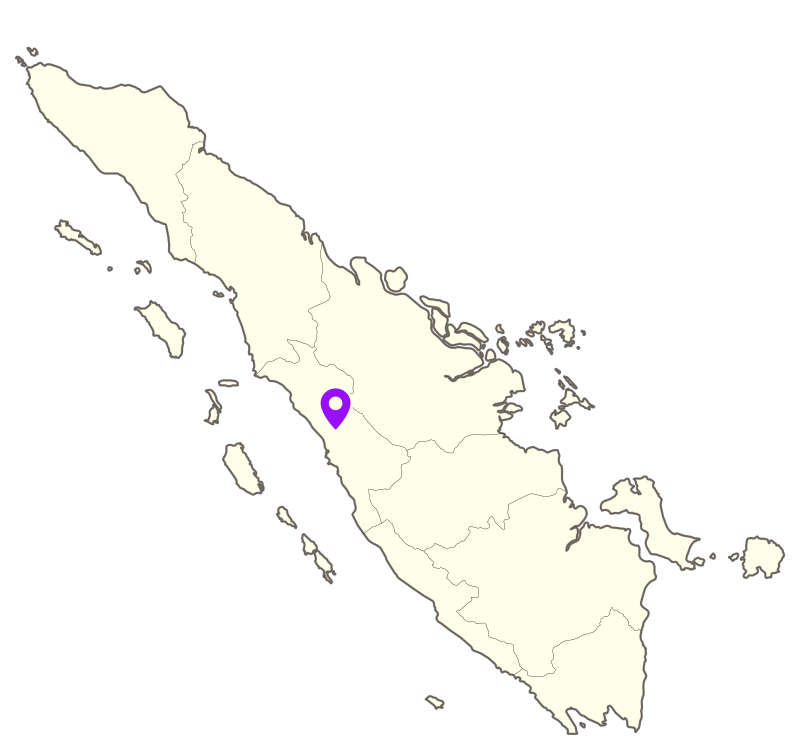
Lake Danau Singkarak is situated at the centre of West Sumatra, sandwiched between low NW-SE mountains on both sides.
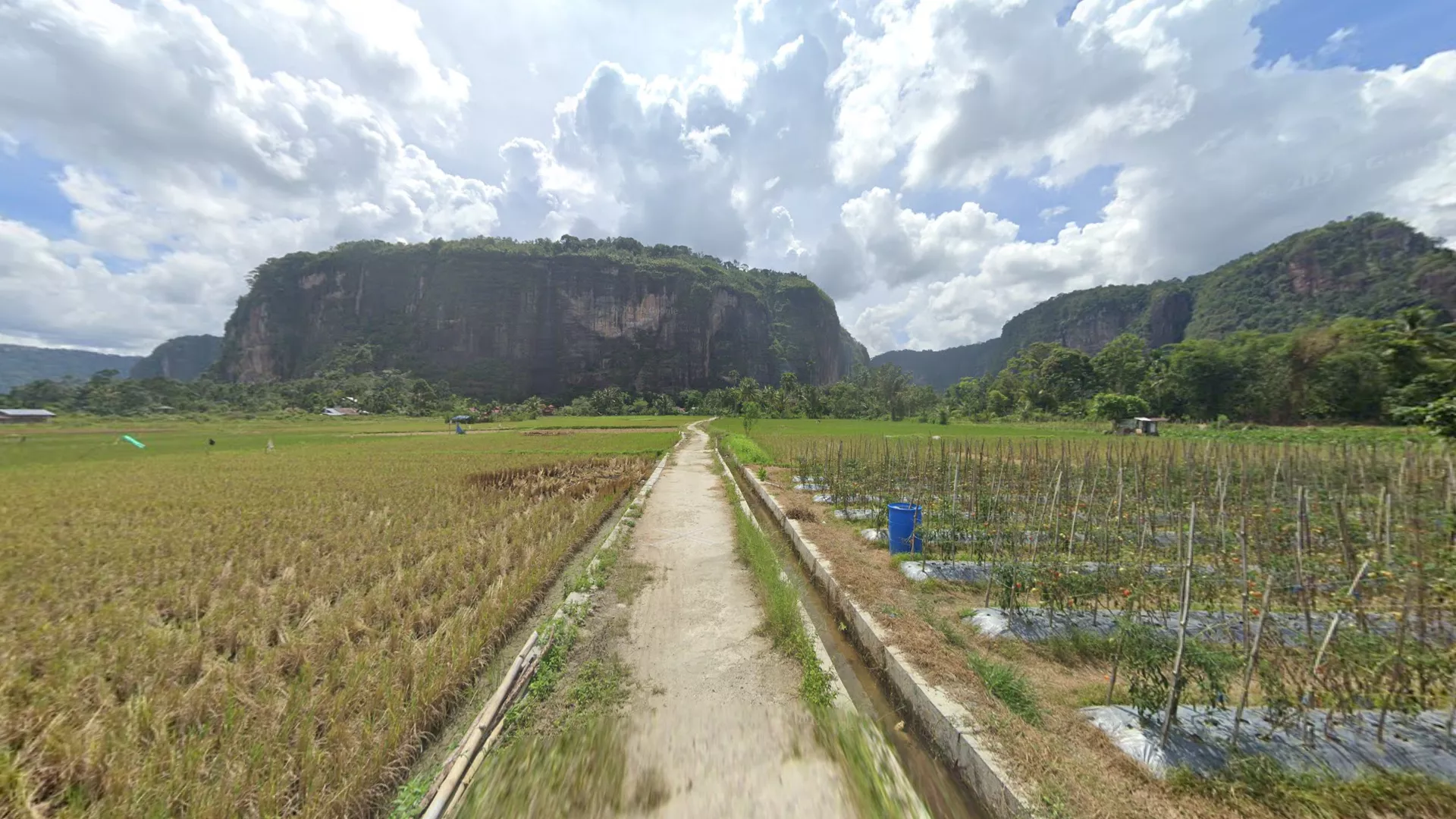
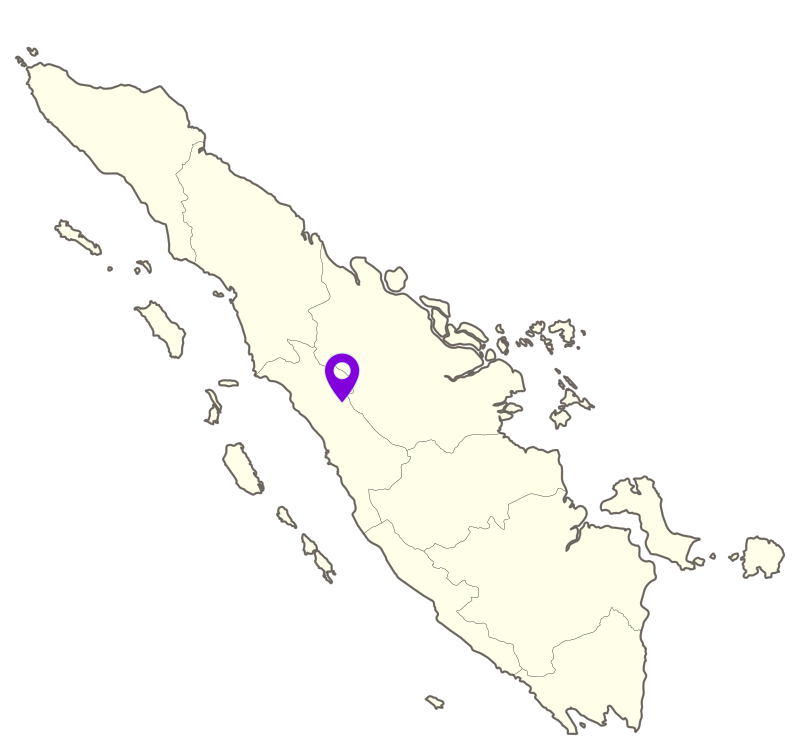
The Harau Valley just north of Payakumbuh is a unique karst landscape with tall exposed rock faces, often with red soil along the bottom.
North Sumatra
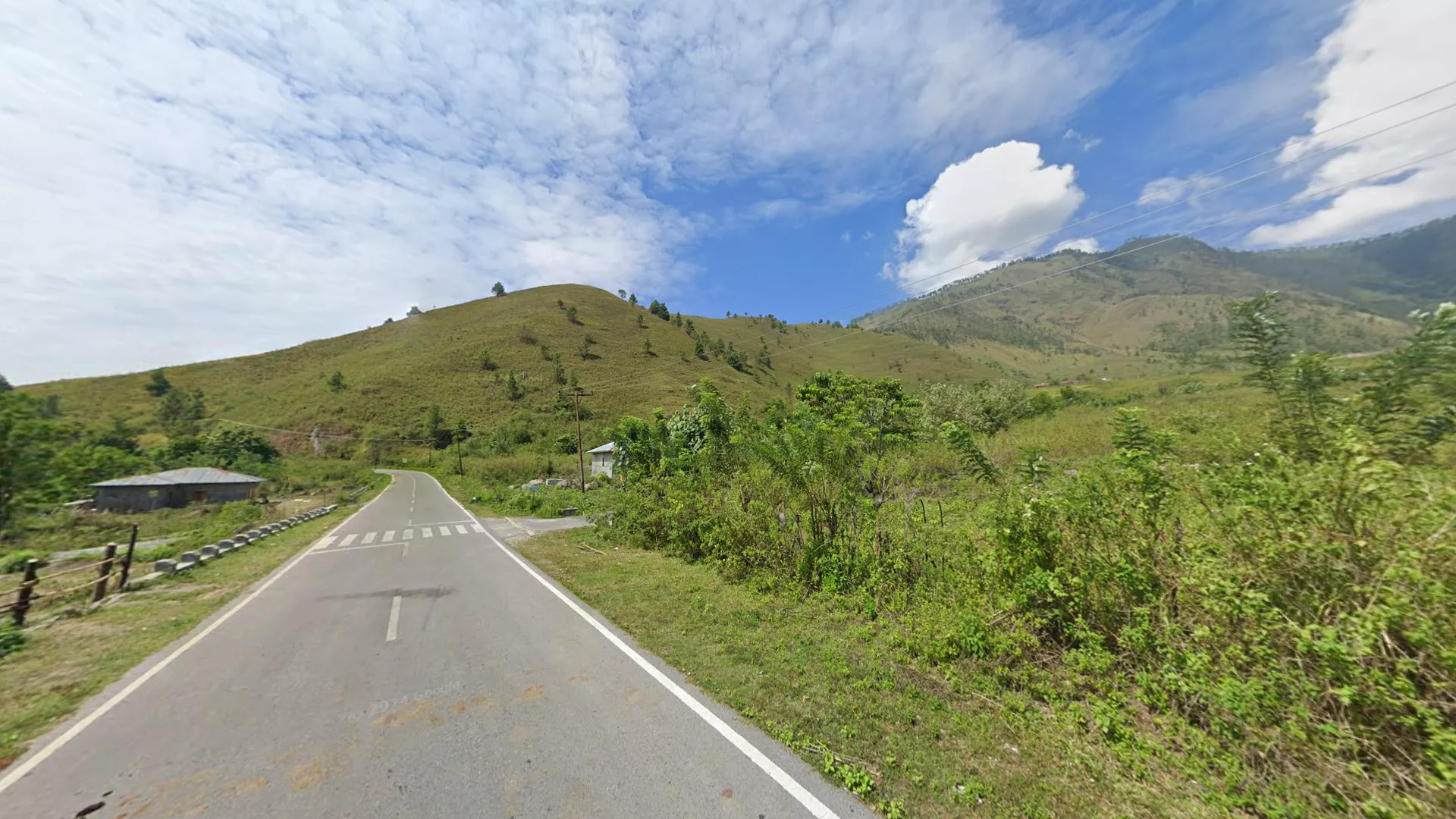
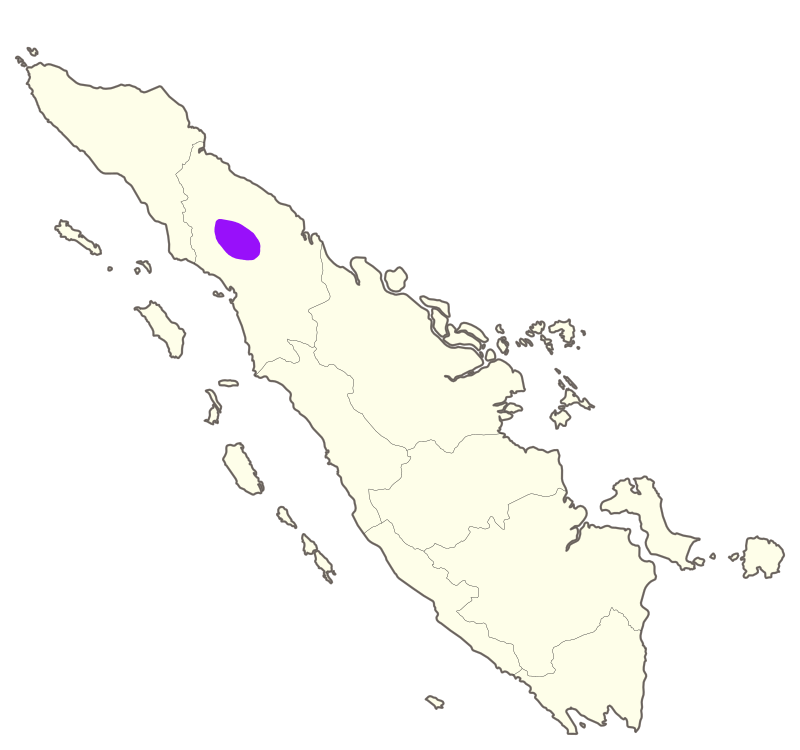
The landscape around Lake Toba is unique, featuring grass-covered mountains dotted with trees. Due to its higher elevation, the clouds sometimes appear quite low.
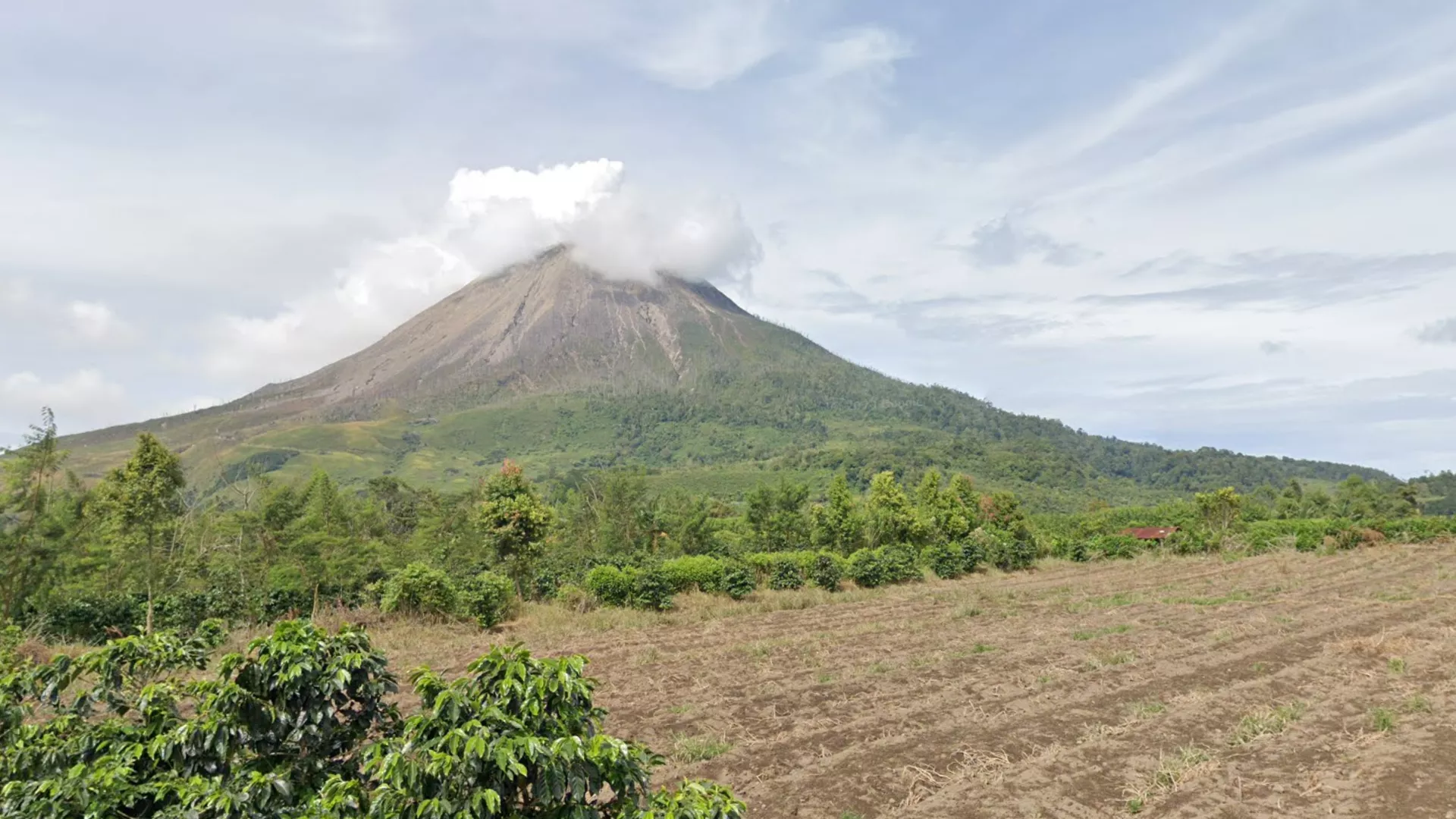
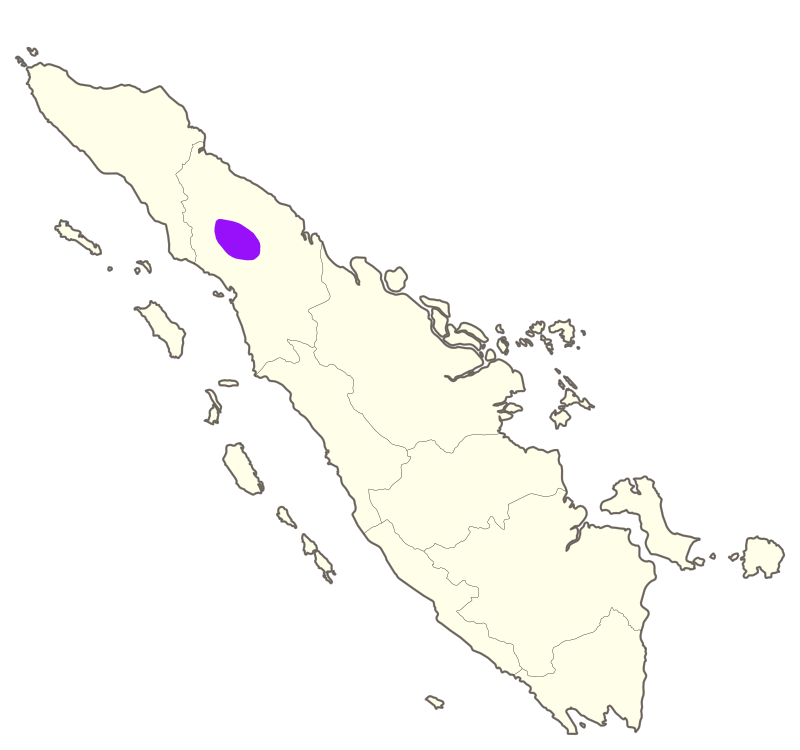
Mount Sinabung is located 30 km northwest of Lake Toba, in Karo Regency. The volcano is cone-shaped, active, and has erupted several times in recent years. Its summit is almost devoid of vegetation and clearly visible from the surrounding area.
Aceh
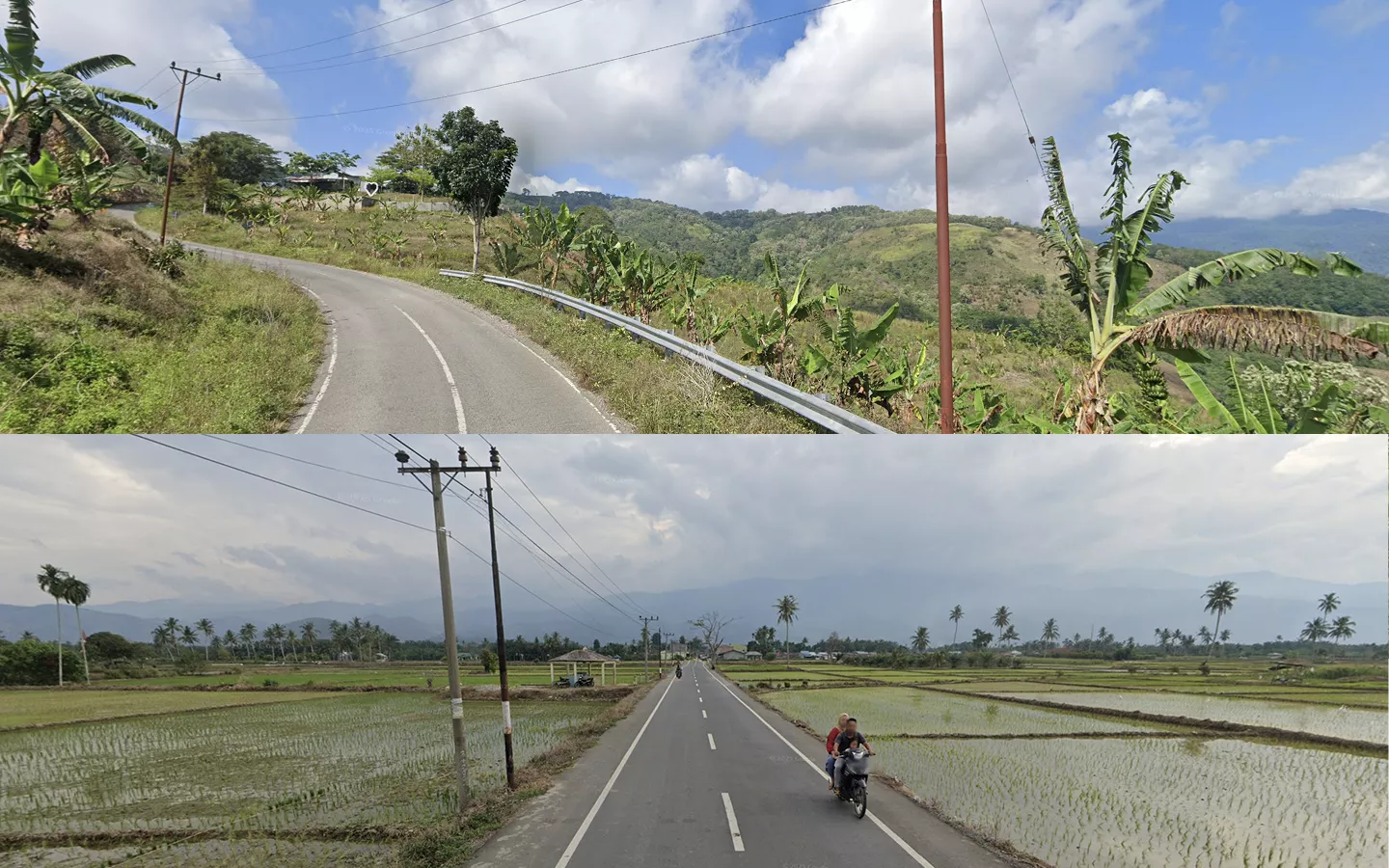
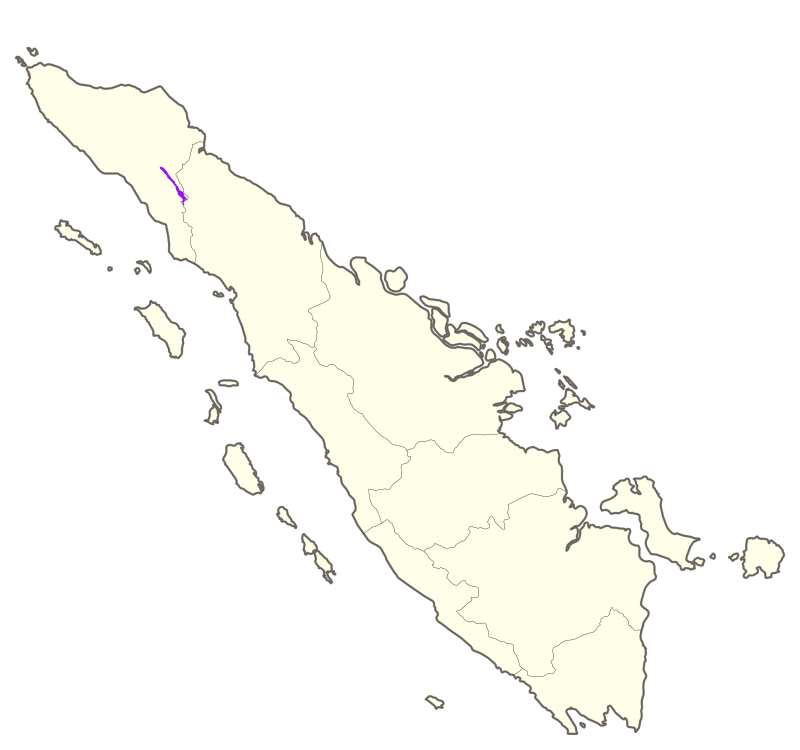
In central Aceh, there is coverage in a long, NW-SE oriented valley coming from north Sumatra. The landscape resembles that of Lake Toba, with high mountains visible to the side of the valley.
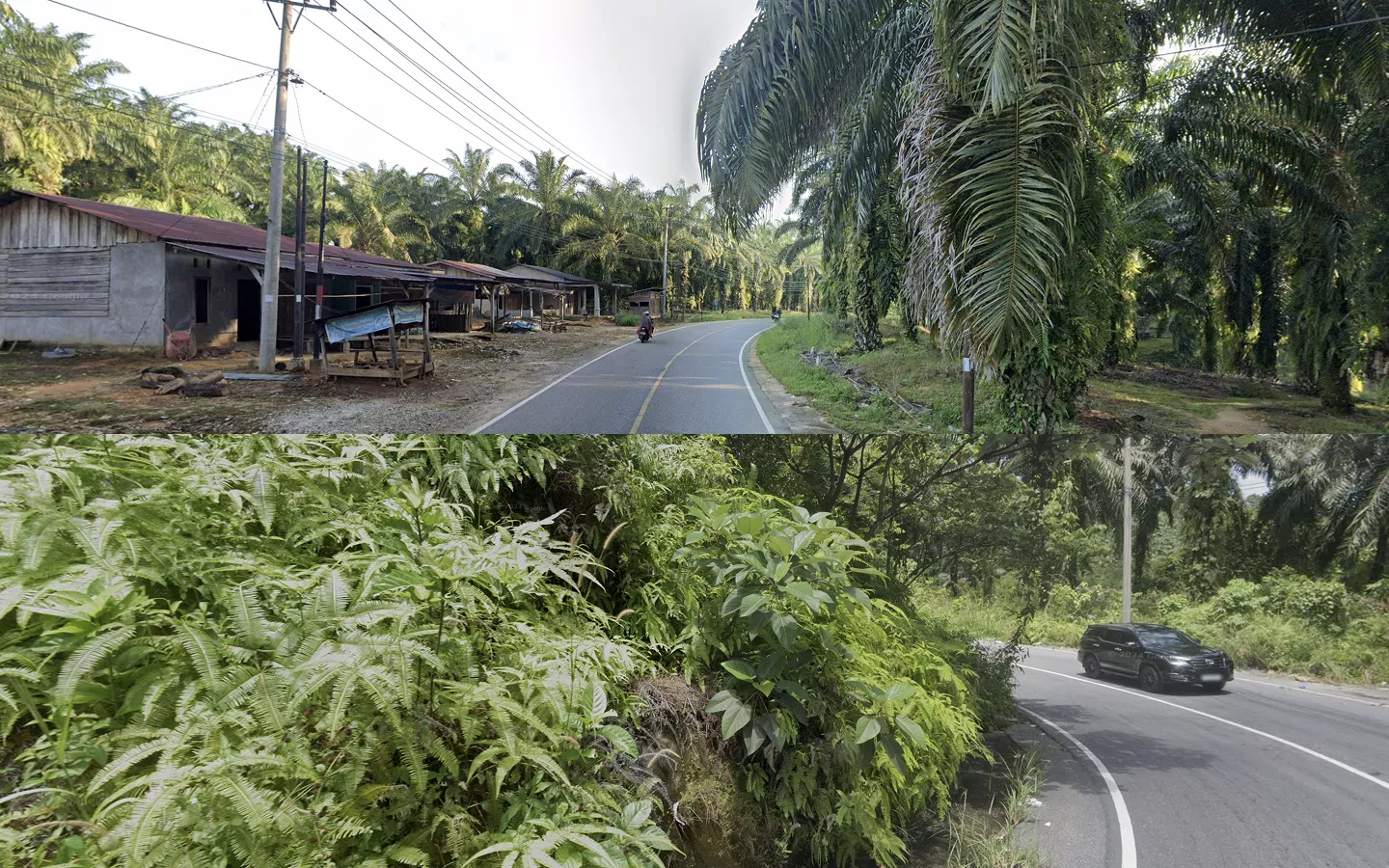
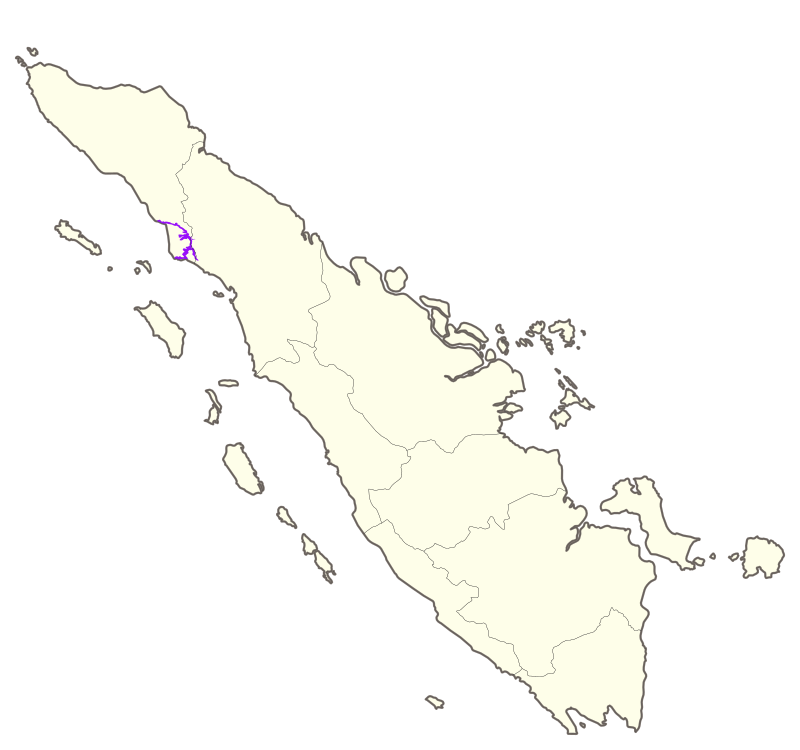
Several trails in the southwestern plains of Aceh have oil palm plantations and the landscape is similar to other western coastal areas of Sumatra. In areas closer to the mountains, ferns are often seen along the sides of the roads.
Batam-Bintan
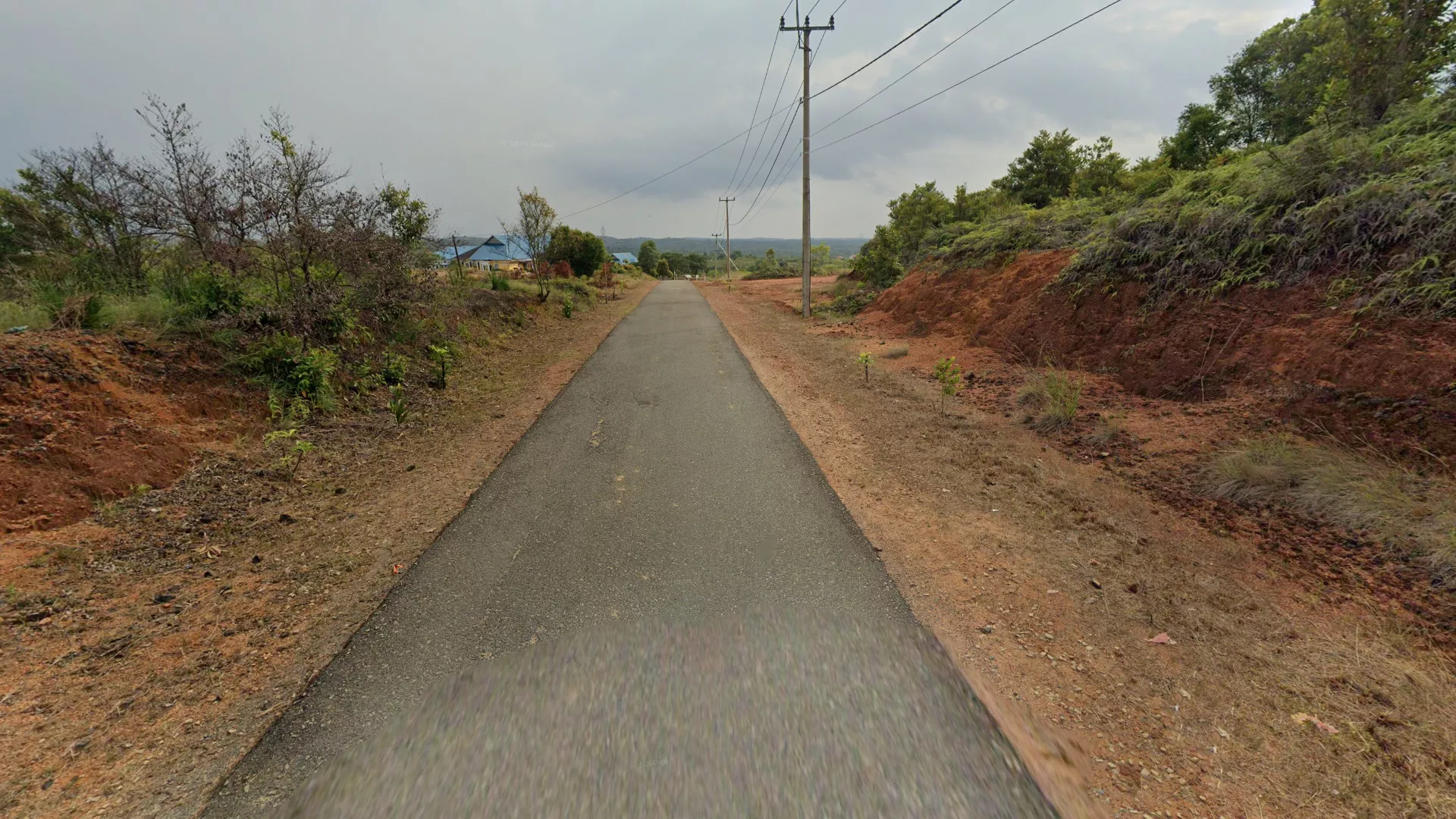
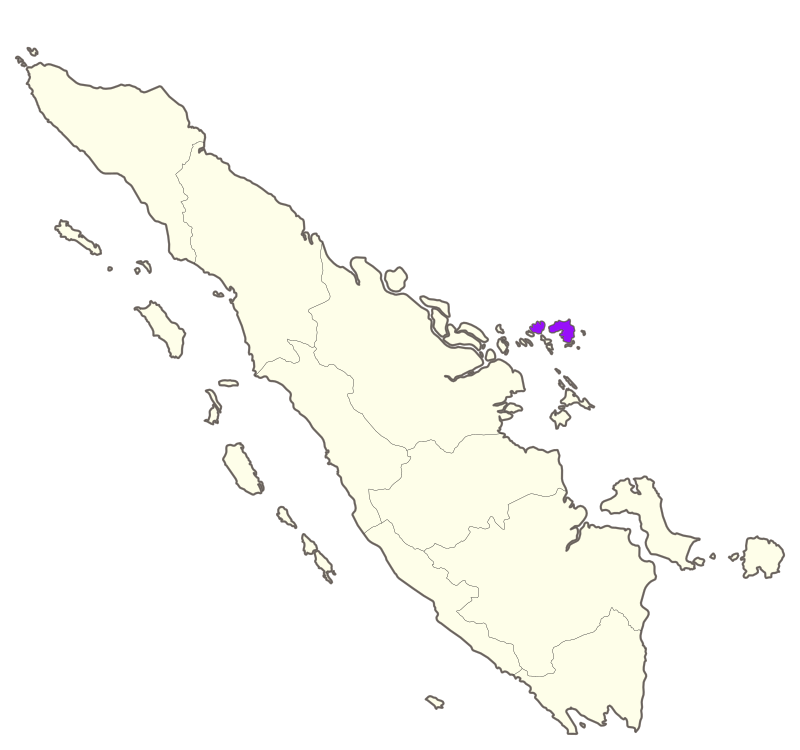
Rural landscapes on Bintan Island and Batam Island are broadly similar, although rarer on Batam Island since this island is more heavily developed.
Rural roadsides are often overgrown with ferns and other low groundcover. Low to modest hills are commonly visible and roads frequently cut through the hillsides leaving exposed red dirt slopes. This is especially common south of Batam.
Rural roadsides are often overgrown with ferns and other low groundcover. Low to modest hills are commonly visible and roads frequently cut through the hillsides leaving exposed red dirt slopes. This is especially common south of Batam.
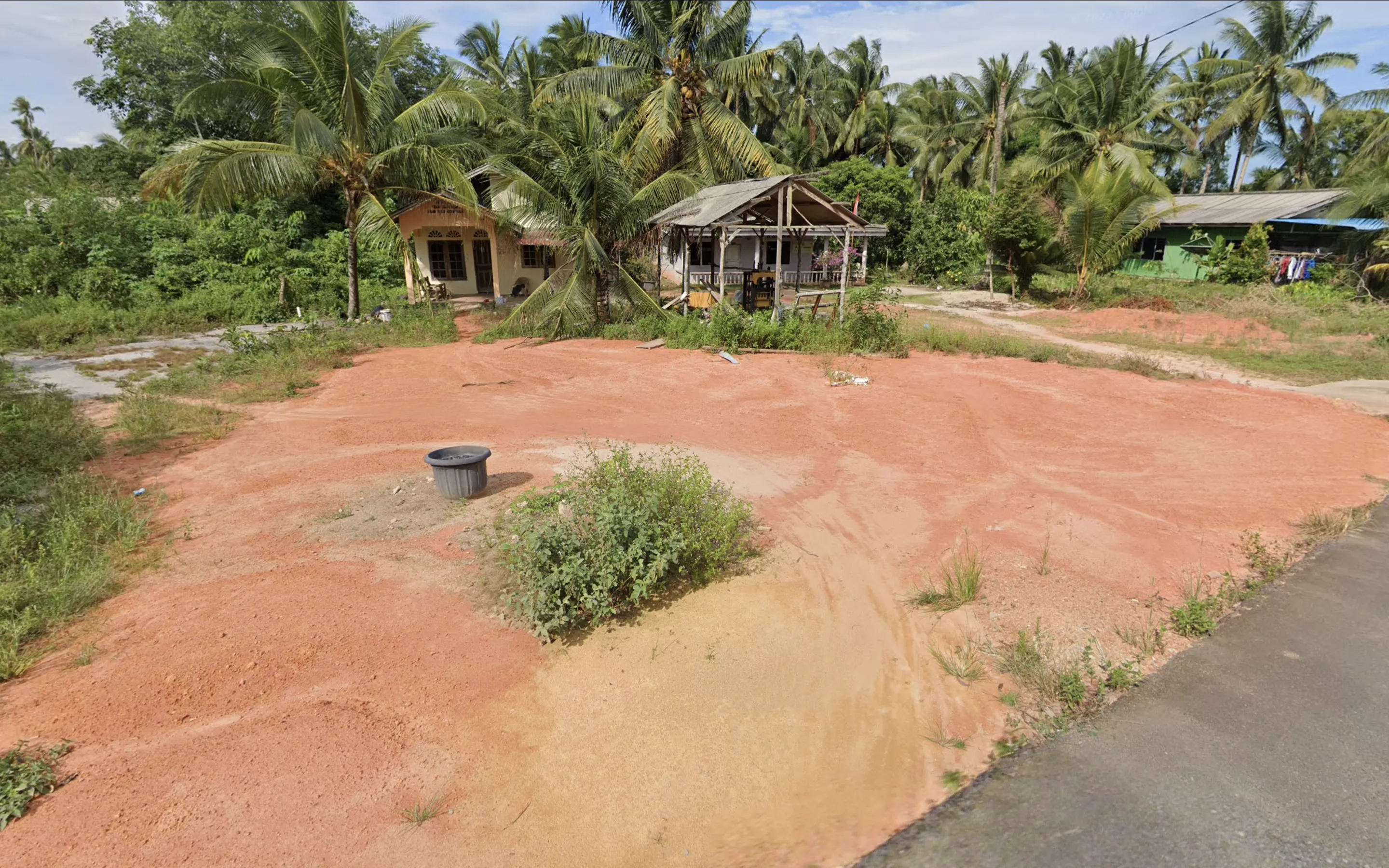
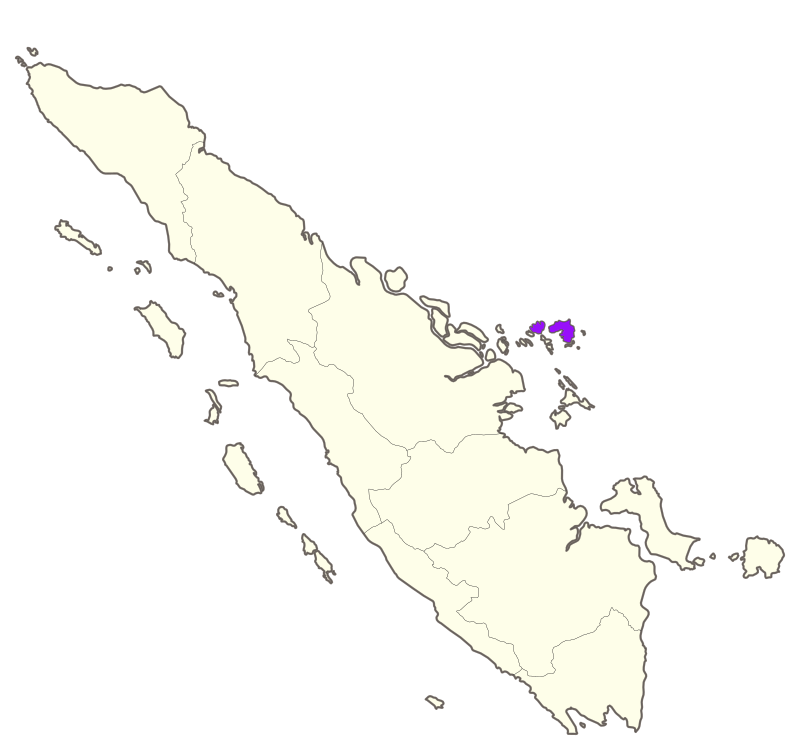
Soil will usually be red on both Batam Island and Bintan Island.
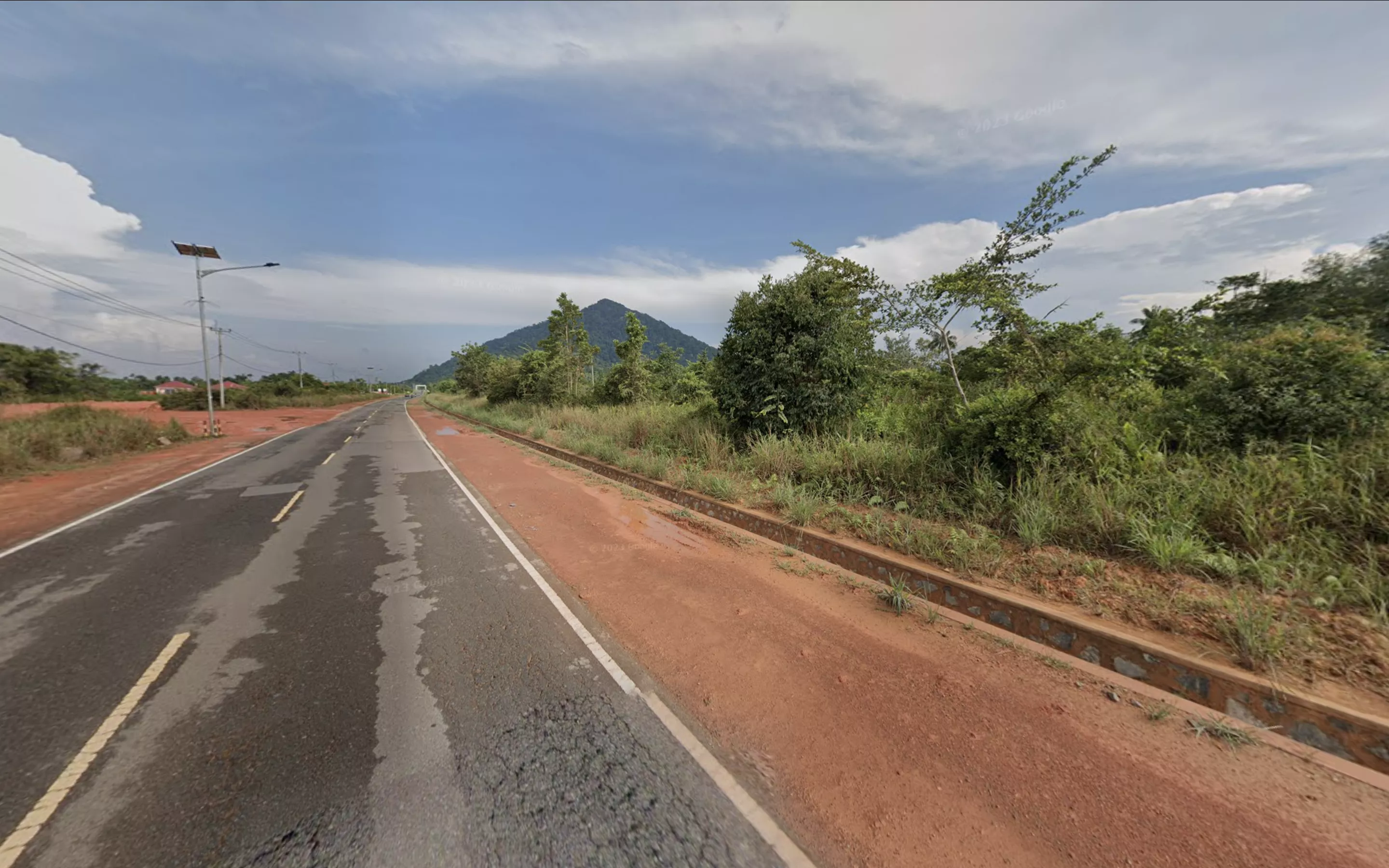
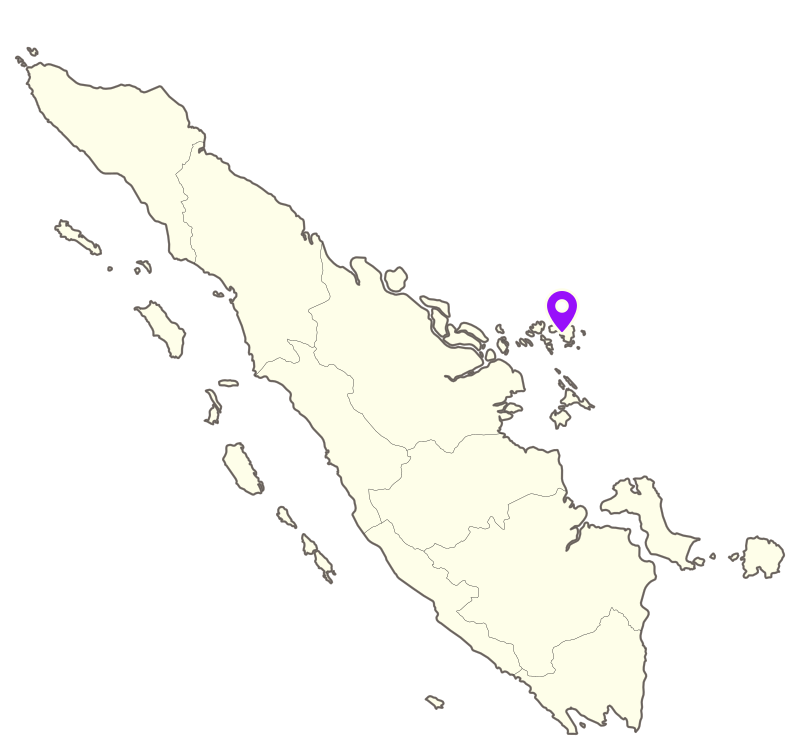
Gunung Bintan Besar (“Mount Bintan”) is the highest point on Bintan Island and can be recognised at a considerable distance with its distinct pyramidal shape.
Kundur-Karimunbesar
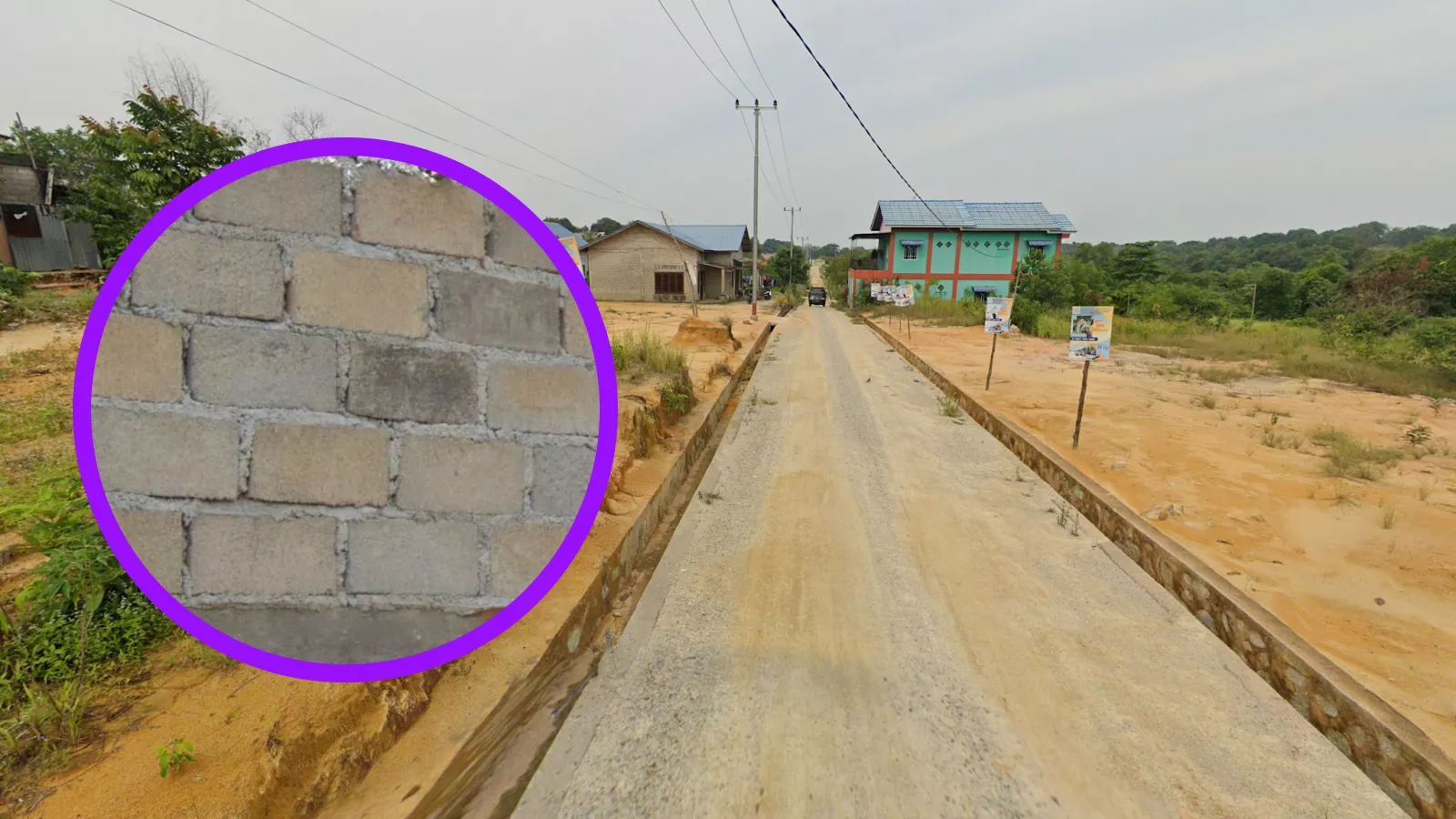
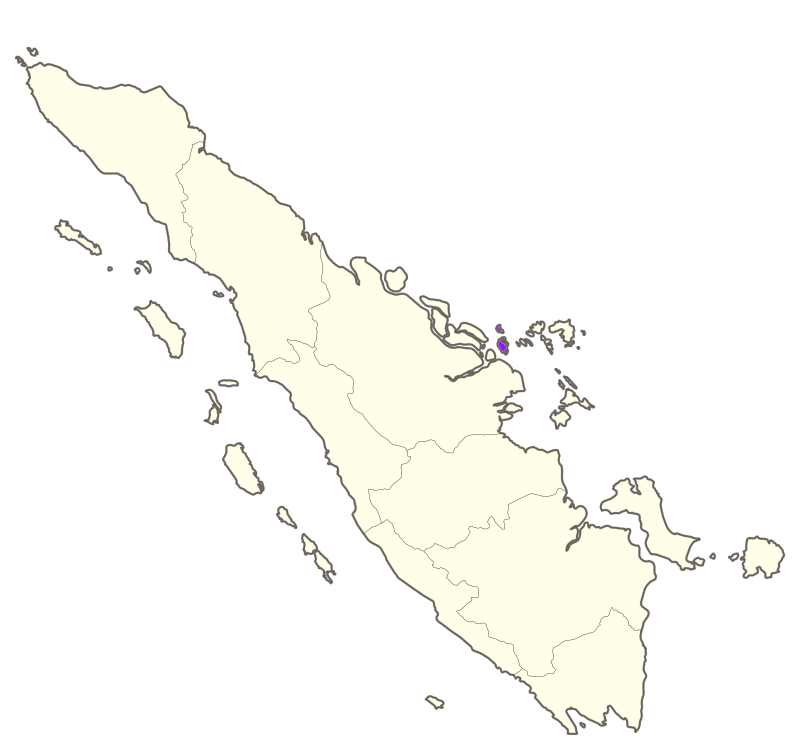
The islands of Kundur and Karimunbesar in the Riau Islands have strikingly yellow soil, which is reflected in a local architecture featuring yellowish-grey bricks. These can be mistaken for similar bricks in the Nusas.
Agriculture & Vegetation
Bangka-Belitung
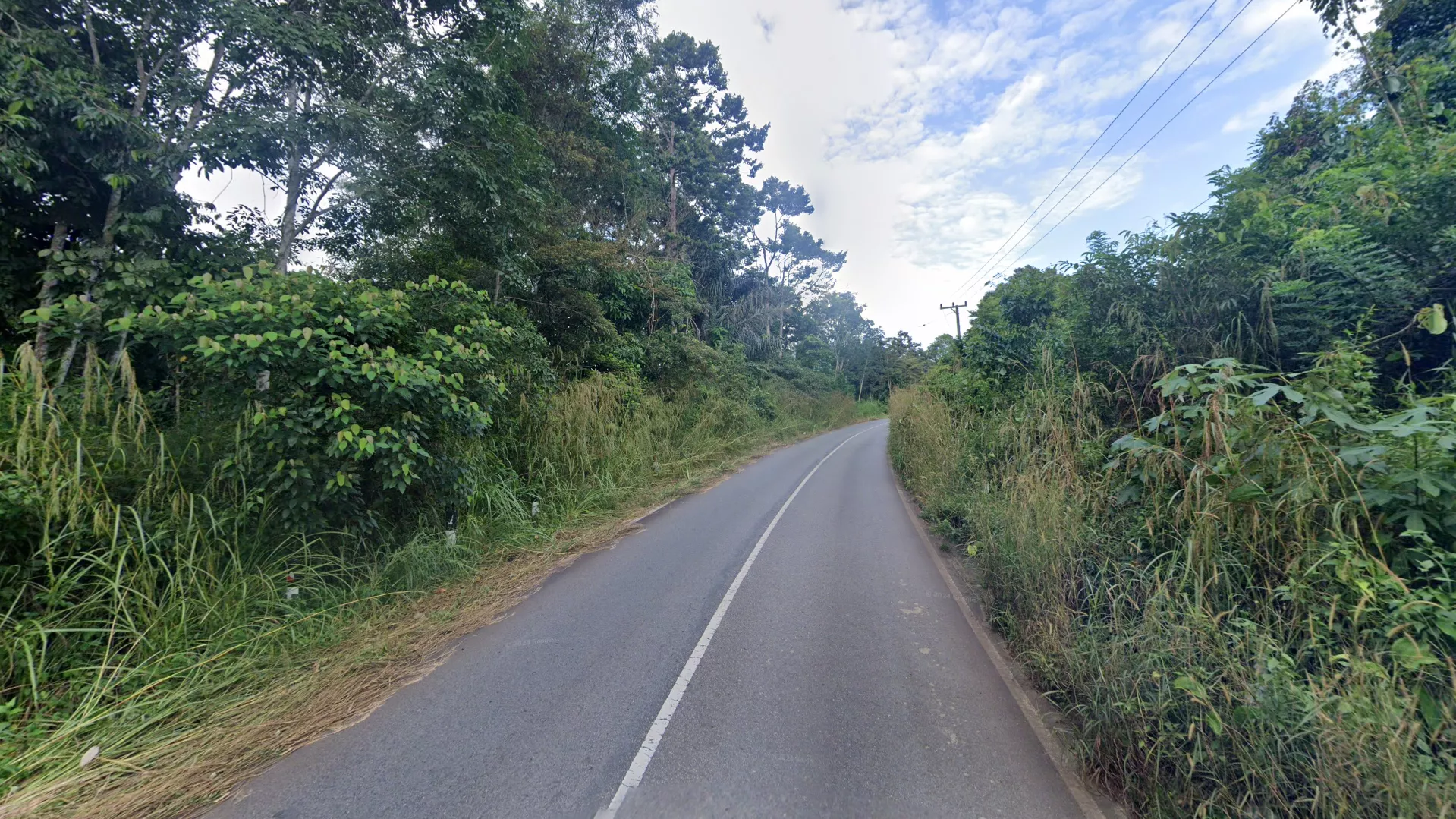
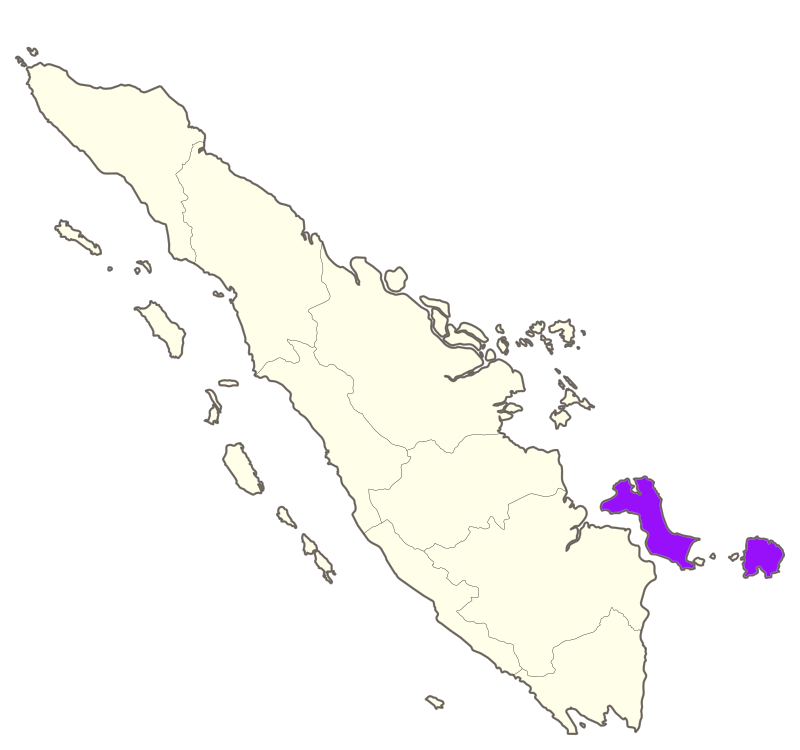
Bangka Island and Belitung Island often have a rural feel with trees and grass lining the road. Reeds are common and some roads appear red in colour (due to the soil).
Jambi
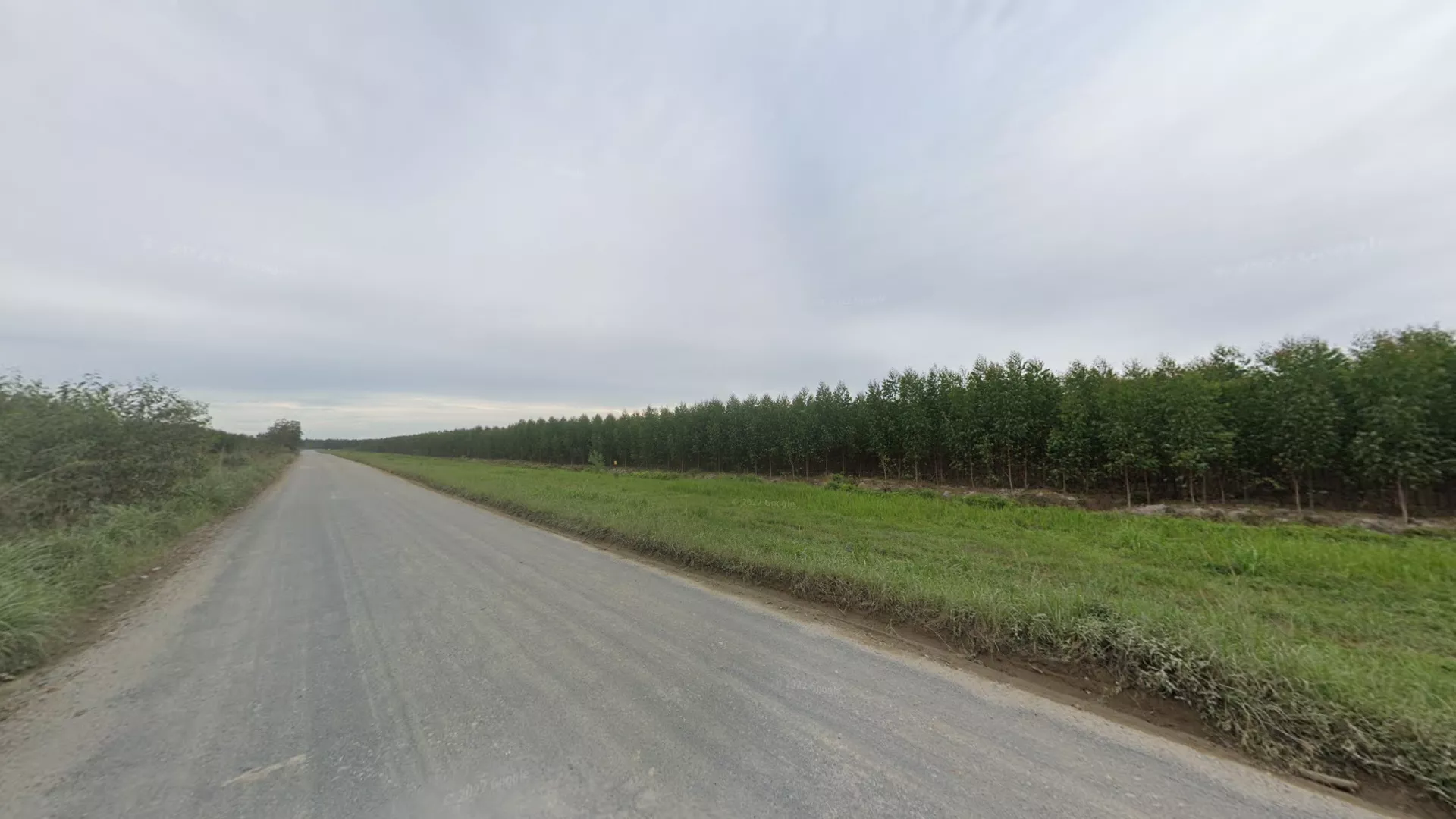
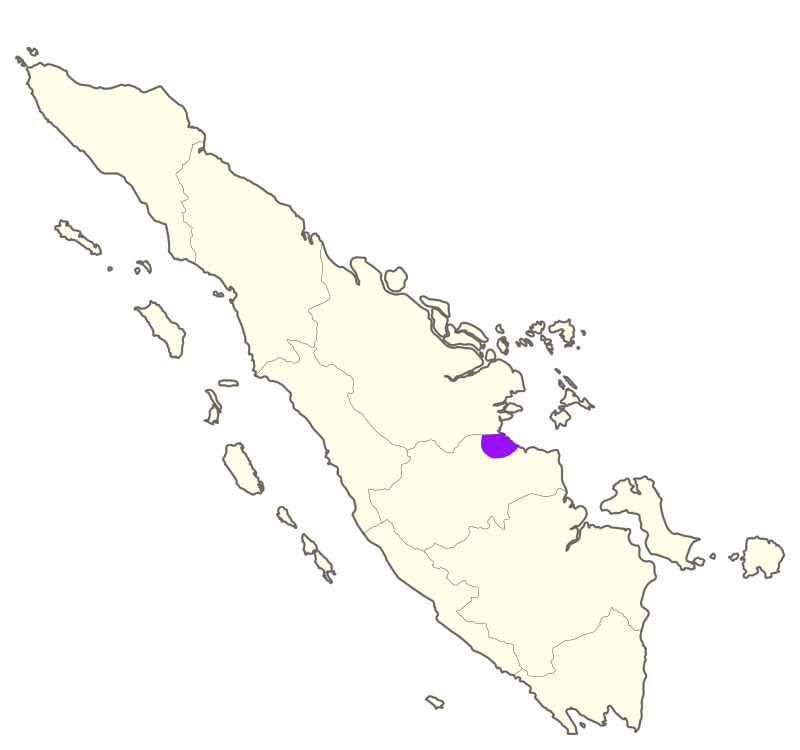
Large eucalyptus plantations define the landscape of coastal Jambi.
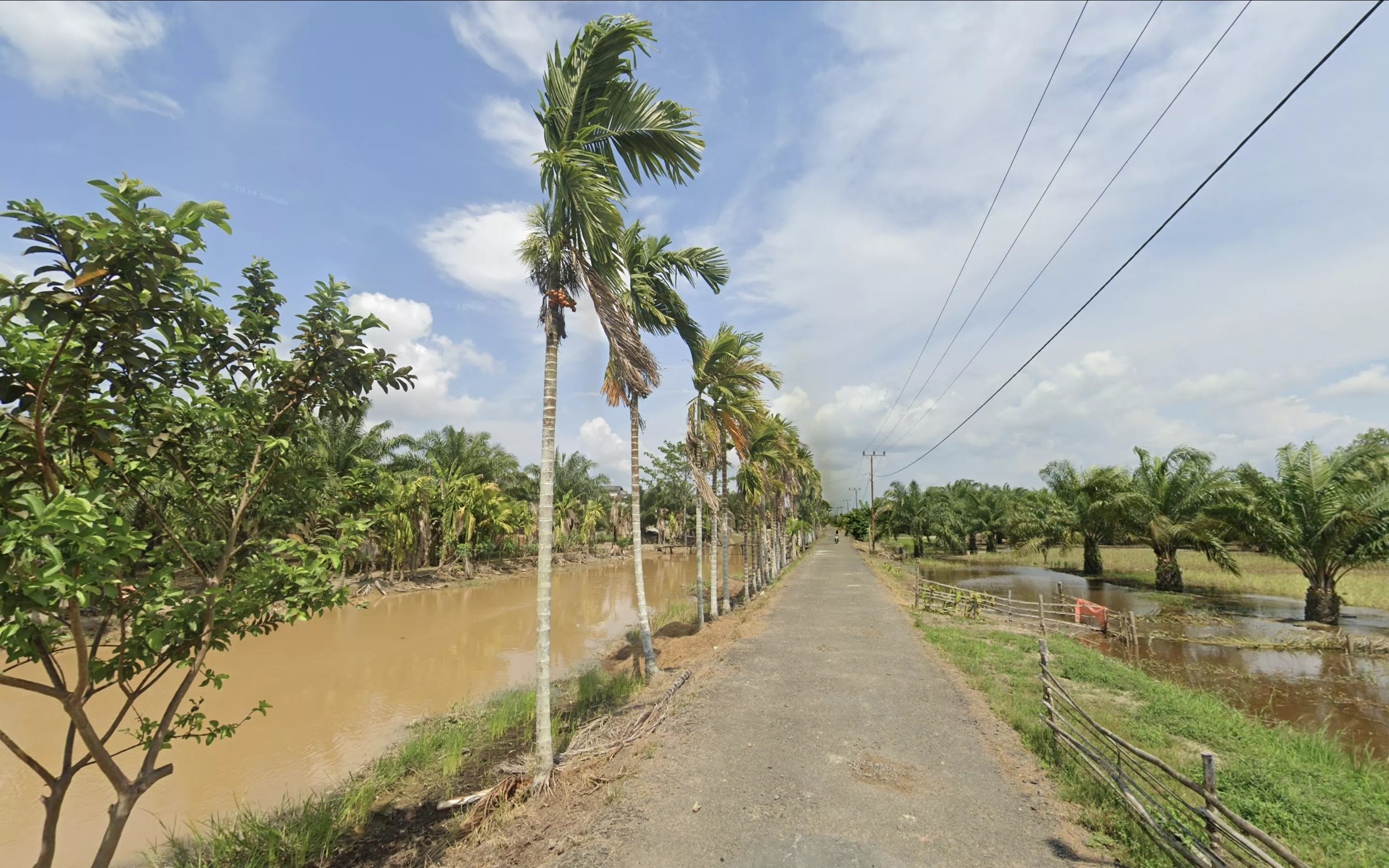
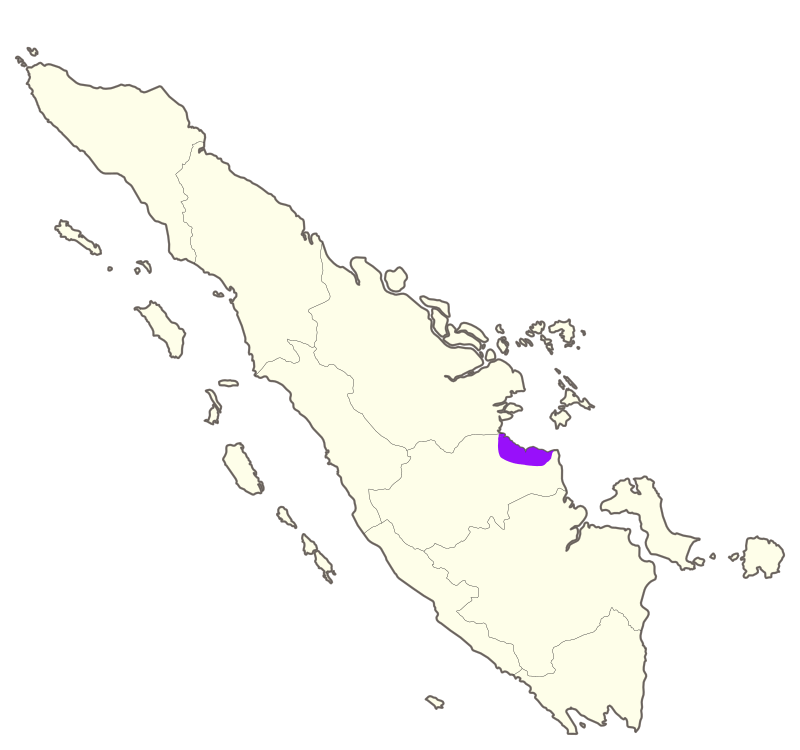
In coastal Jambi you can also find many canals lined with areca palms.
West Sumatra
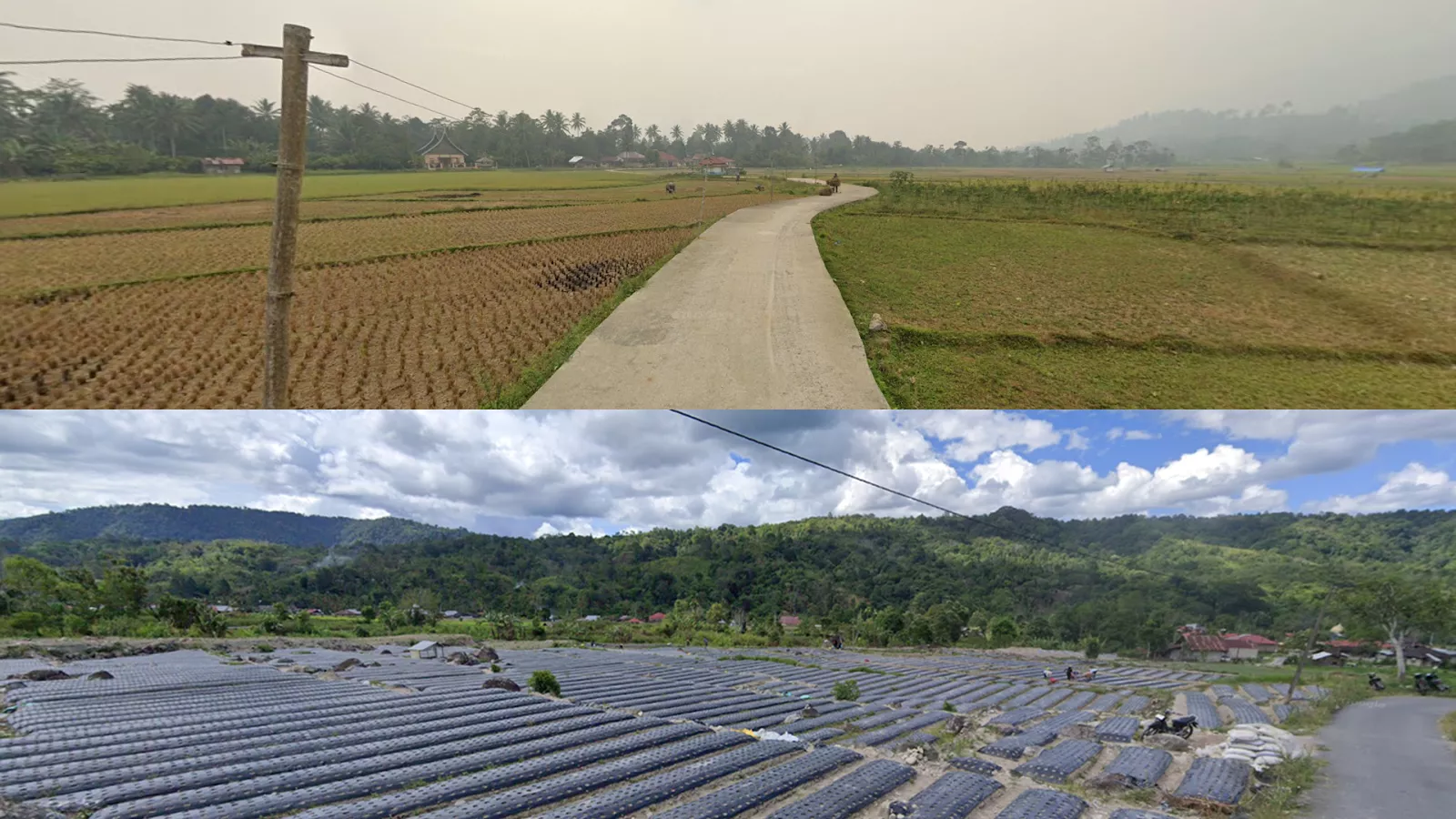
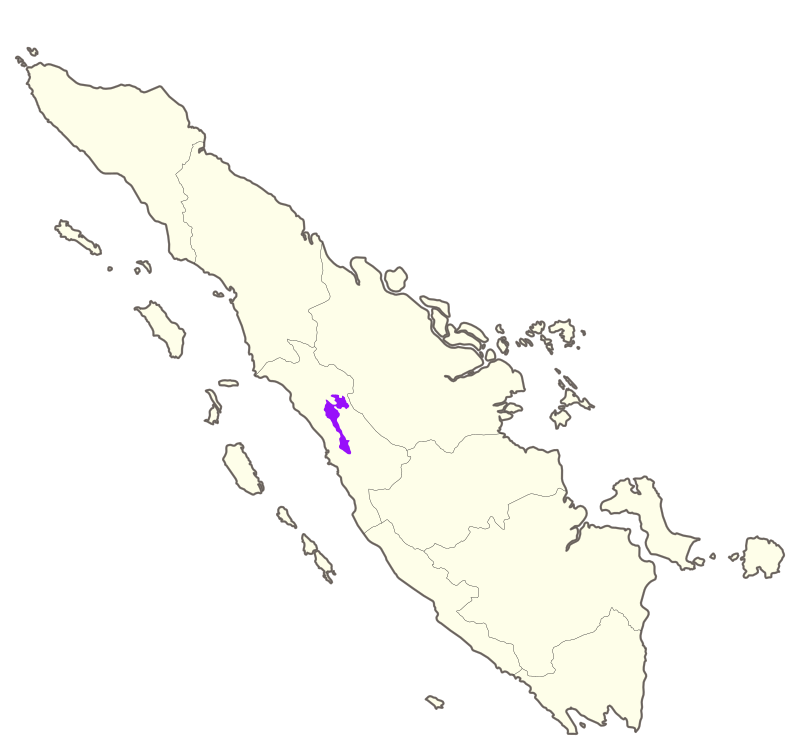
West Sumatra is a major rice-producing province, with fields mainly located in the basin around Payakumbuh as well as the surrounding valleys. You will also find fields south of Solok, particularly cabbage fields, typically covered with recognisable black foil.
North Sumatra
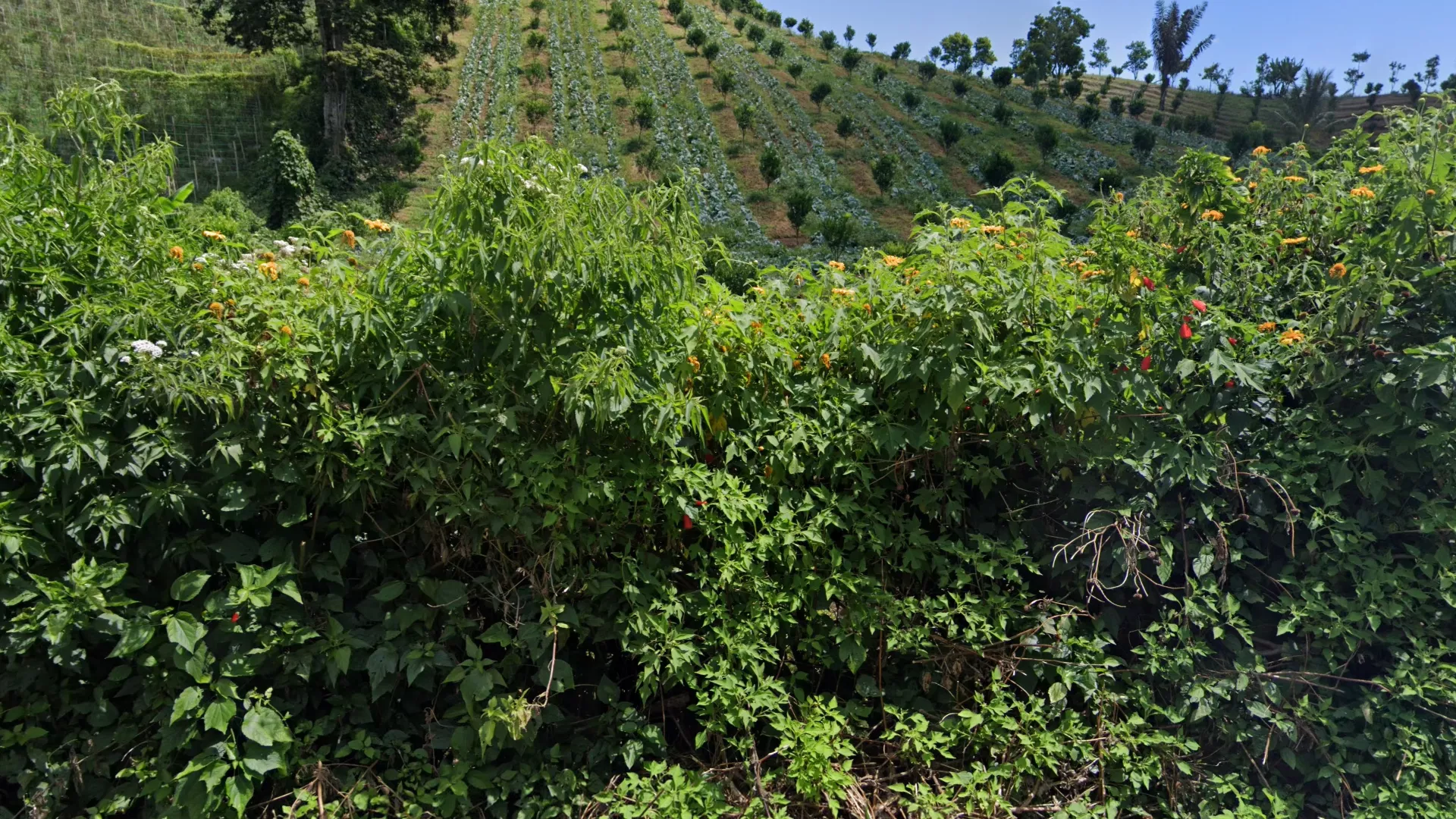
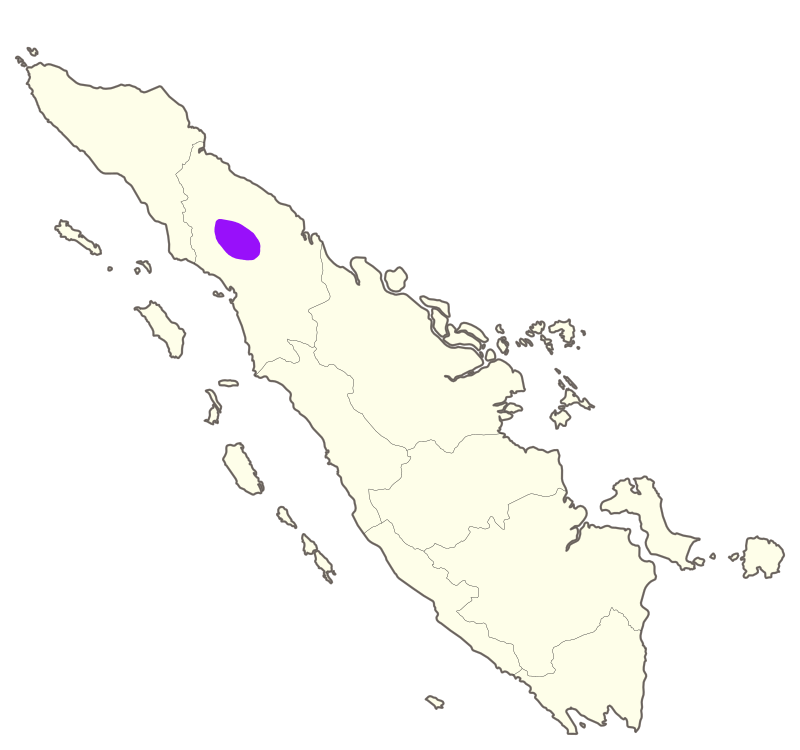
The Lake Toba area is dominated by small-scale agriculture with small garden-like fields and tea plantations. These are often lined with various flowers, in particular Clibadium surinamense (white), Mexican sunflowers (yellow) and hibiscus (red).
Nias Island
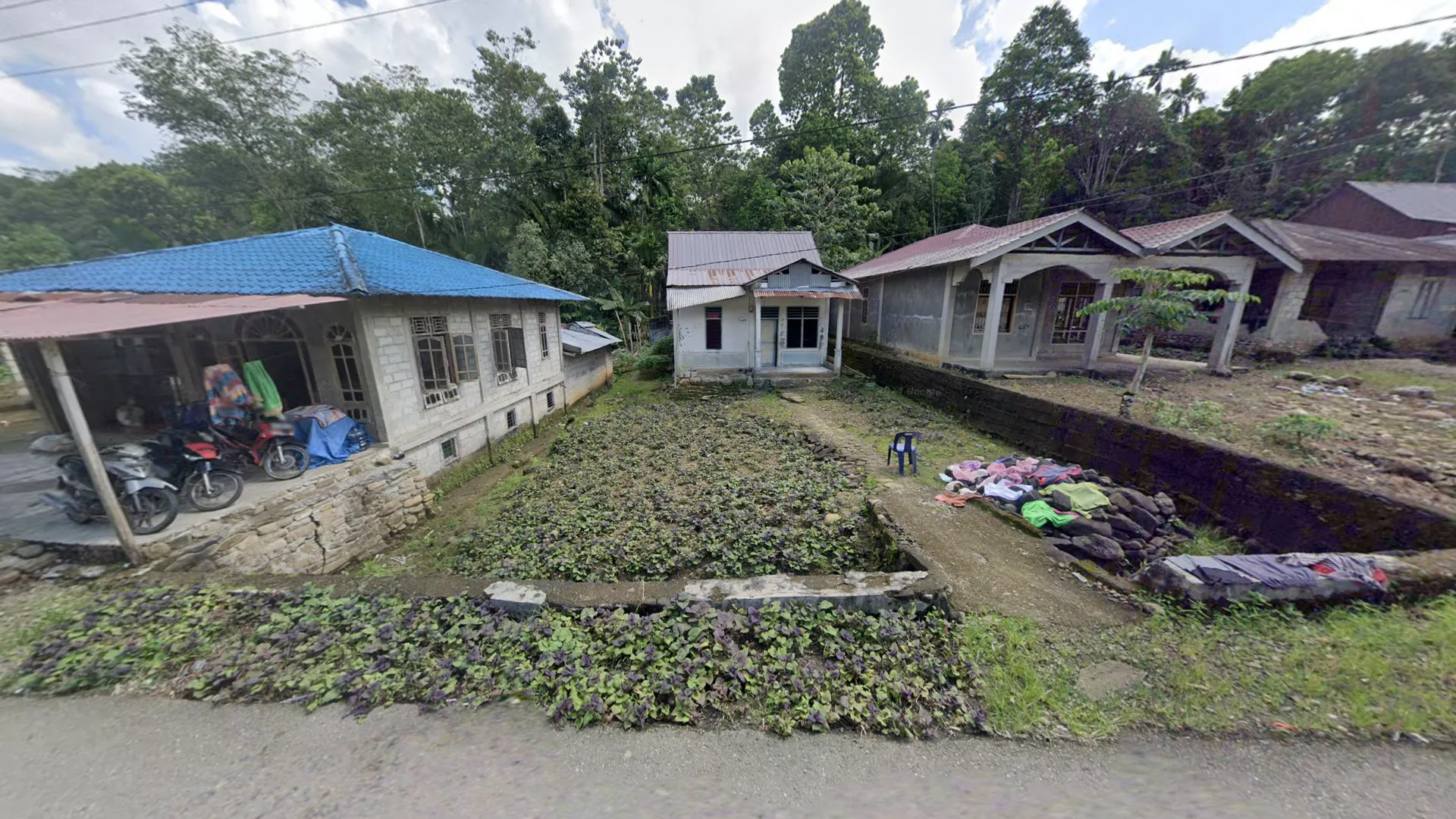
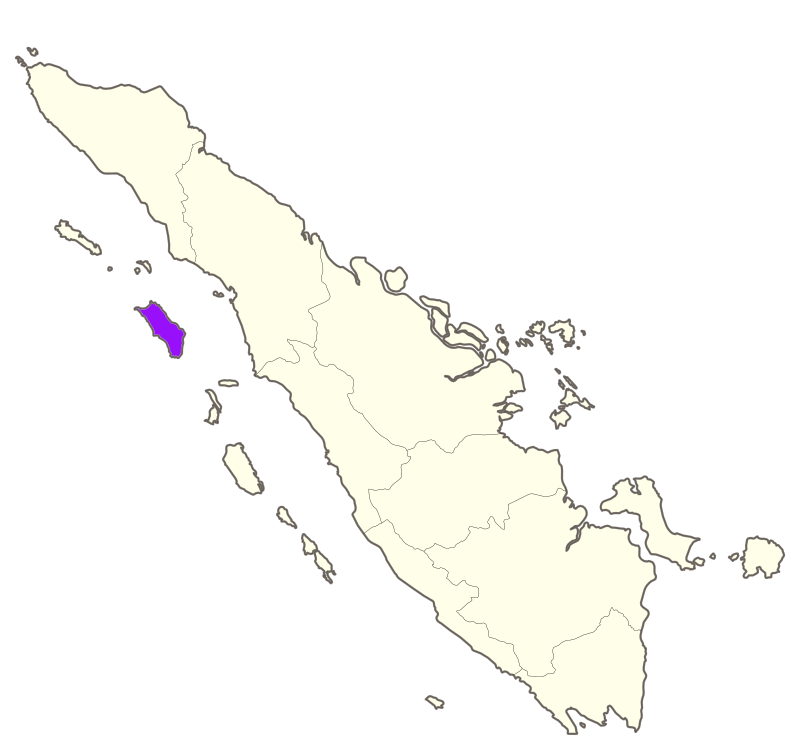
The sweet potato plant can be recognised by its small, green and dark purple leaves. It can be found covering large areas of ground all over Nias Island.
Architecture
Red Bricks
Red bricks are very common in Sumatra and are helpful in regionguessing or excluding specific parts of the island. They occur in two variants: narrow and wide.
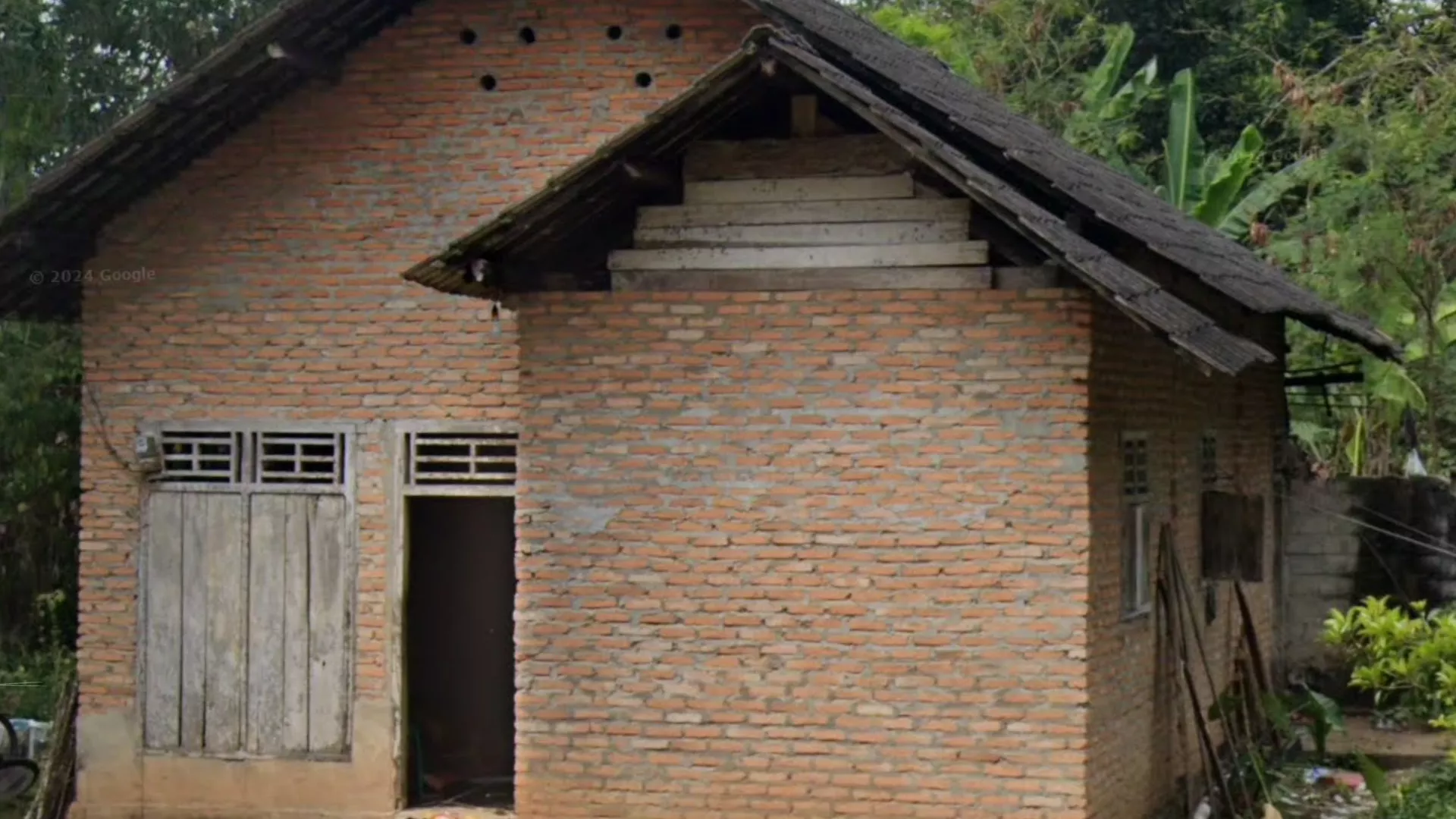
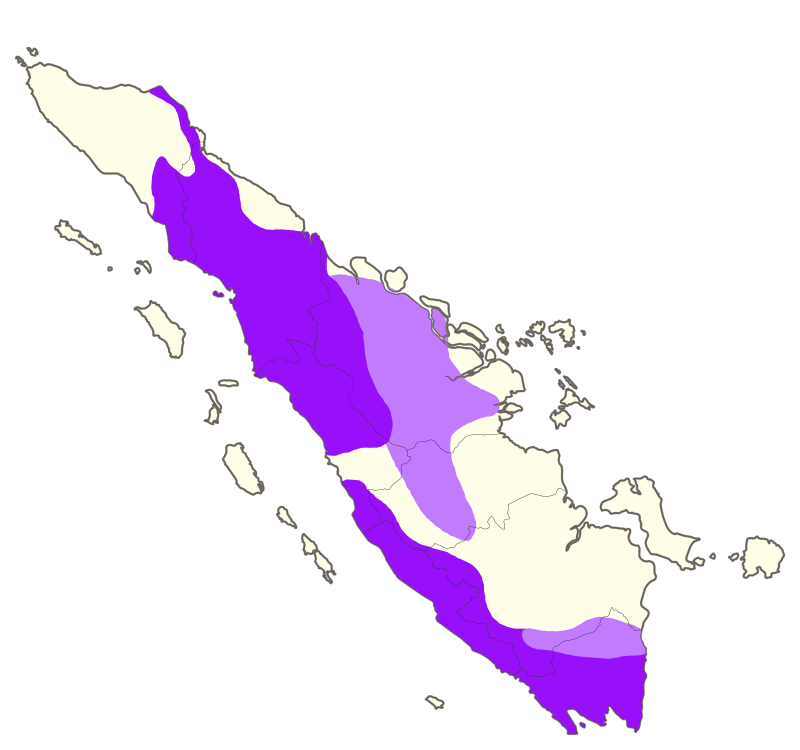
Narrow red bricks are found in the northern and southern parts of Sumatra, as well as all along the west coast.
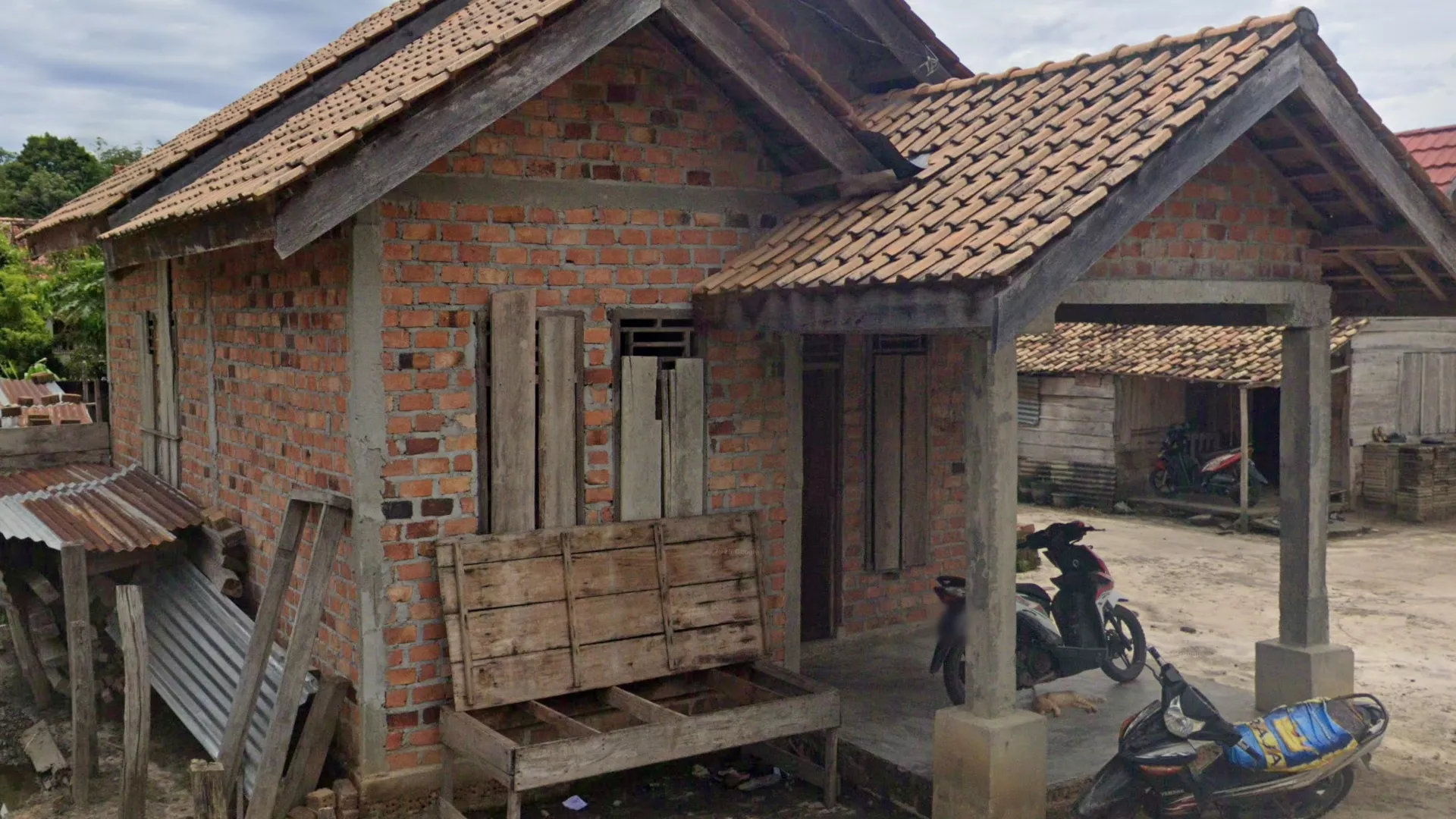
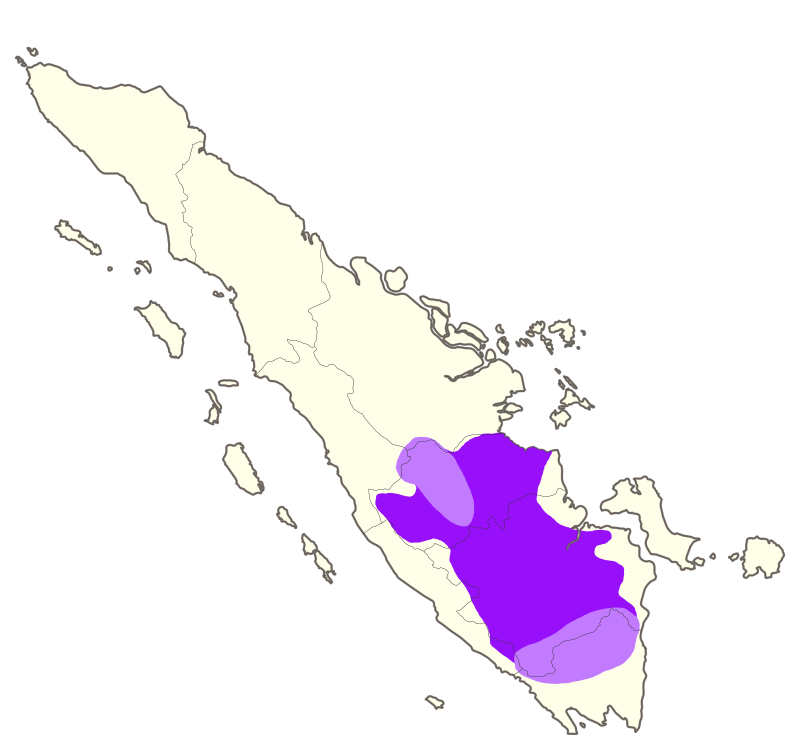
In contrast, wide red bricks are found in the centre-south, primarily in South Sumatra and Jambi.
Lampung
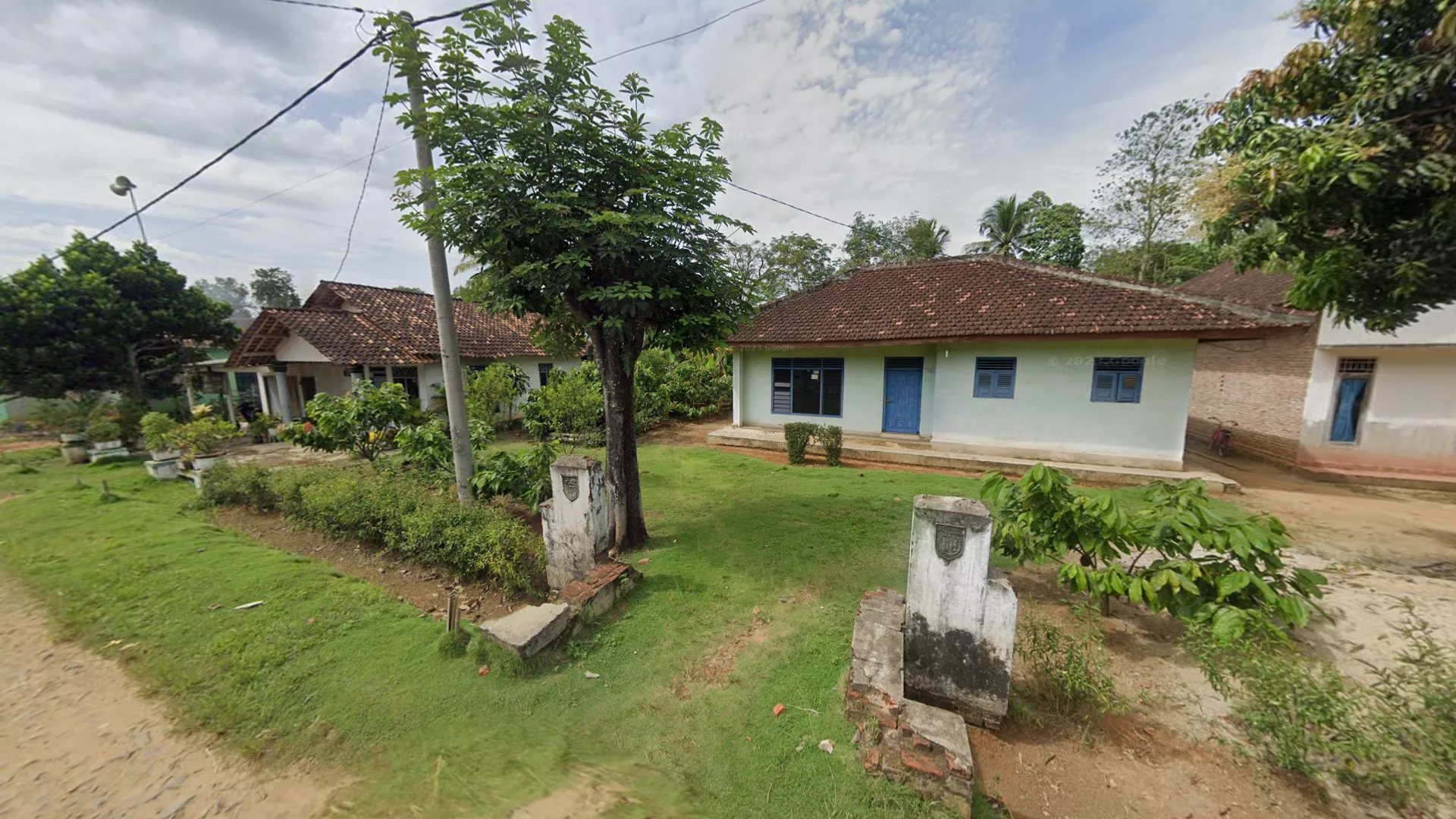
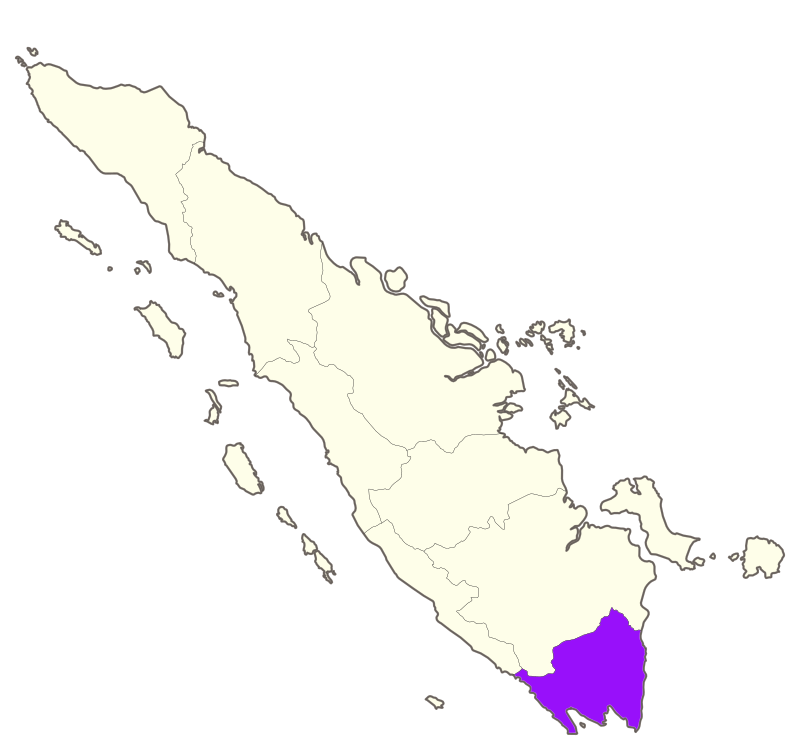
Historic migration from Java has left a mark on architecture in Lampung.
Traditional Javanese tiles are common here, however the population density in Lampung is much lower, resulting in larger plots of land and widely spaced houses.
Lampung roofs often have tiles of different shades, from light orange to dark brown. There are also more houses built of wood in Lampung.
Traditional Javanese tiles are common here, however the population density in Lampung is much lower, resulting in larger plots of land and widely spaced houses.
Lampung roofs often have tiles of different shades, from light orange to dark brown. There are also more houses built of wood in Lampung.
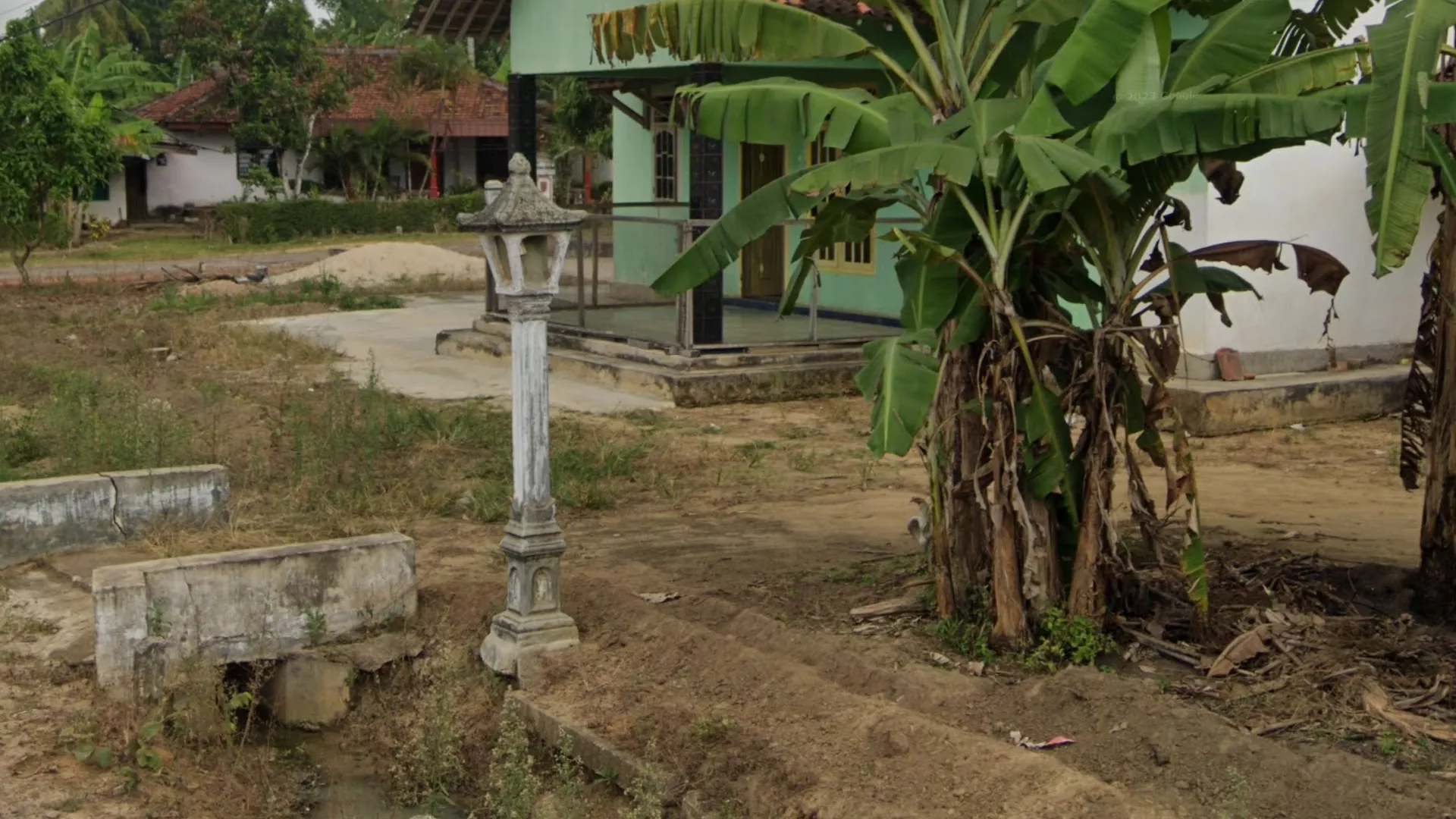
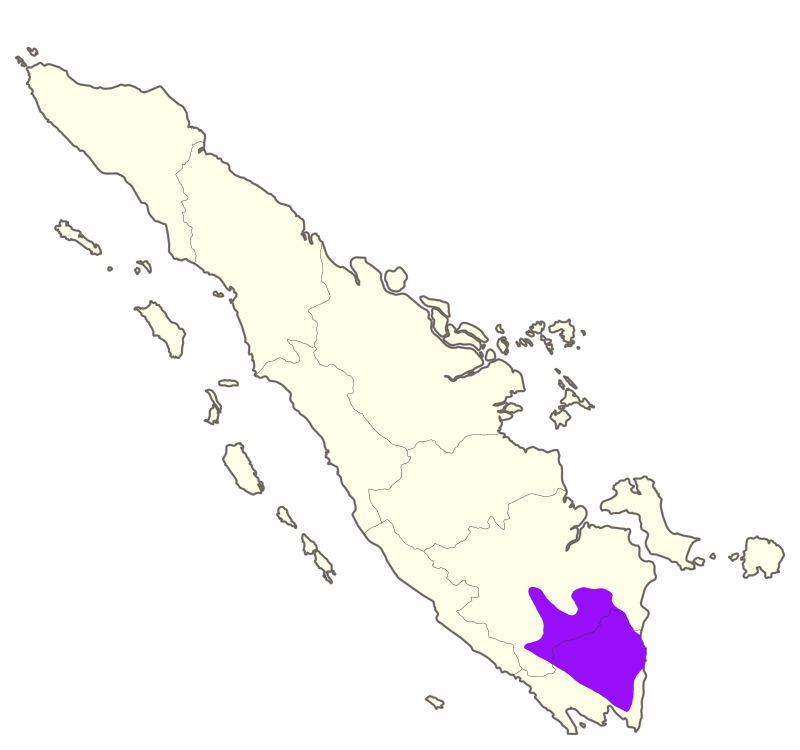
Stone lamps are common at entrances in Lampung as well as in adjacent parts of South Sumatra.
Gate Pillars
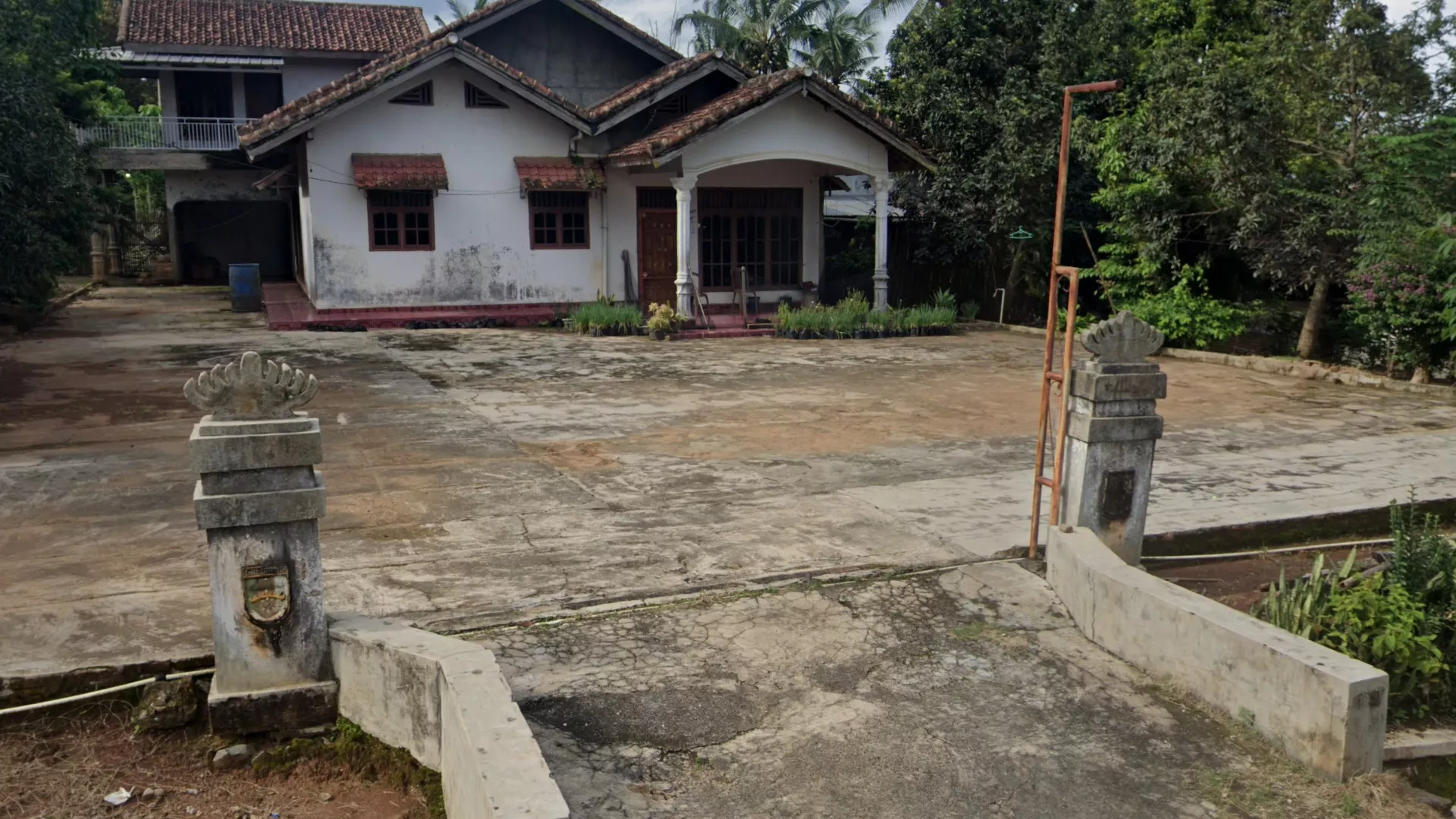
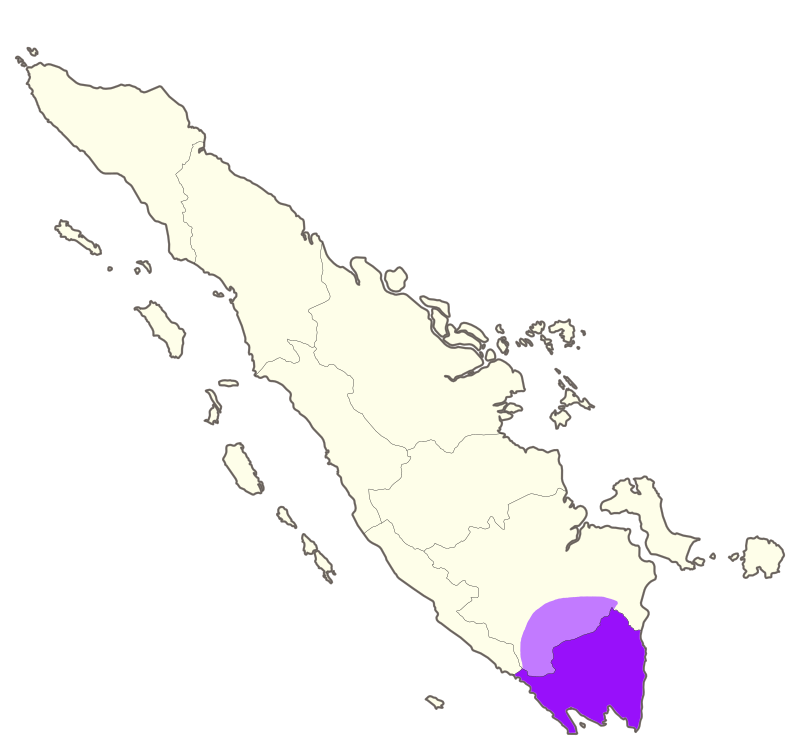
Property entrances in Lampung also frequently feature rectangular stone pillars, often decorated, and a concrete kerb.
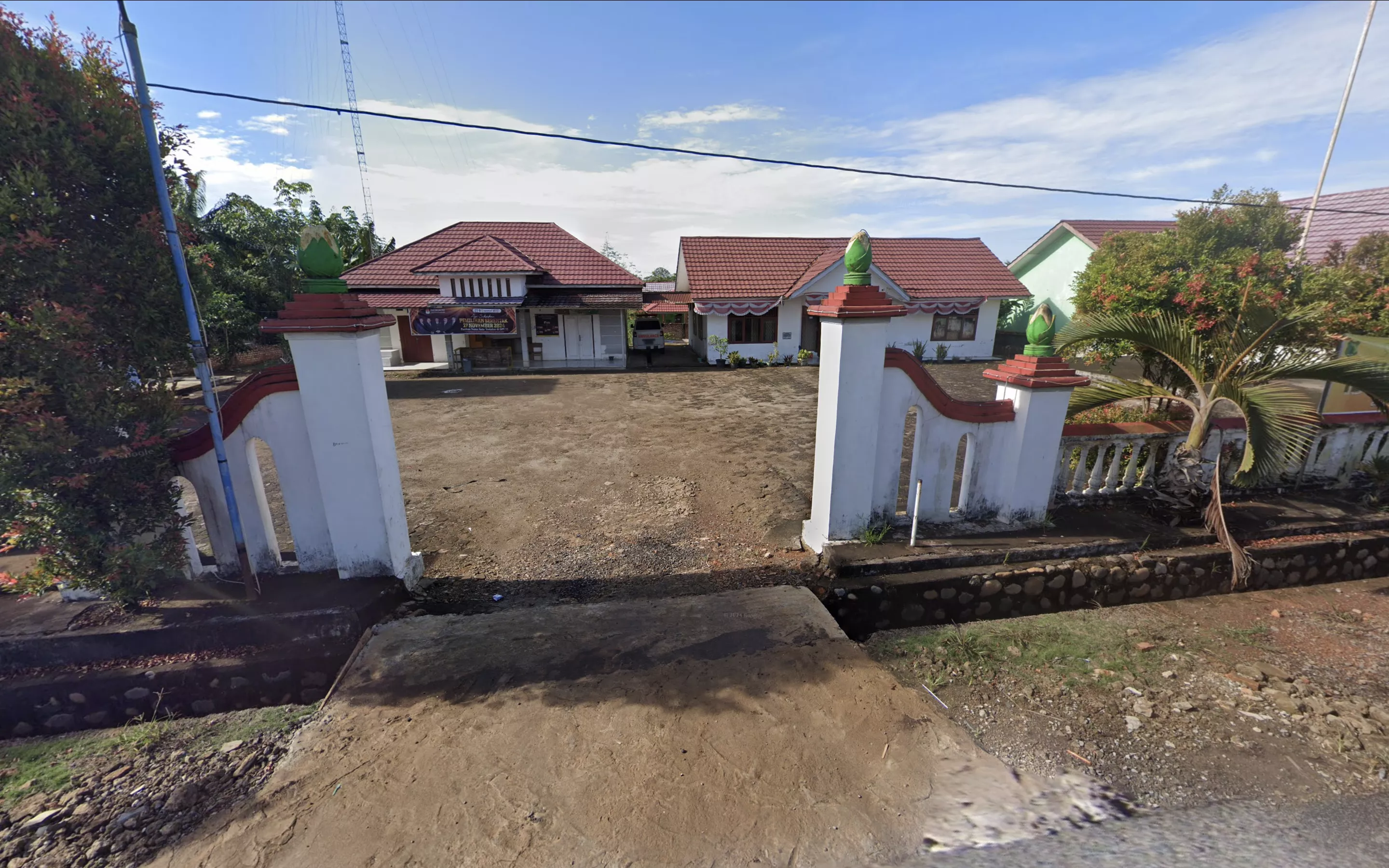
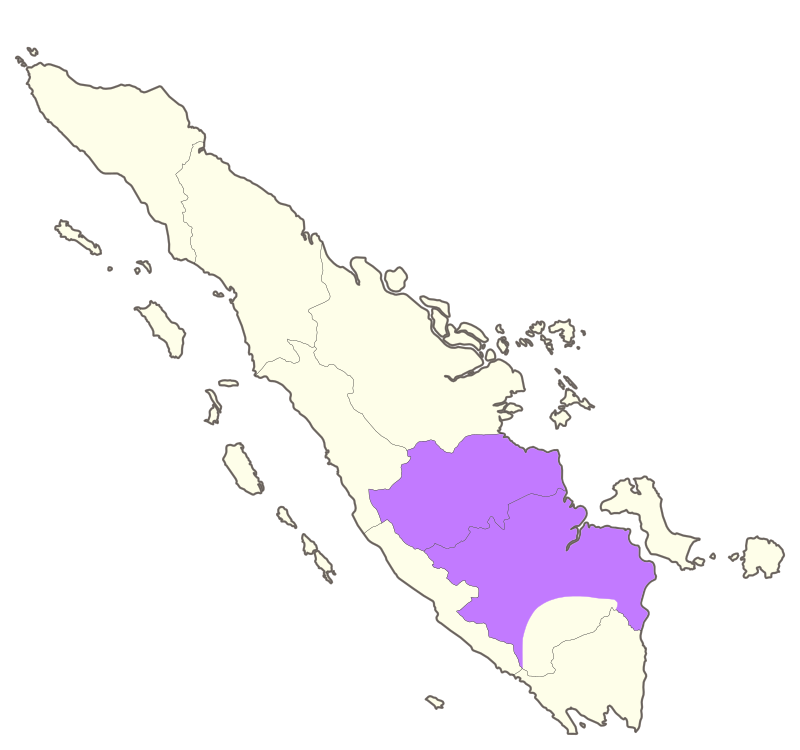
Entrance pillars can be found In South Sumatra and Jambi, usually taking a turret shape with a rising balustrade attached.
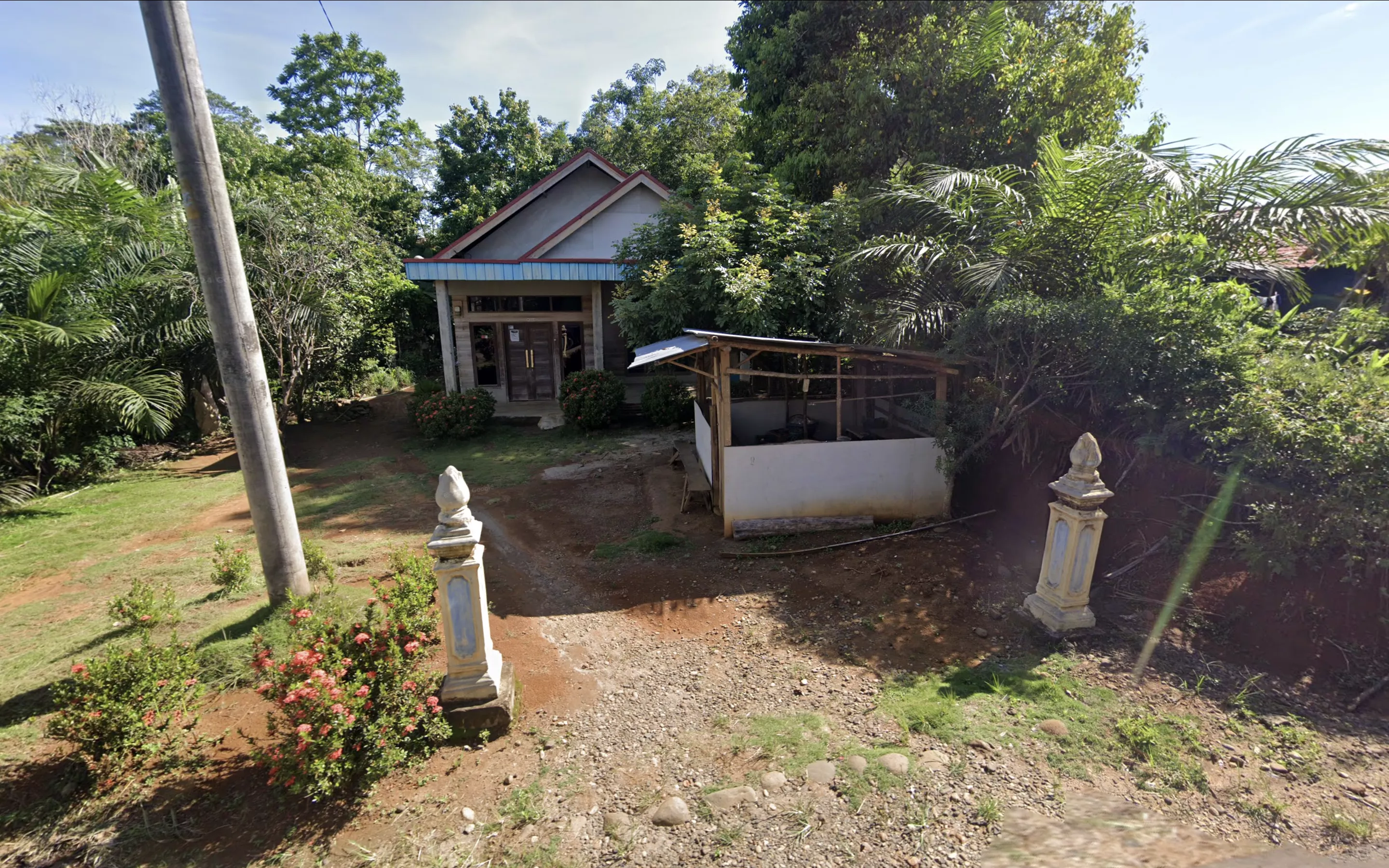
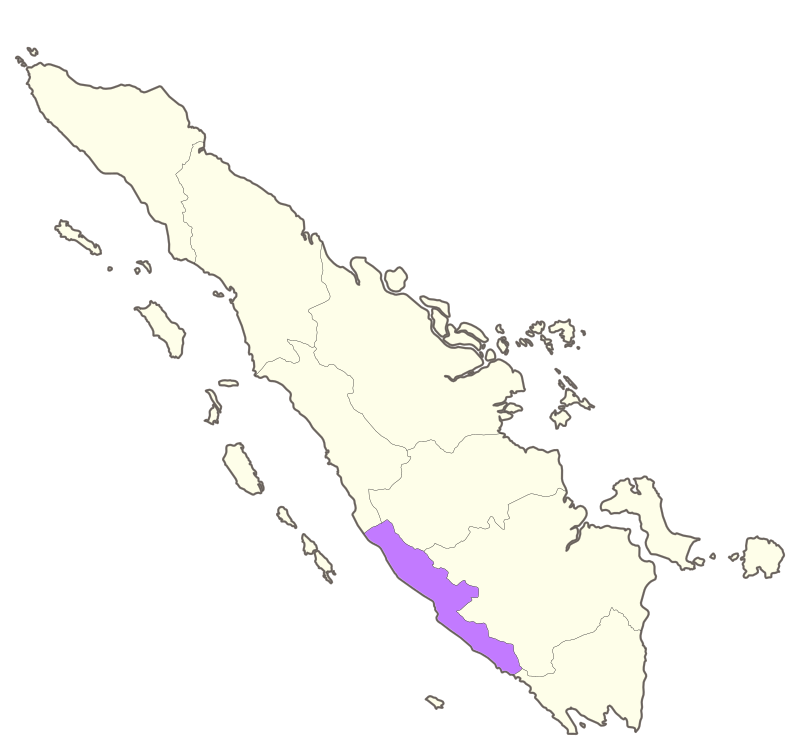
In Bengkulu, you will rarely find isolated pillars at property entrances.
South Sumatra
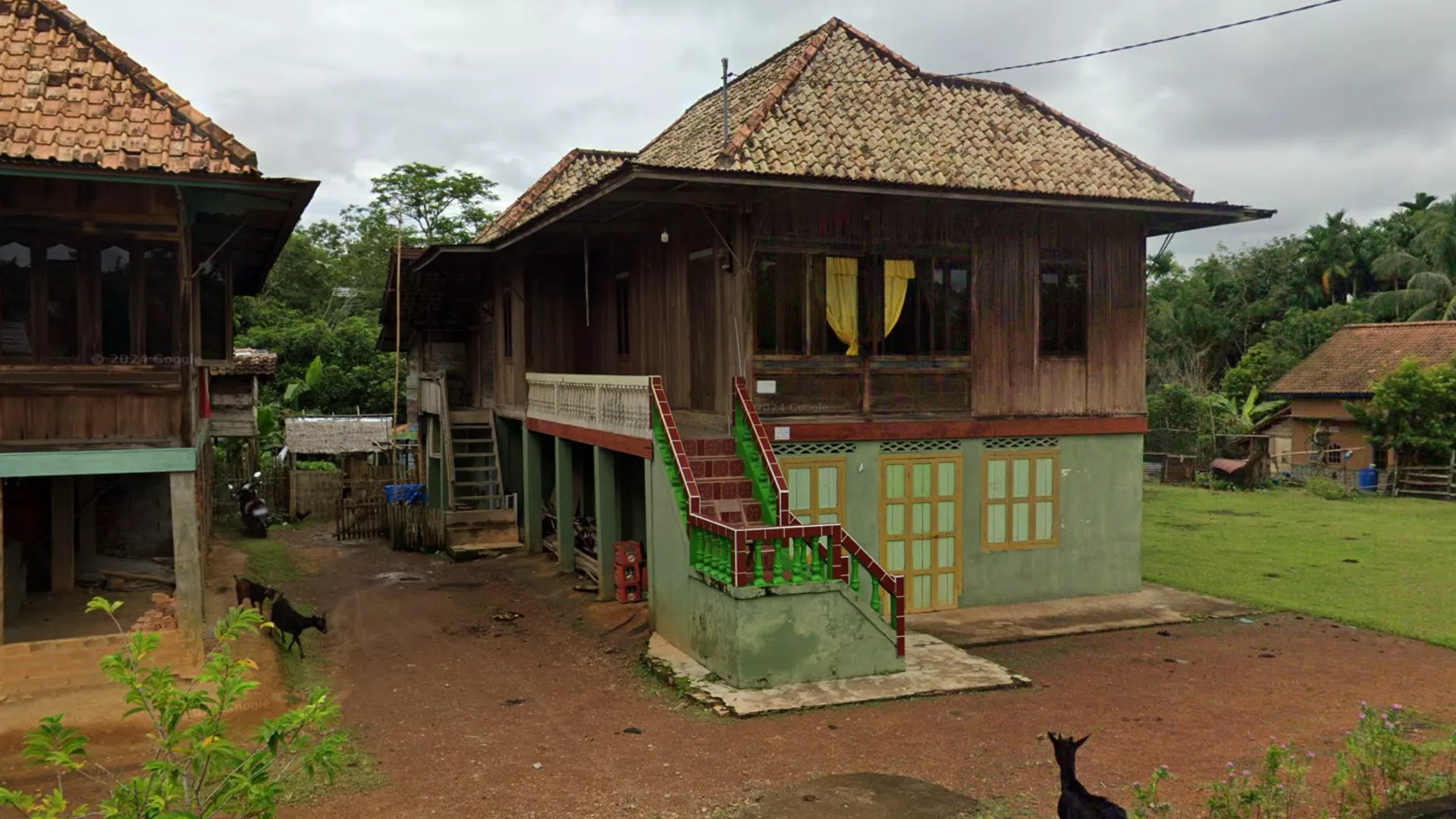
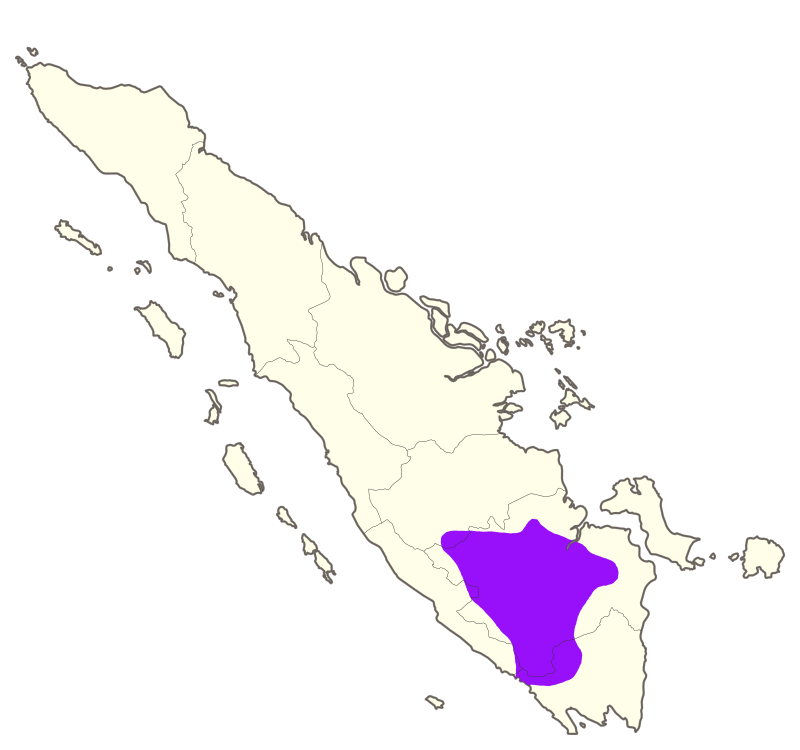
South Sumatra has very unique houses which typically consist of a top floor with many windows, serving as the main floor, built on top of a lower section which may sometimes just consist of stilts or pillars. A staircase leads to the top section. The whole house is built of timber.
Combined with a hip roof made of traditional tiles, this type of house is very recognisable.
Combined with a hip roof made of traditional tiles, this type of house is very recognisable.
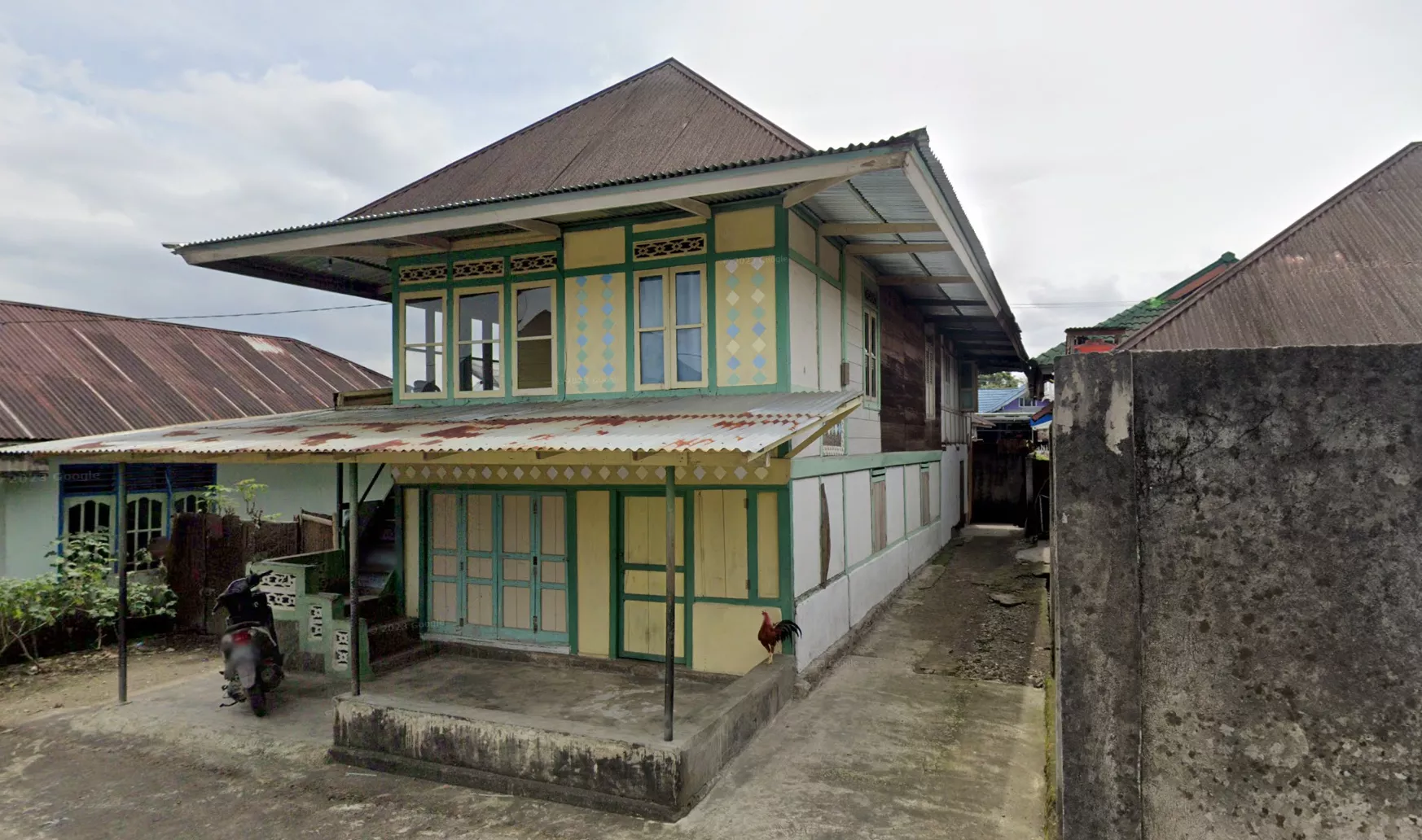
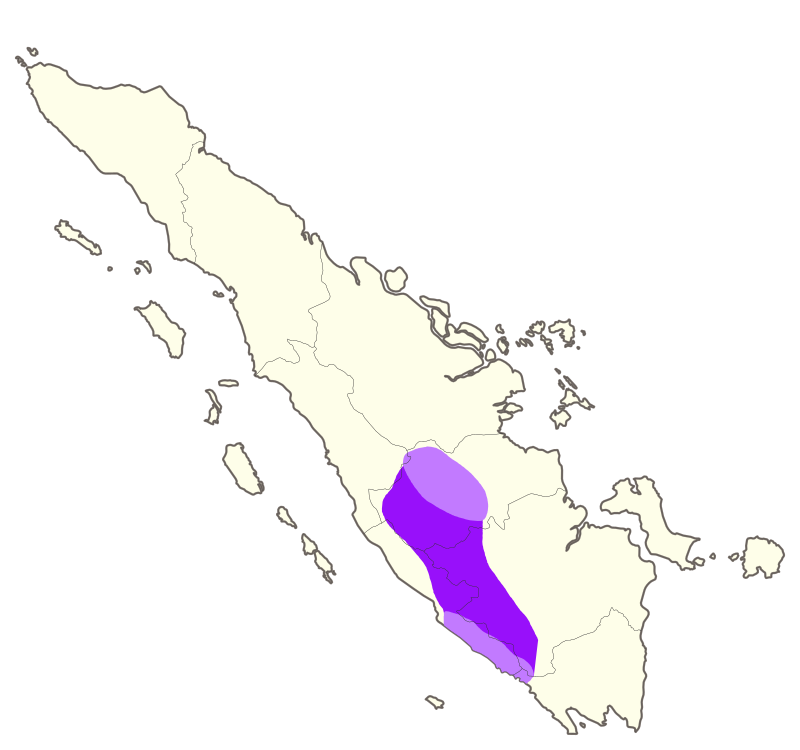
South Sumatra houses with sheet metal roofs (often with a dark rust-brown tone) are found in the interior, mountainous parts of the province, and can be found also in western Jambi.
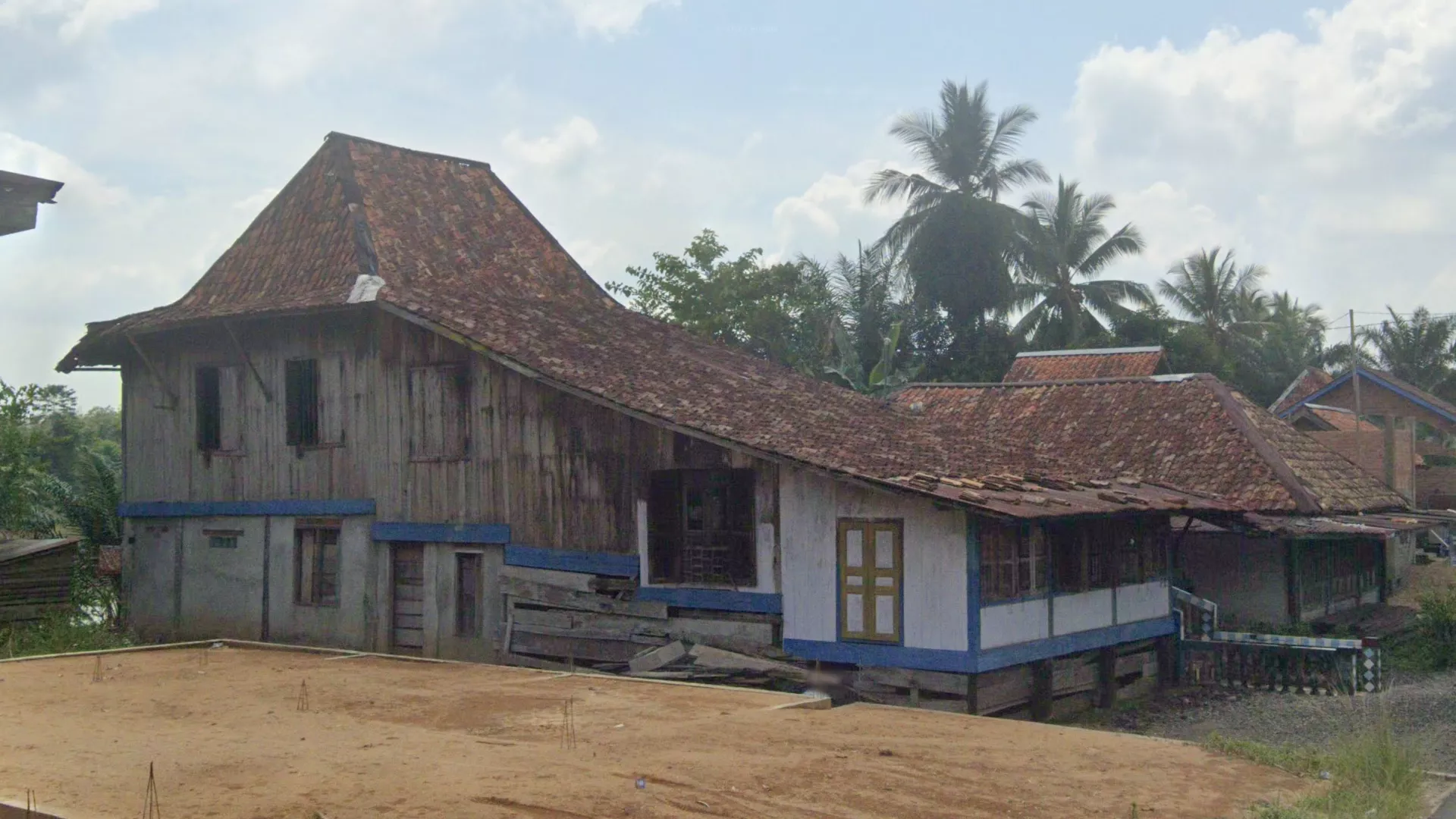
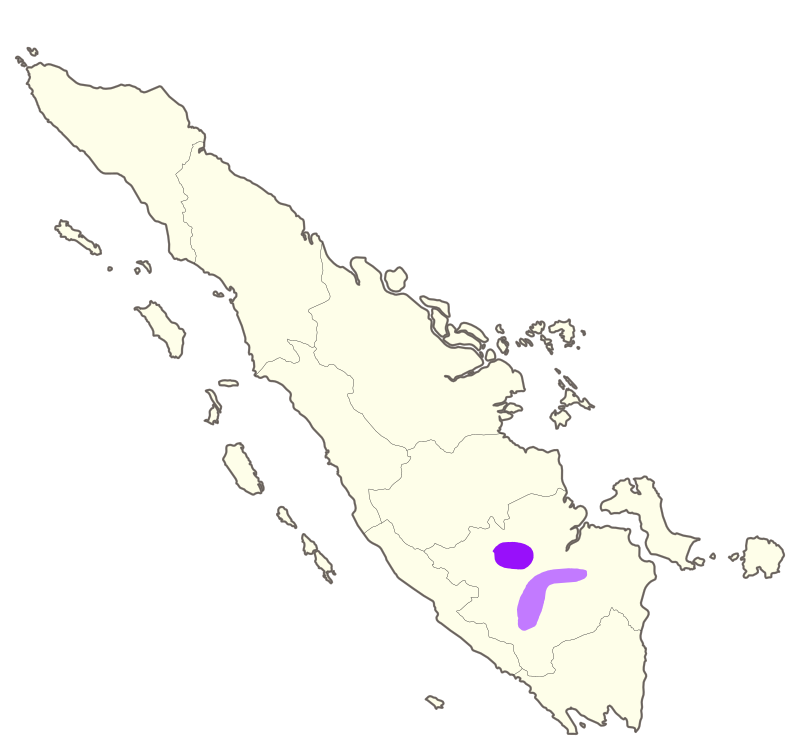
Limas houses are found in a narrow area in the Musi Banyuasin Regency. A characteristic feature of this house type is a top section that gradually descends forming a long street-facing extension.
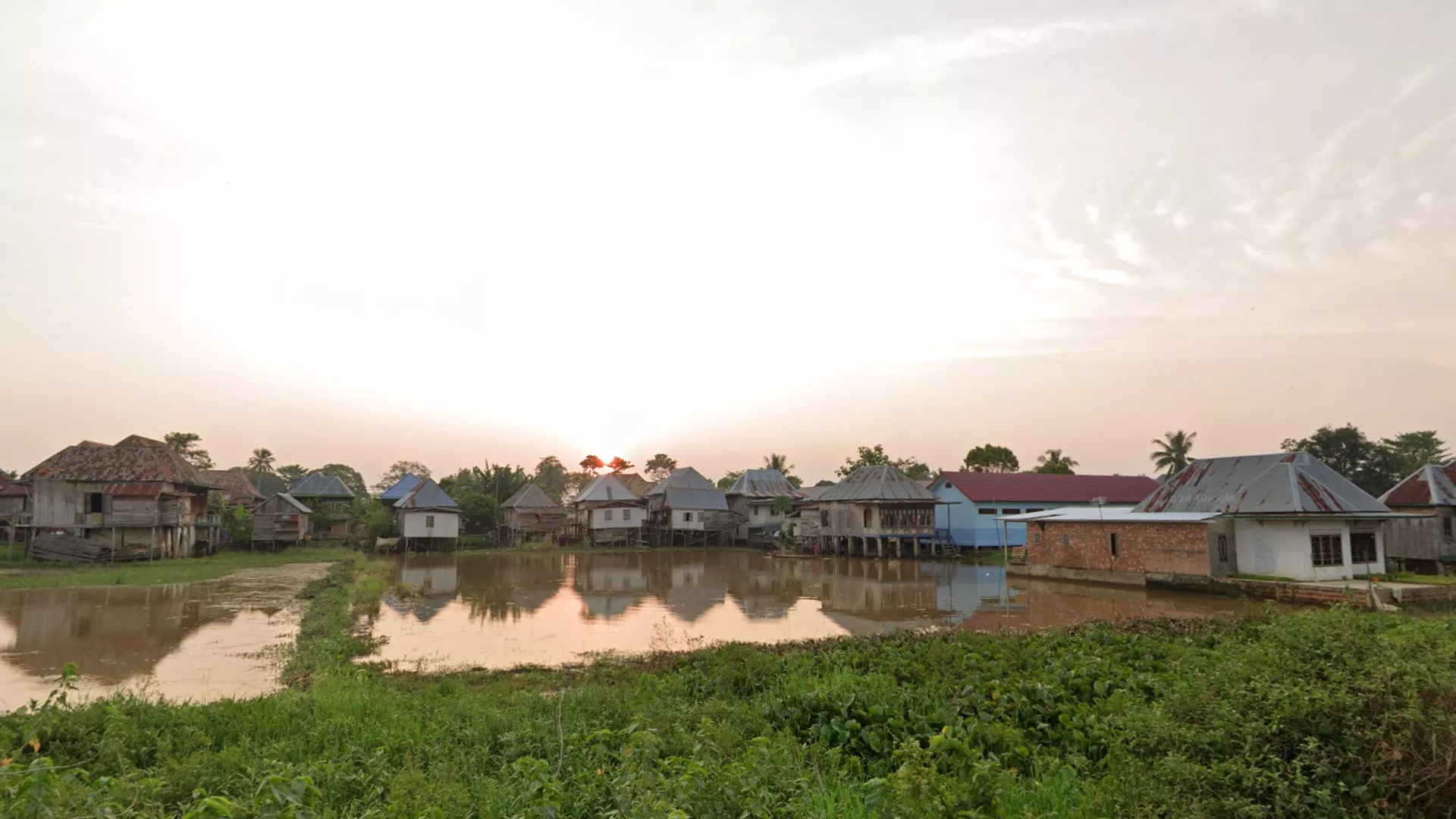
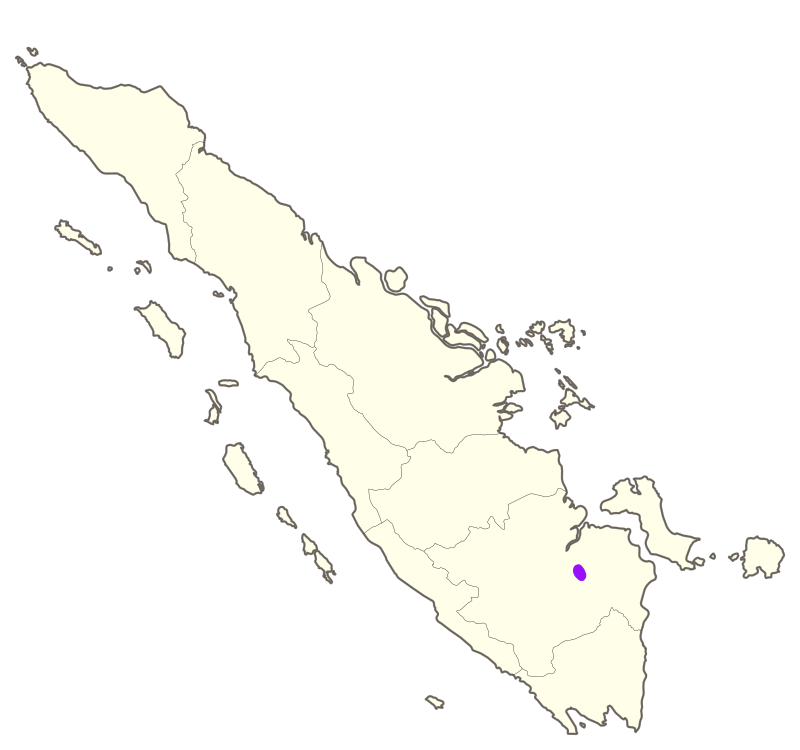
The area south of Palembang is full of swamps. Stilt houses with hip metal roofs are common here.
Bangka-Belitung
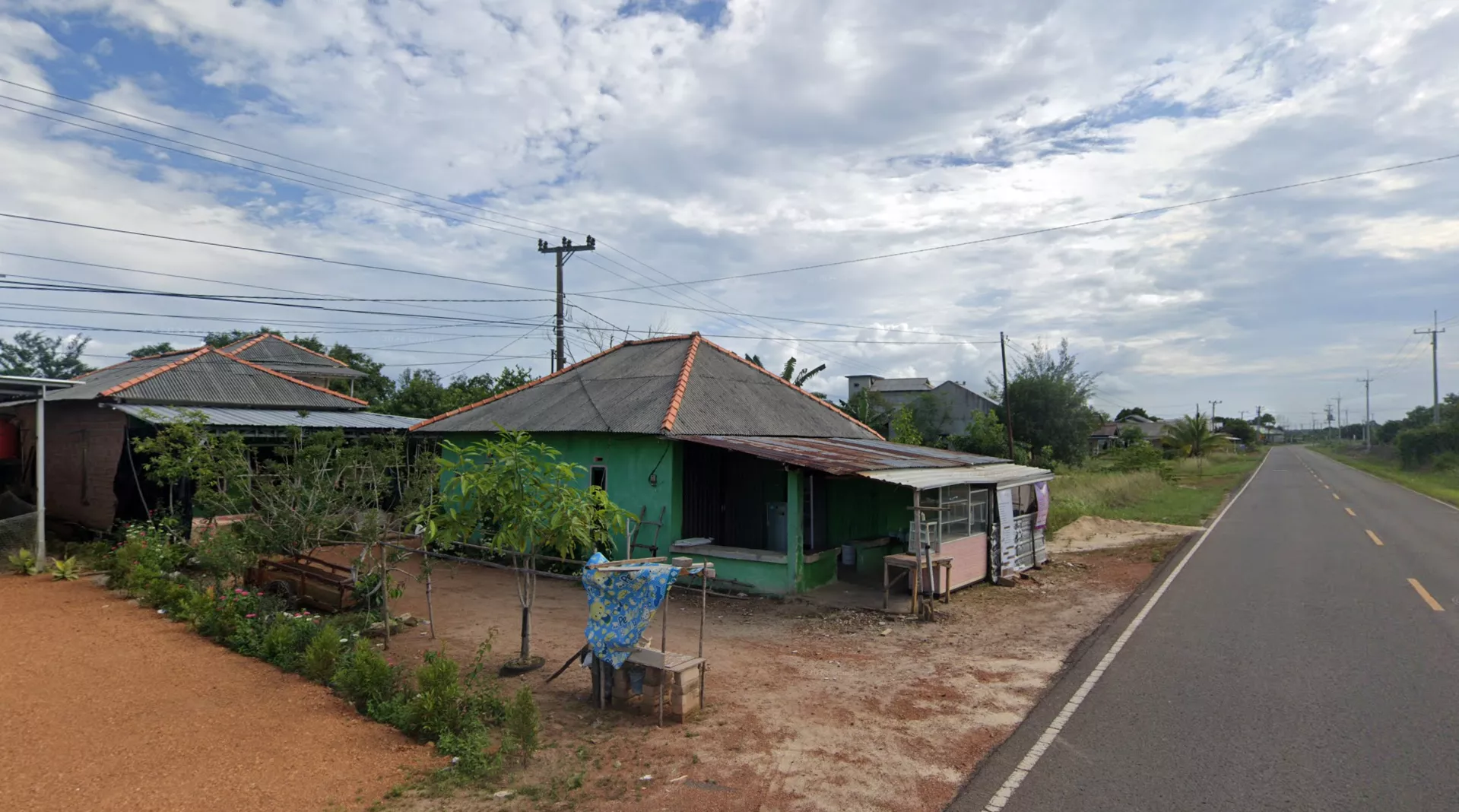
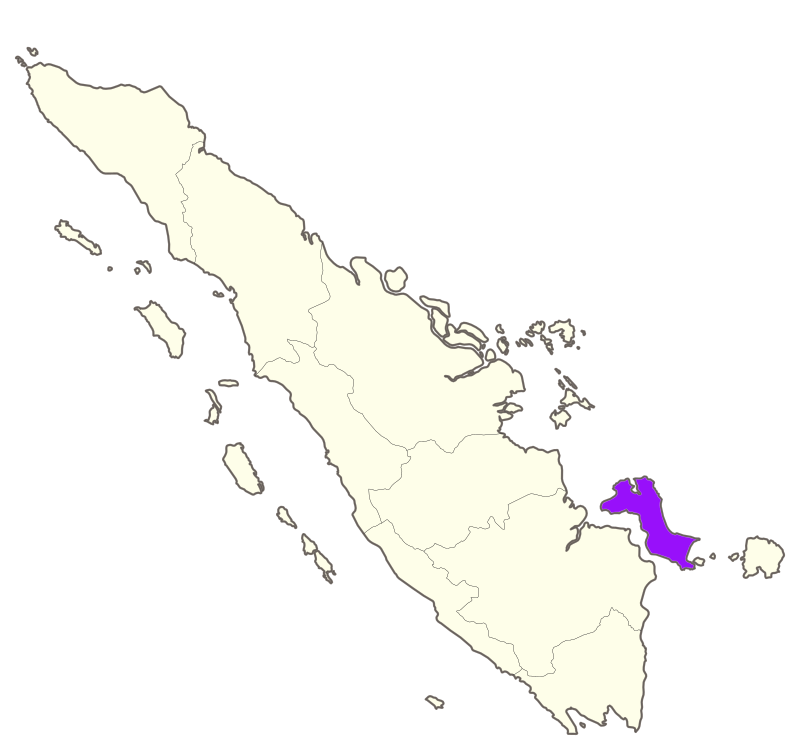
Red tiles along the edges of fibre cement roofs make houses on Bangka Island easily recognisable. Fully tiled roofs are also common.
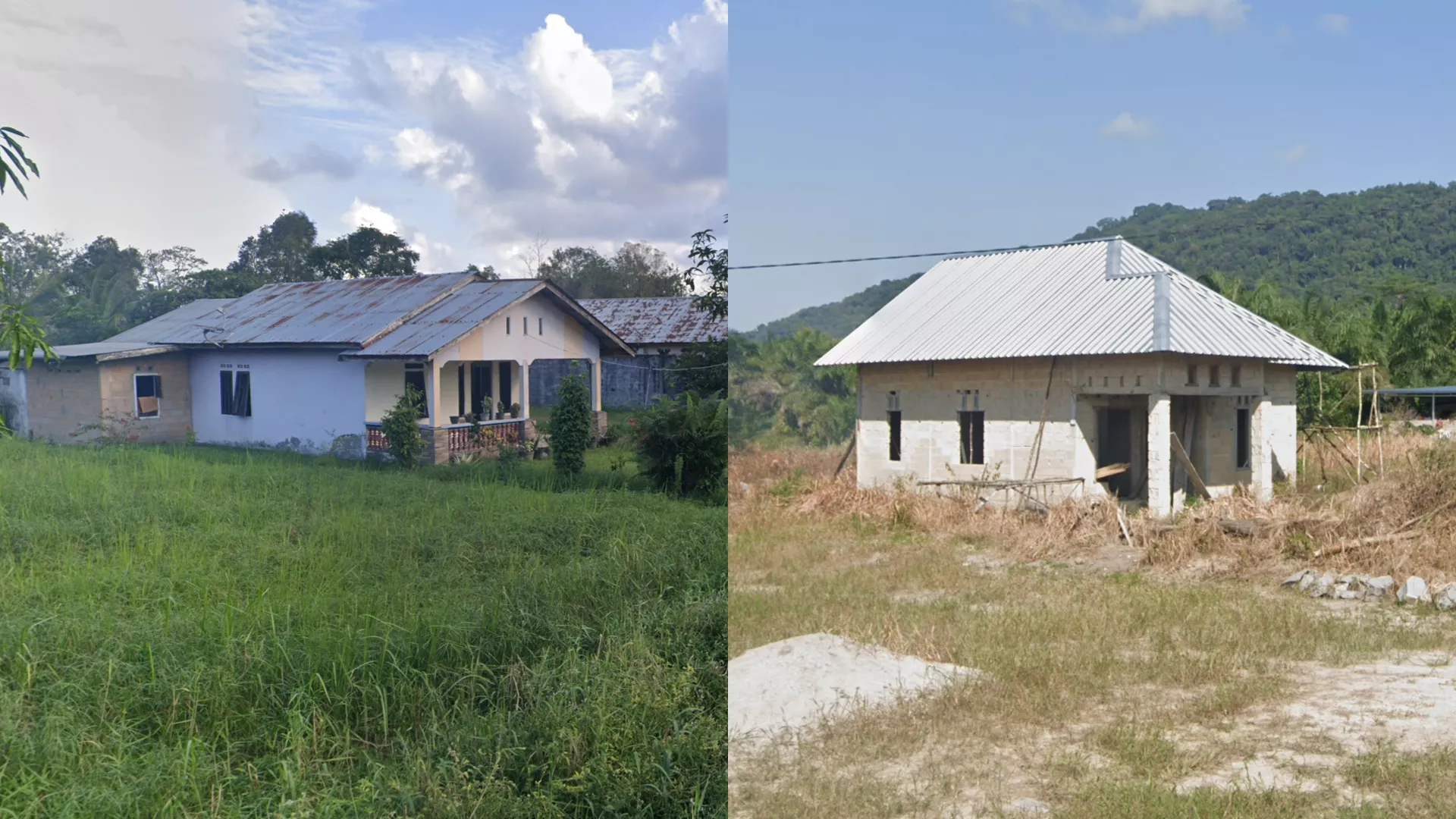
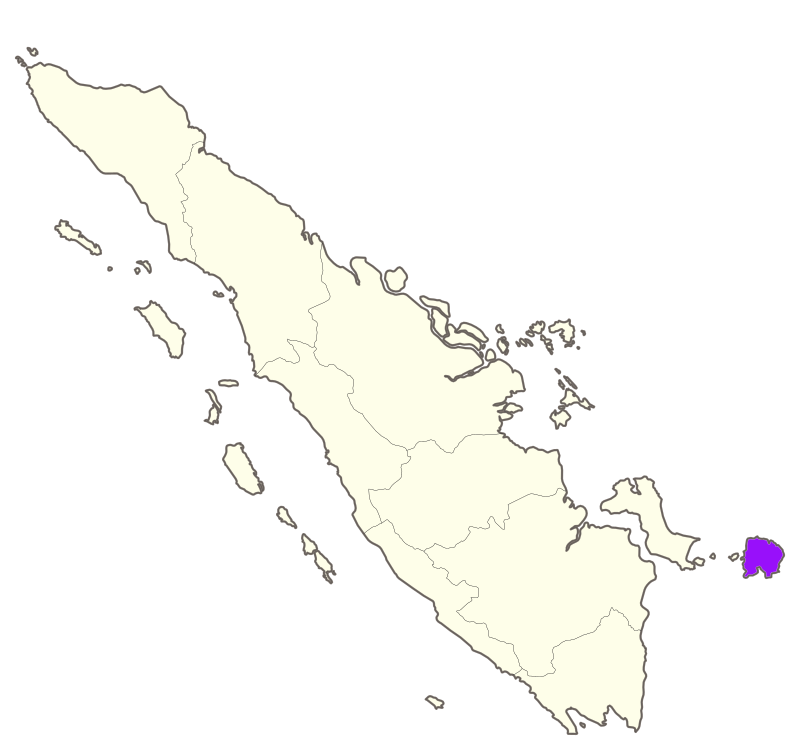
Belitung Island, on the other hand, mainly has sheet metal roofs, which can be either a fresh silver colour or show signs of rust. Modern dwellings often have silver-coloured sheet metal roofs with wide grooves, similar to those often found on Sumbawa.
Bengkulu
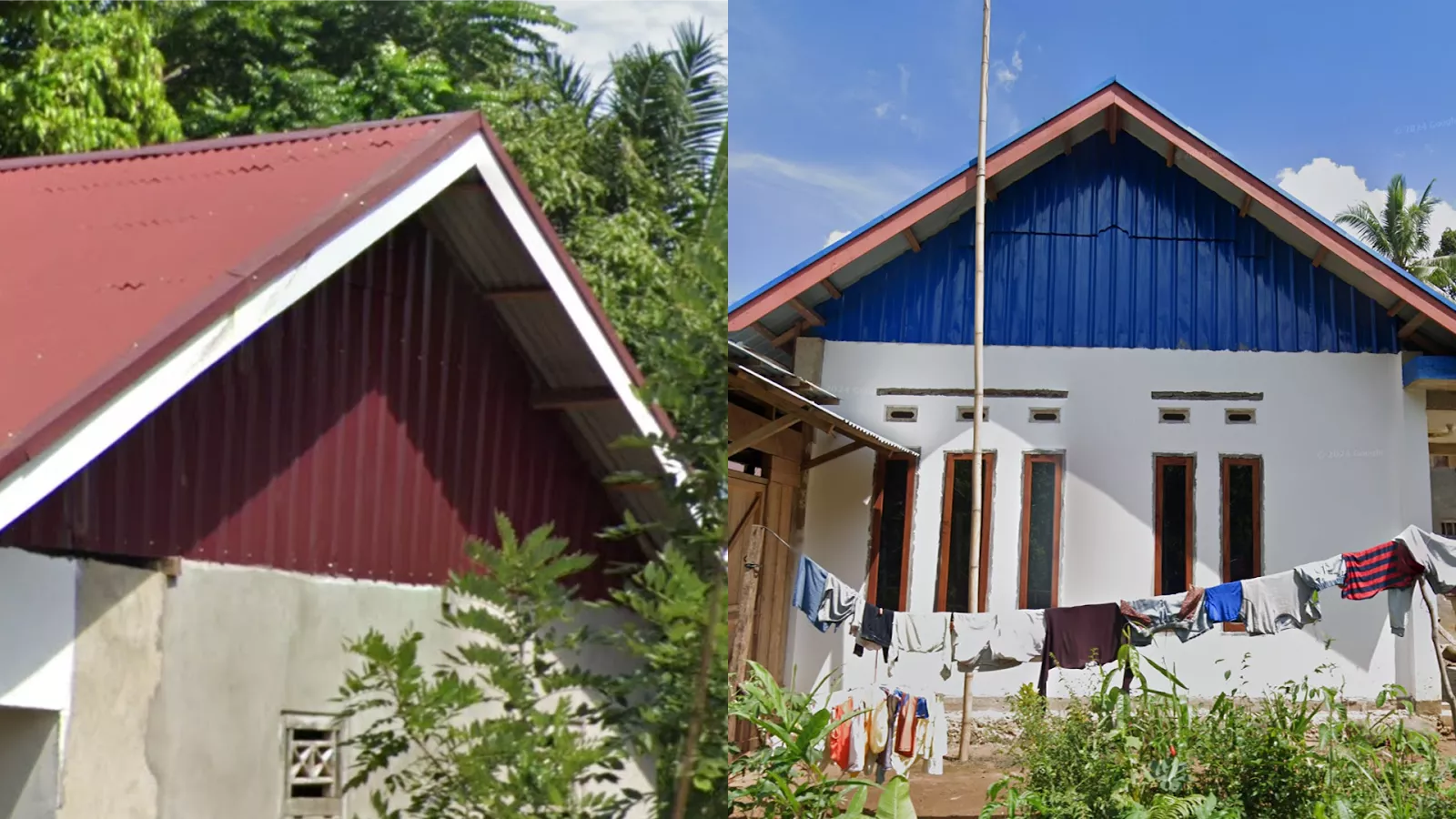
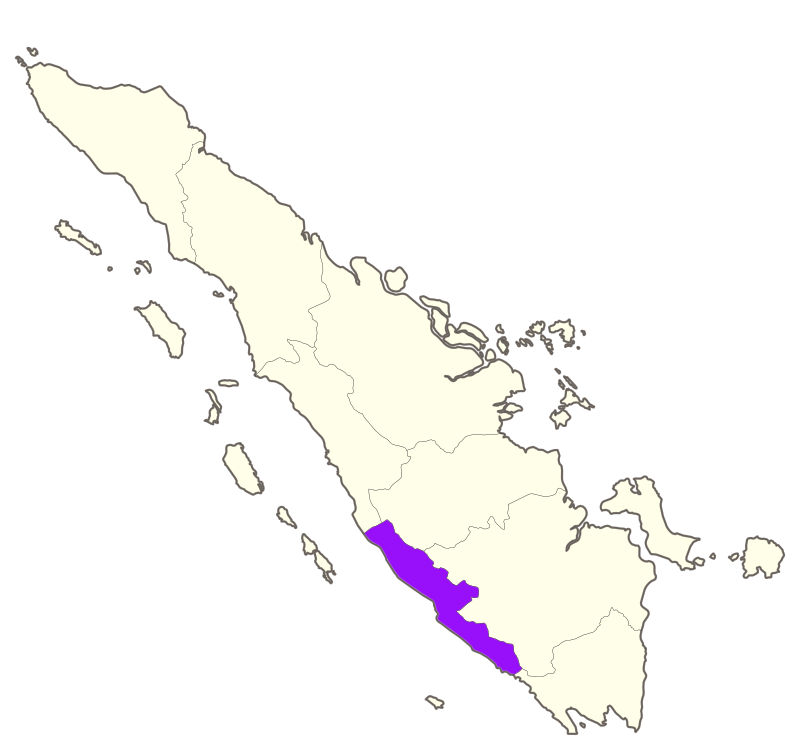
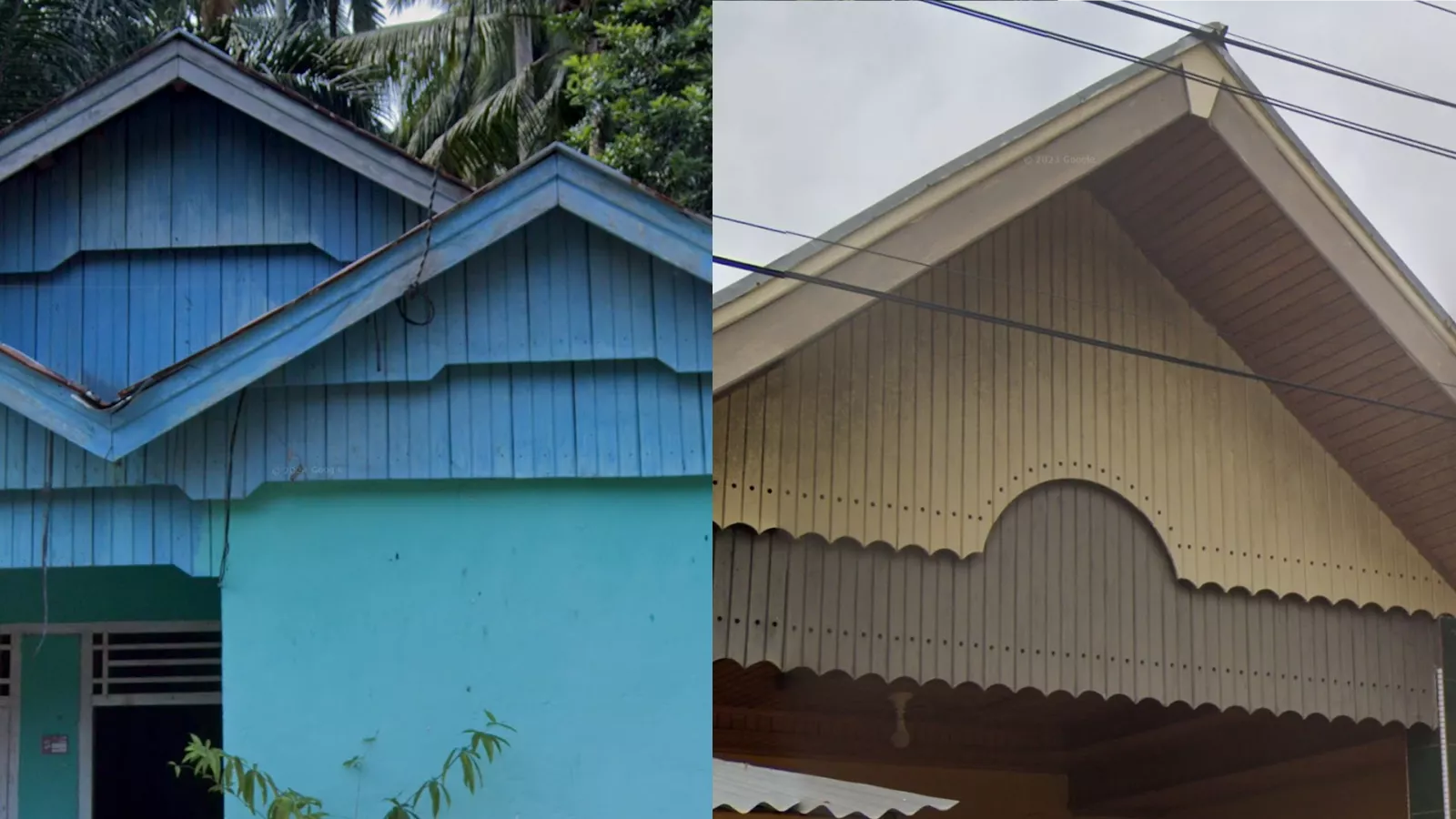
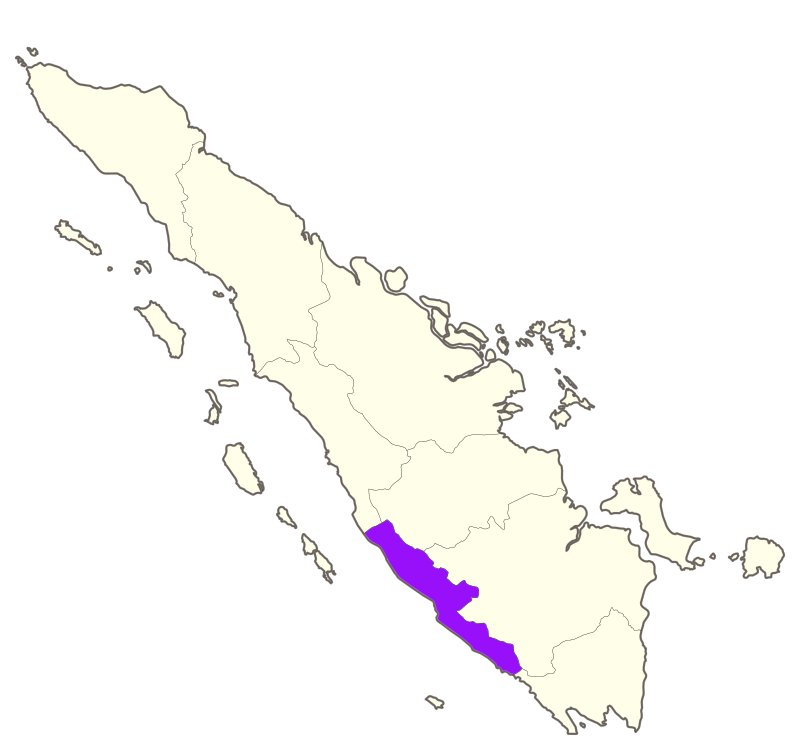
Gables in Bengkulu are also frequently multi-layered, with notches or semi-circle patterns in the top layer. Similar notches specifically can rarely occur in other regions such as North Kalimantan and West Sulawesi.
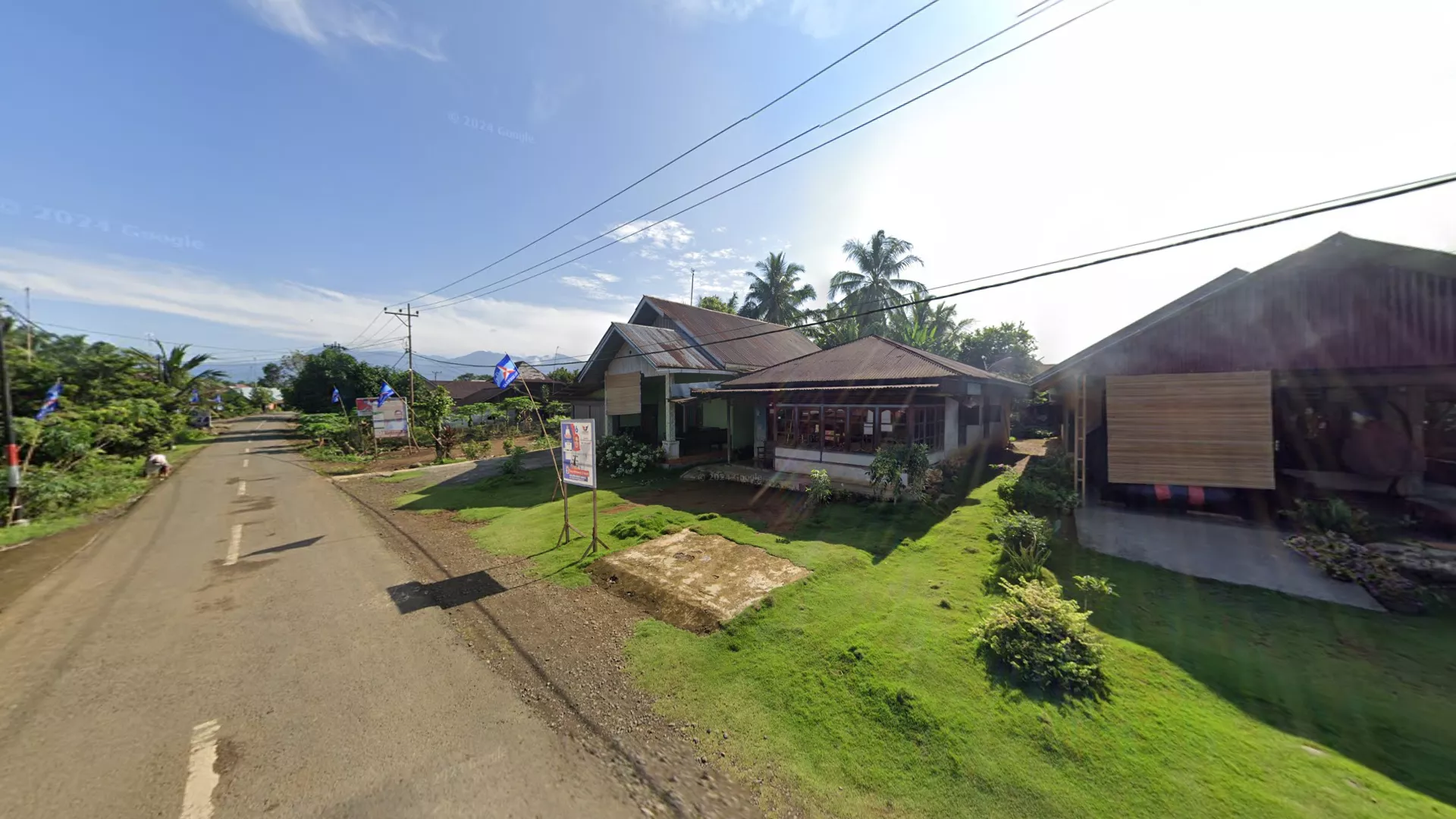
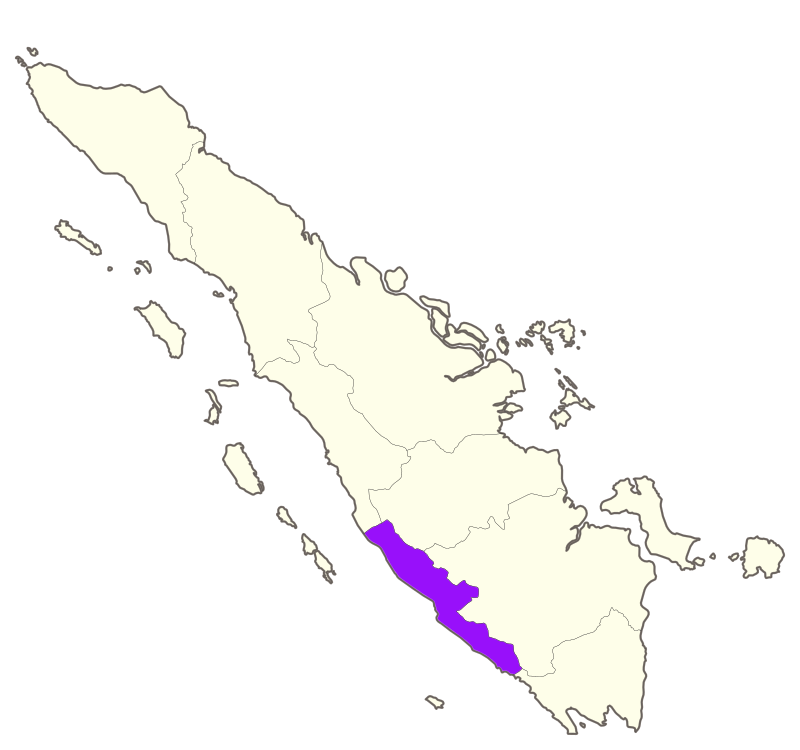
In Bengkulu you can often find front gardens covered with moss-like lawns.
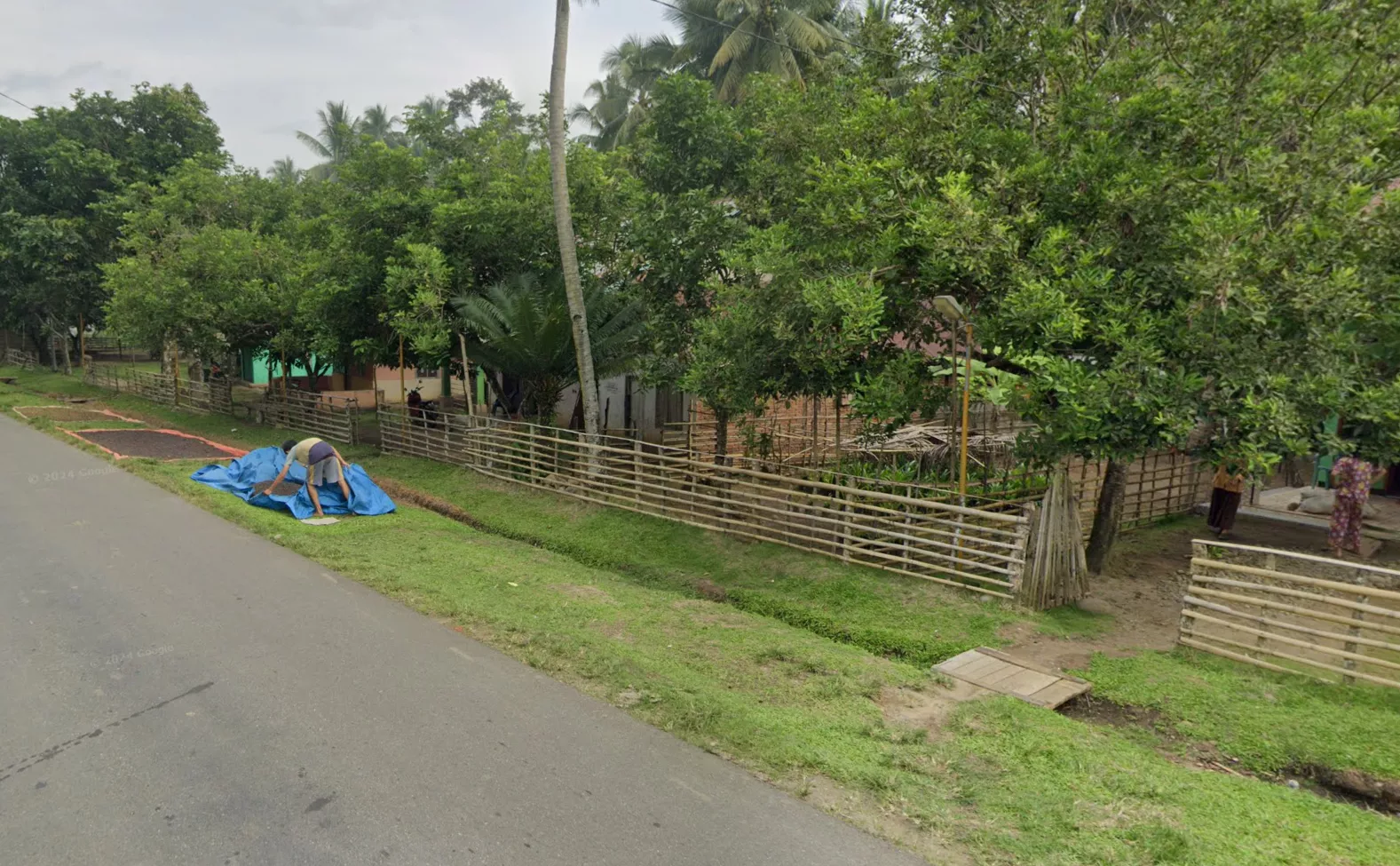
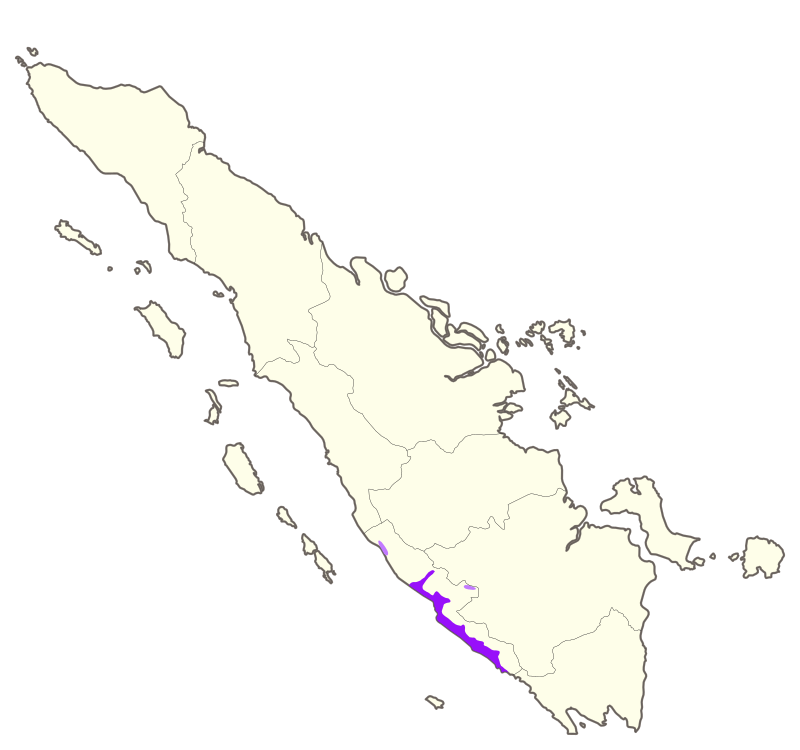
Conspicuously long bamboo fences, usually laid horizontally, are commonly used to demarcate properties within villages in Bengkulu, and are also frequently found in rural areas. Vertically oriented bamboo fences are also common.
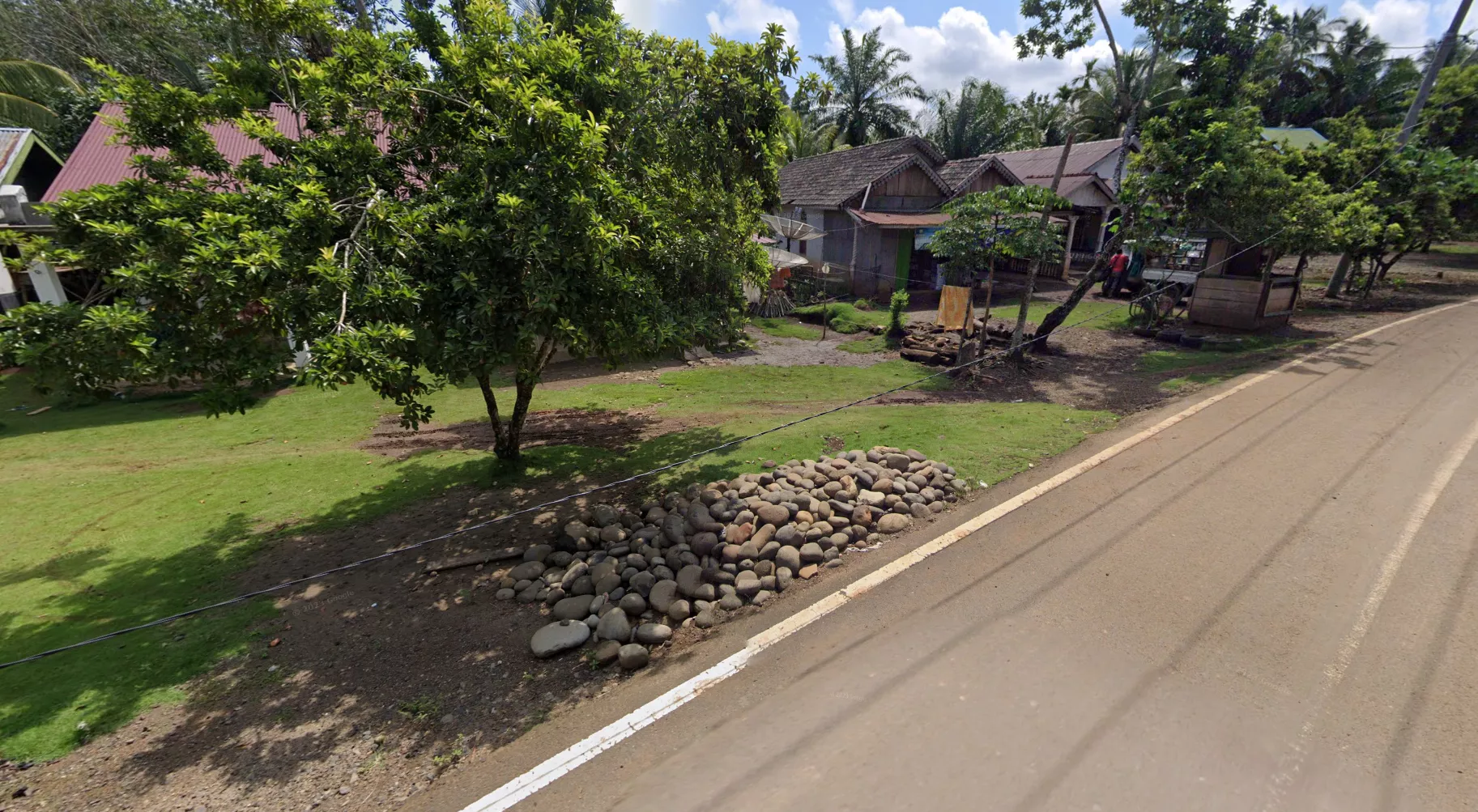
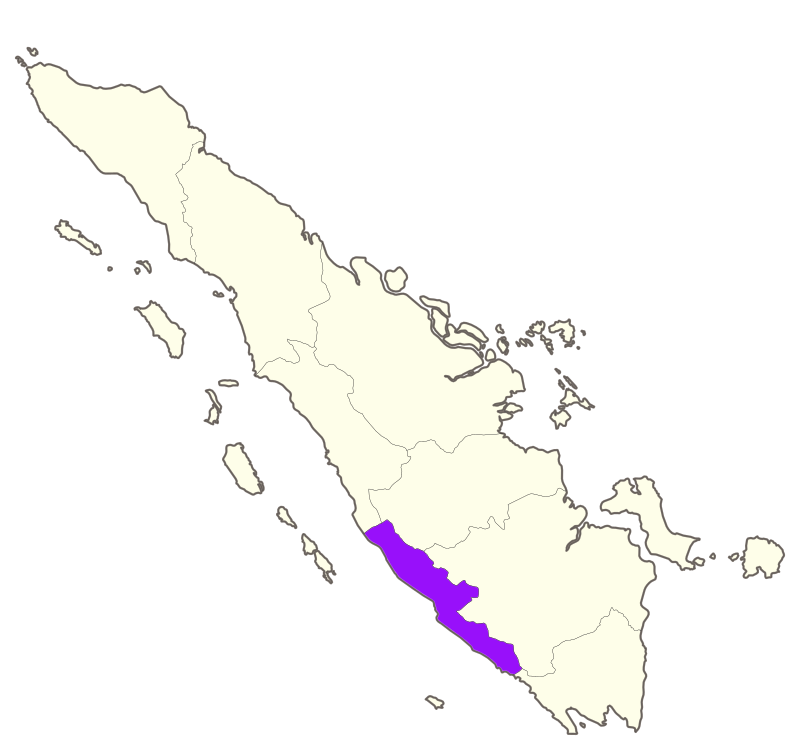
Loose piles of stones are common in Bengkulu villages. Combined with the moss gardens this can be a good indication of the province.
Jambi-Riau
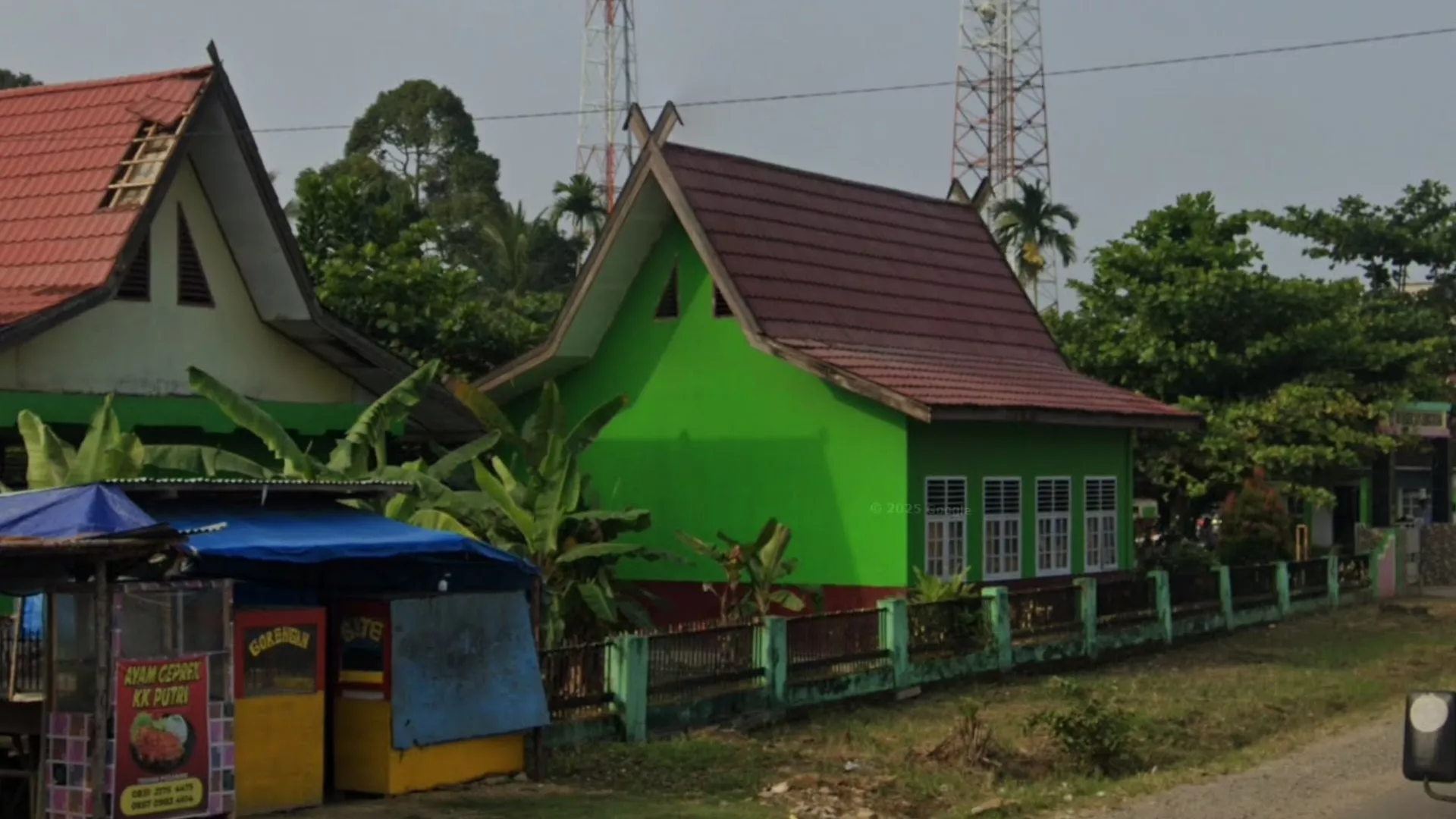
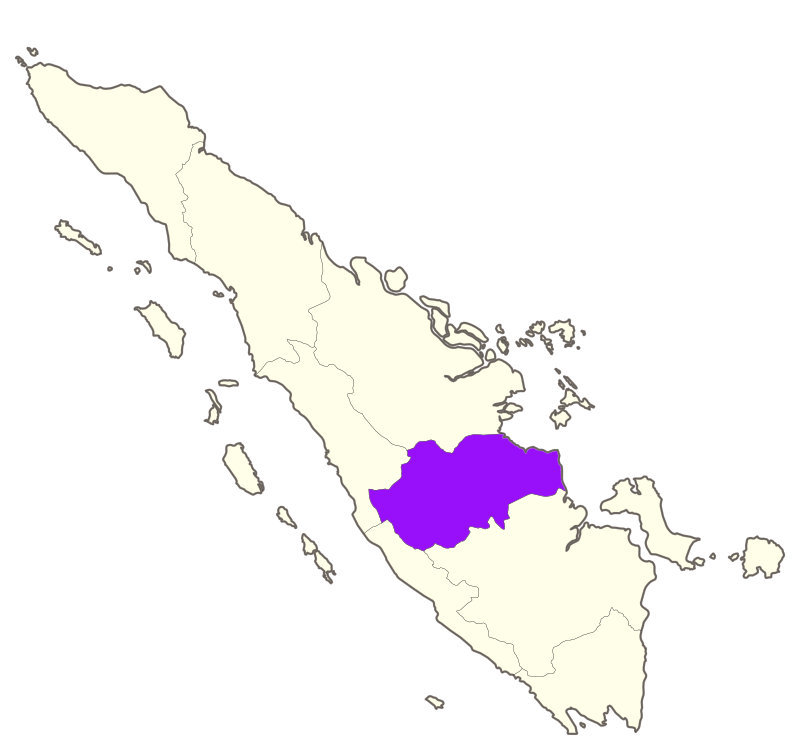
In Jambi, you'll commonly find pointy saddle roofs, consisting of a steep top part and a more shallow flap. These often have simple X-shaped or hook-shaped gable horns attached.
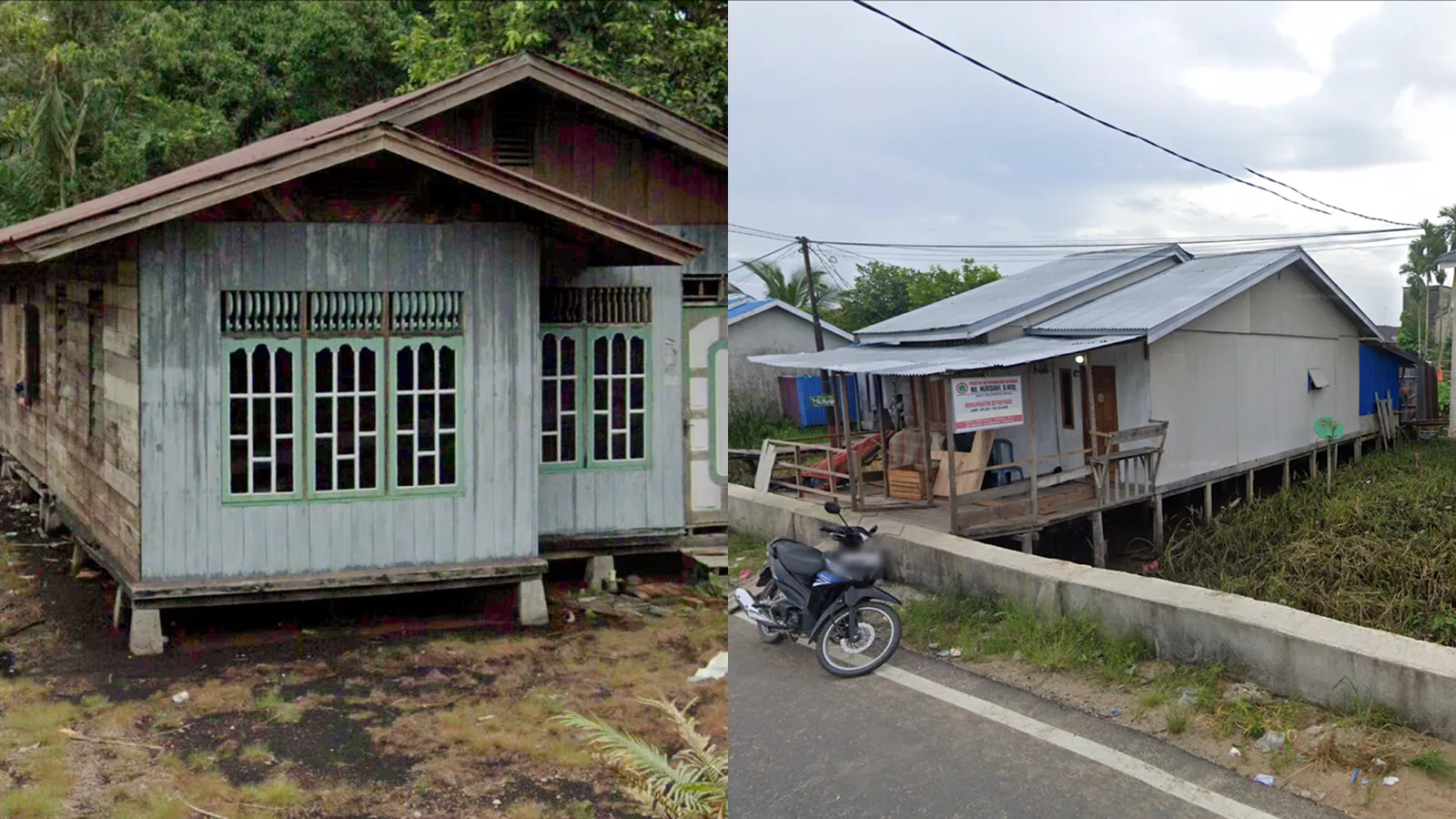
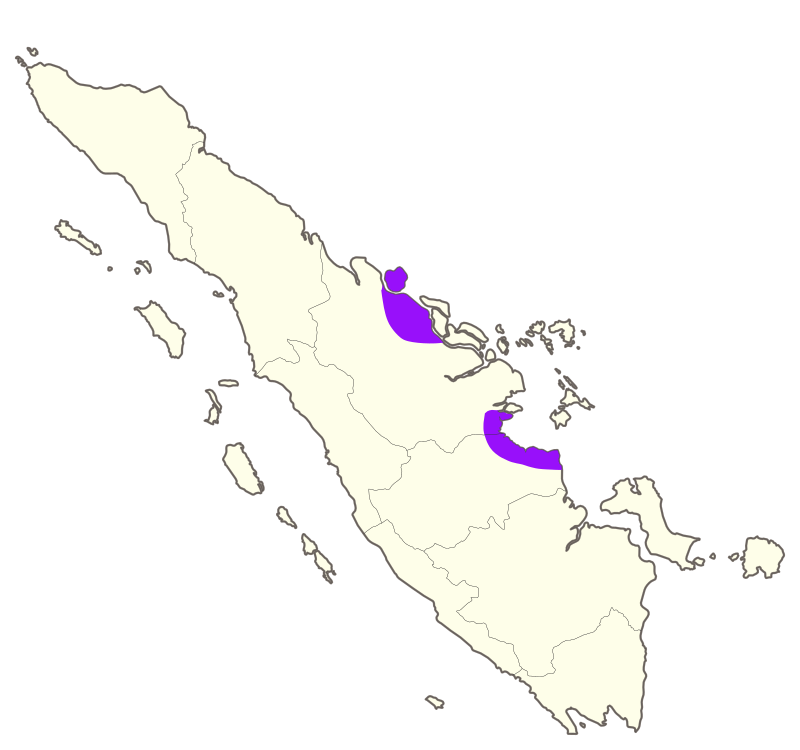
In coastal areas of north-east Sumatra (mainly Riau and Jambi), you can find low-stilt houses. In the north they are usually elevated by concrete frustums while wooden stilts are found further south.
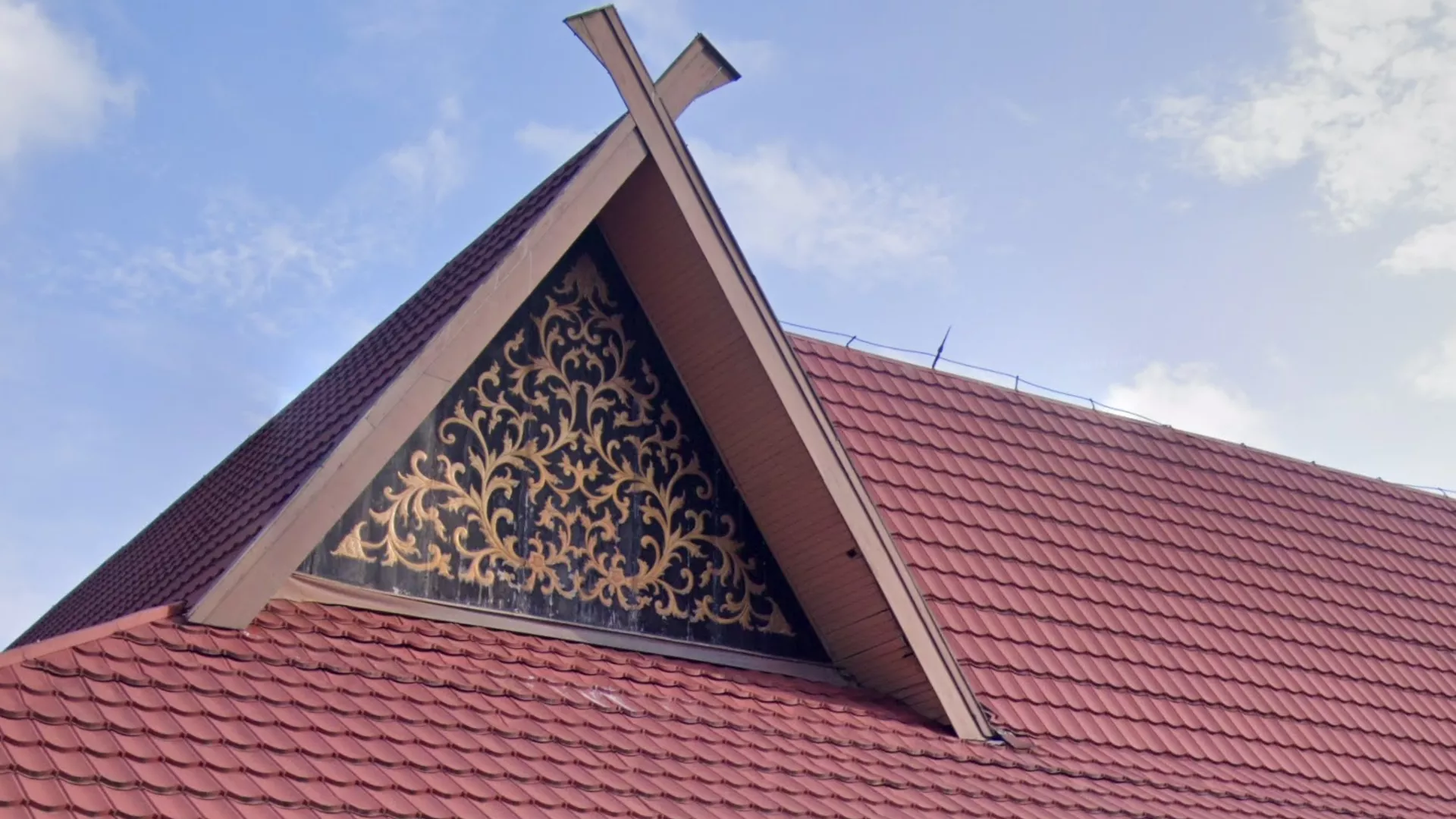
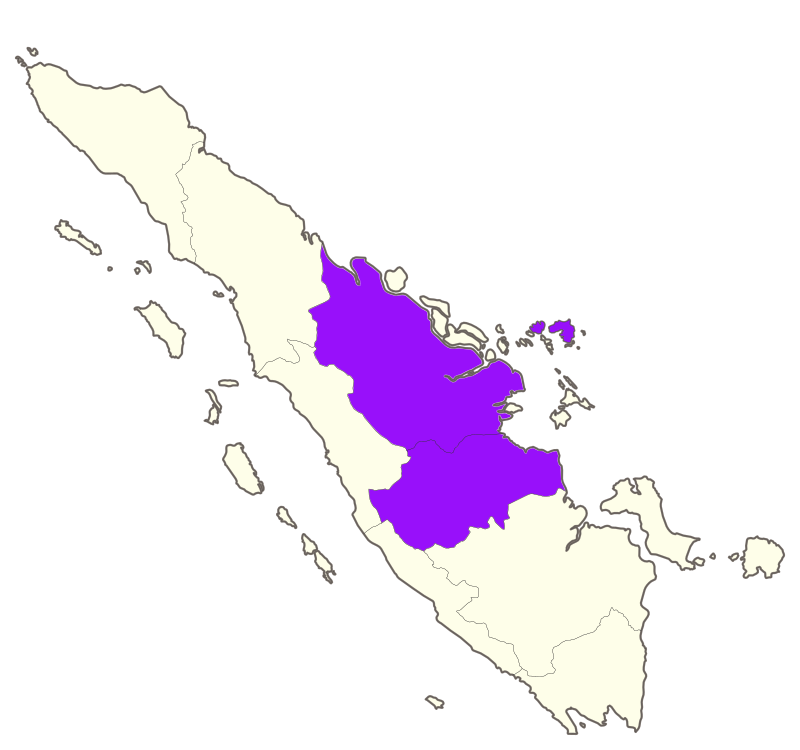
In Jambi, Riau and also Batam and Bintan, intertwining floral patterns on house gables are common.
West Sumatra
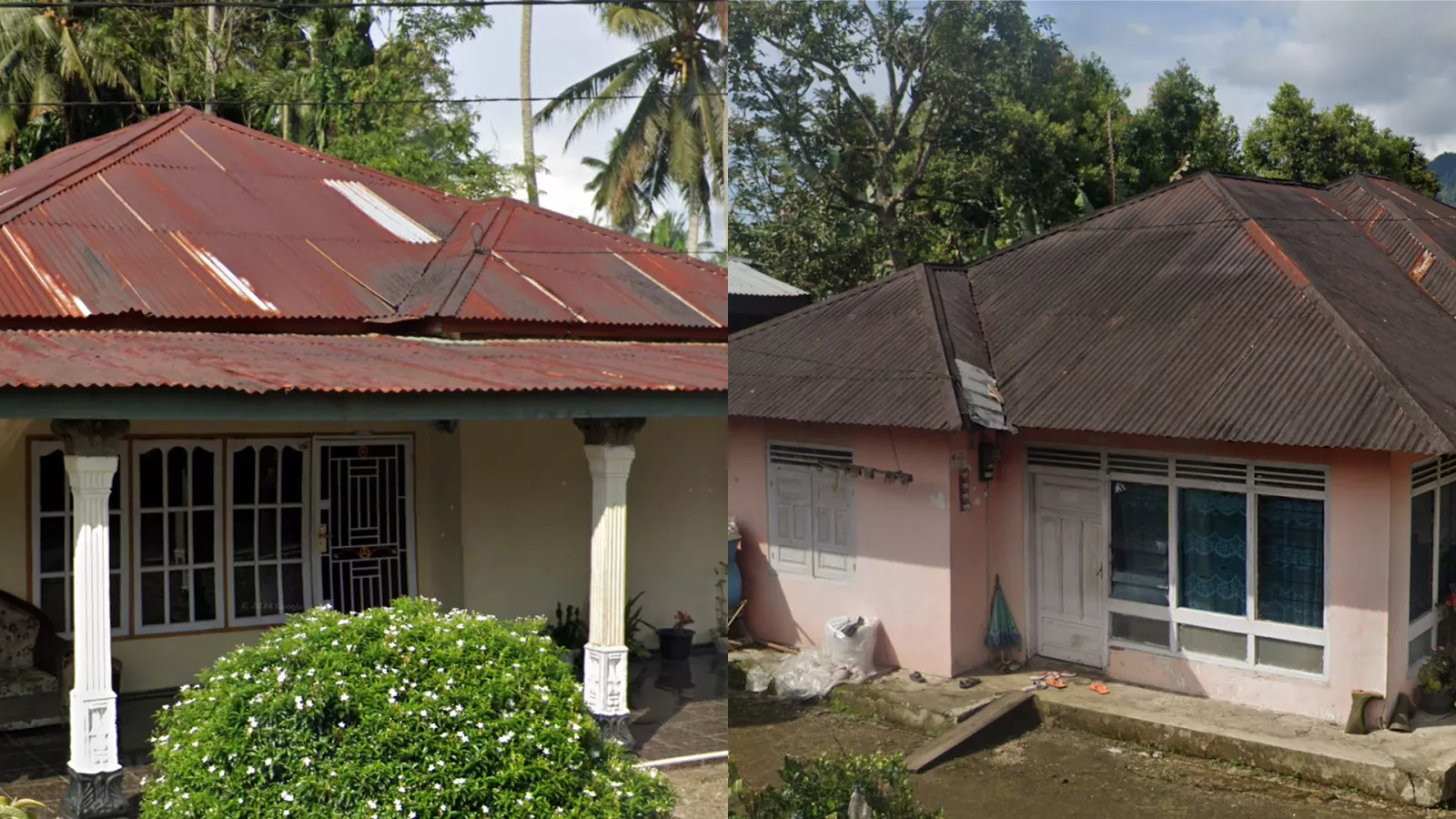
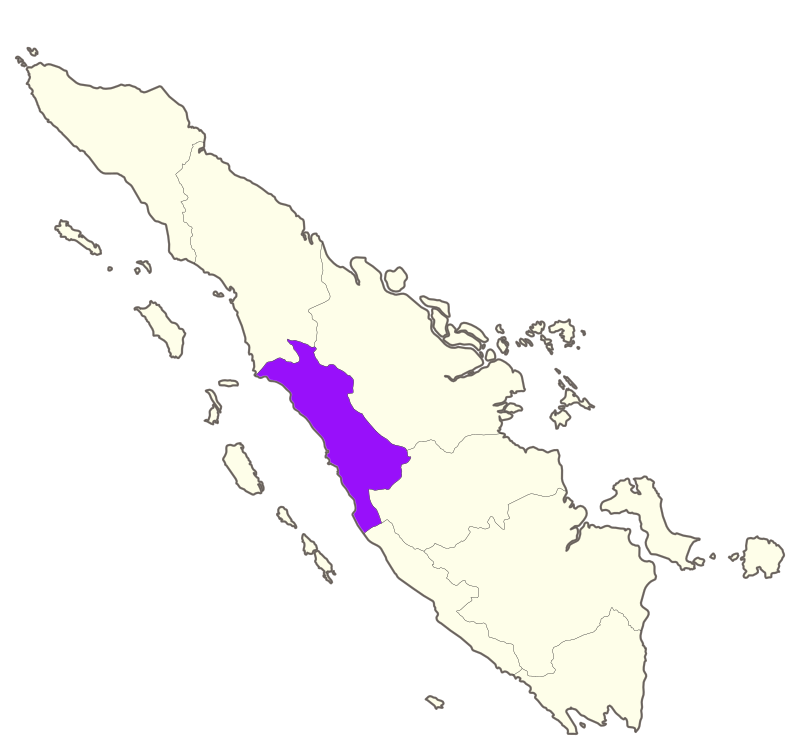
Roofs in West Sumatra are typically low, hipped, and have a dark rusty colour, often with multiple trapezoid sections.
North Sumatra
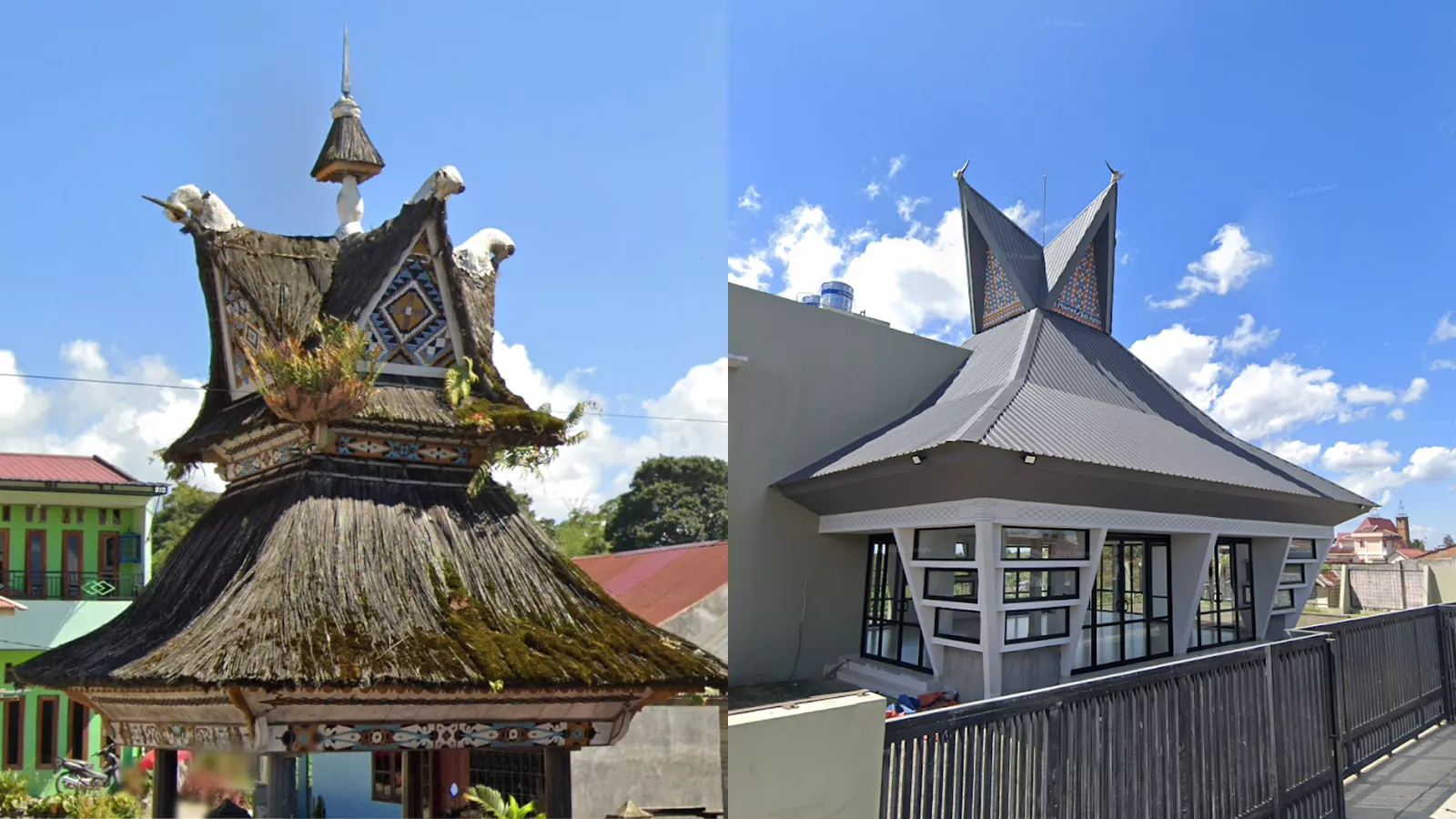
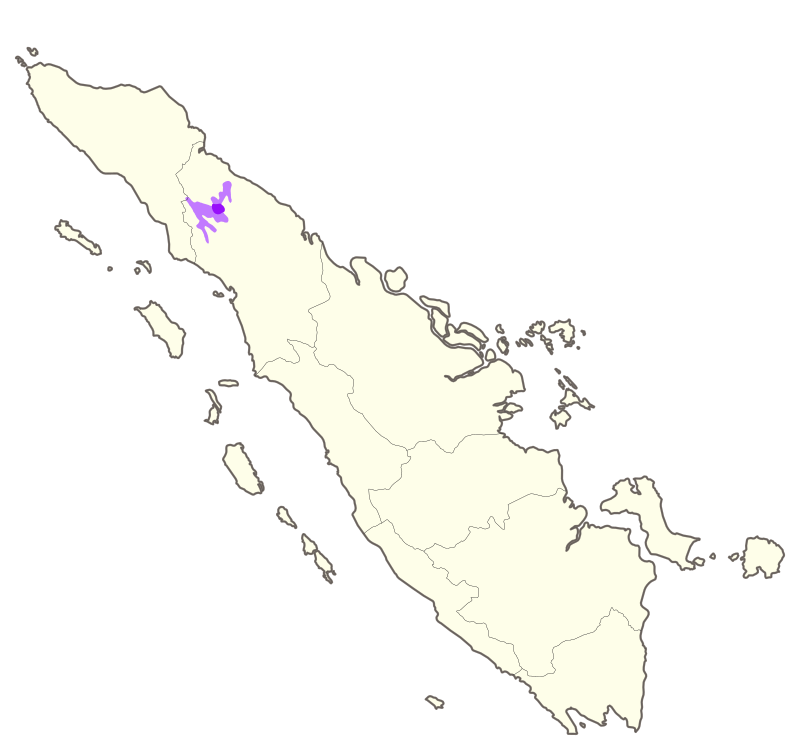
The Batak Karo people in the north of North Sumatra province often construct houses with unique, highly ornate crowns, consisting of four-way gables topped off with buffalo head finials. Both modern and traditional varieties of this design exist.
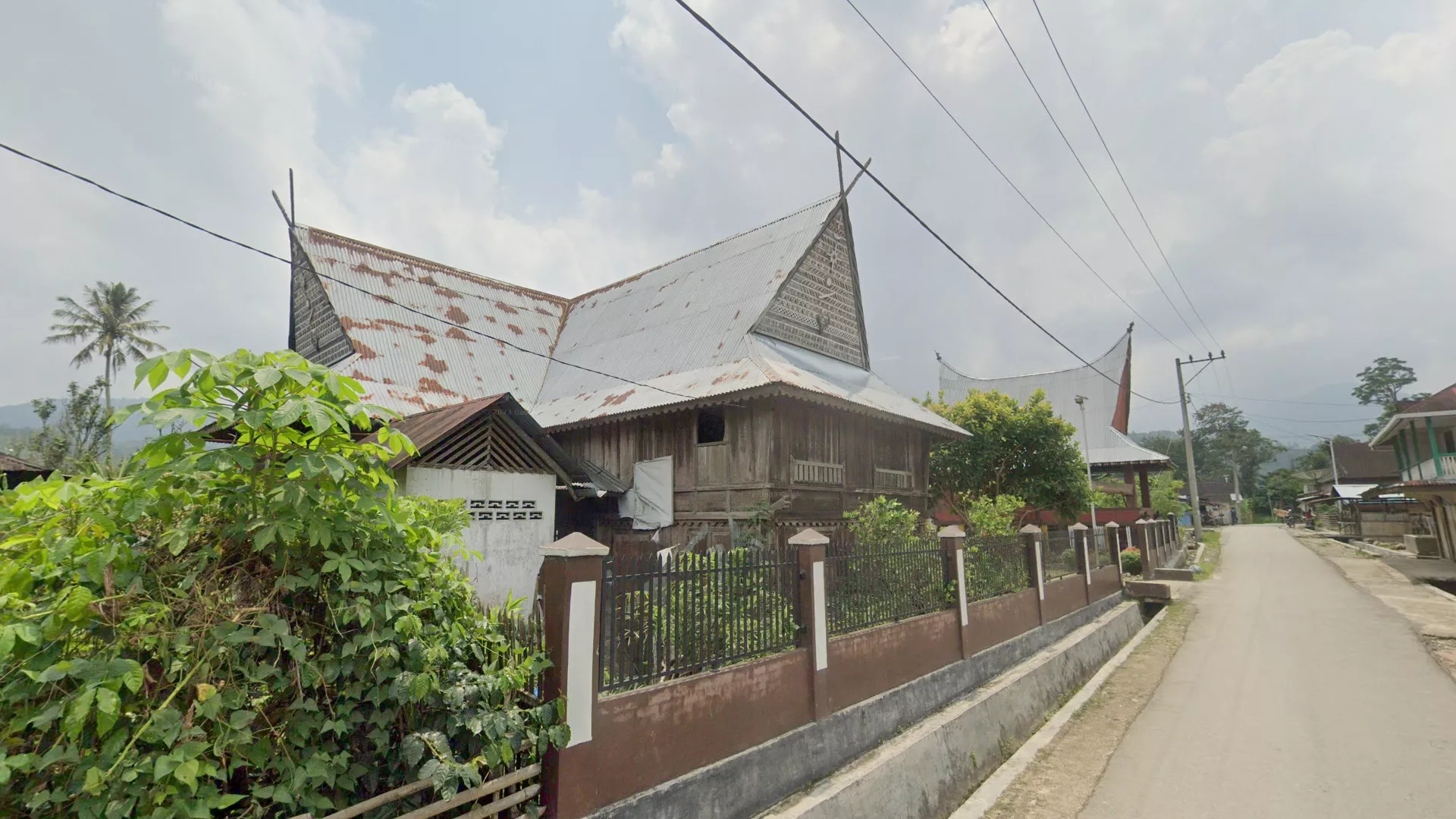
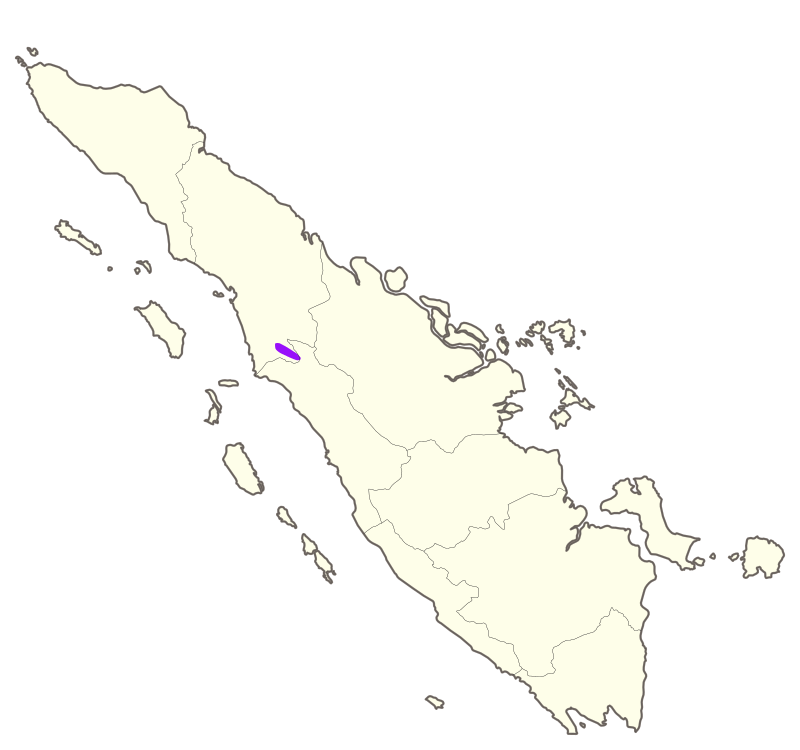
In Mandailing Natal Regency, you will find houses with ornate gables and strikingly long gabled horns on large roofs. These are called Bagas Godang Panyabungan Tonga and are associated with the Batak Mandailing people.
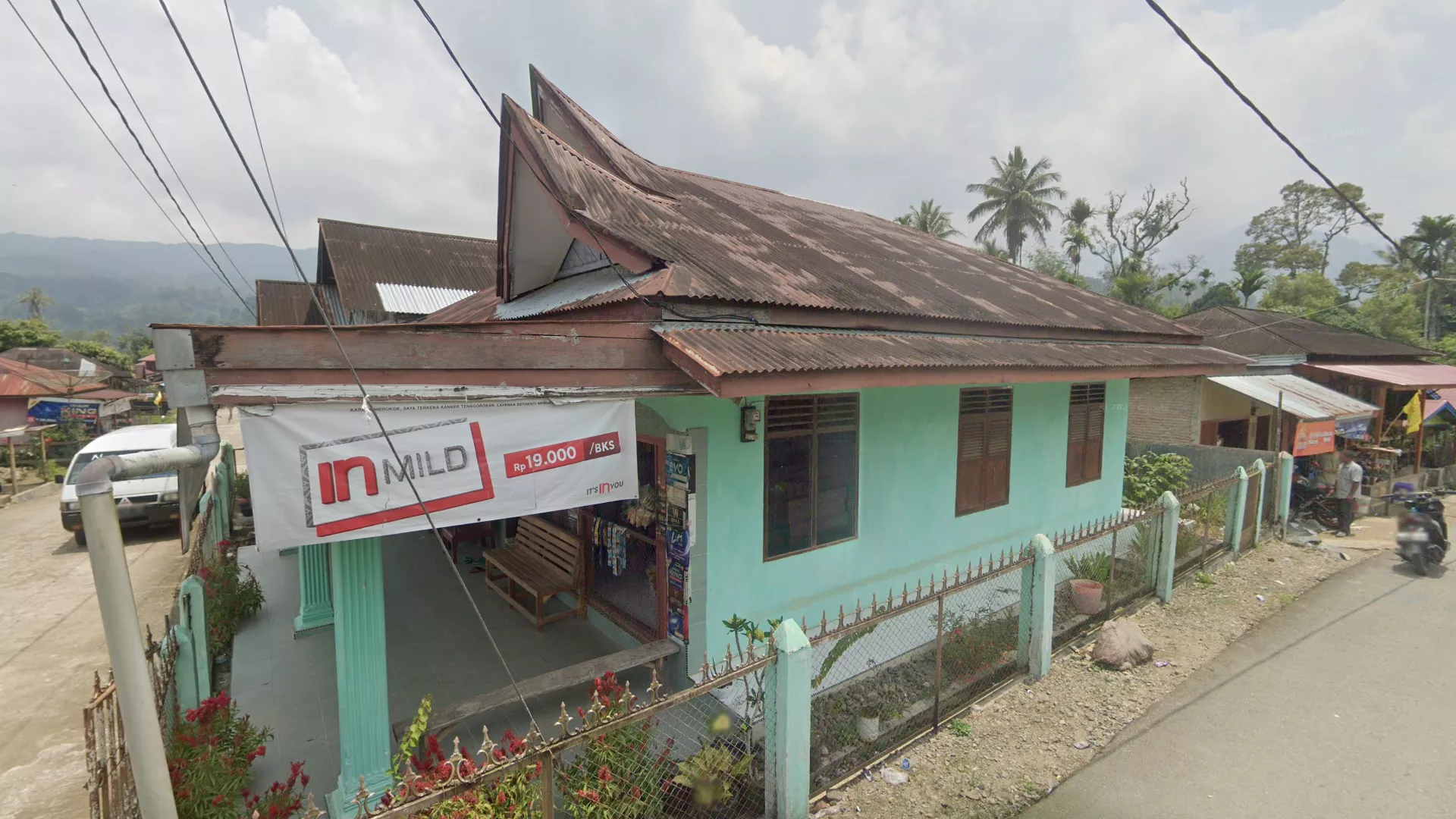
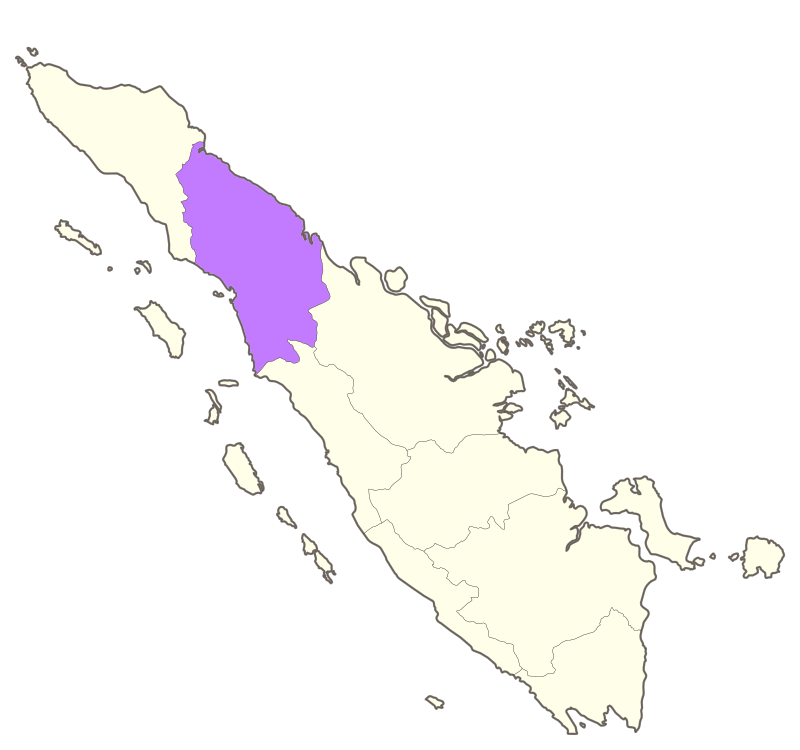
Smaller structures in North Sumatra will often feature a variation of the gable design with a jagged boat roof, as opposed to the smoother curve. The rising section can be found on one or both ends of the roof.
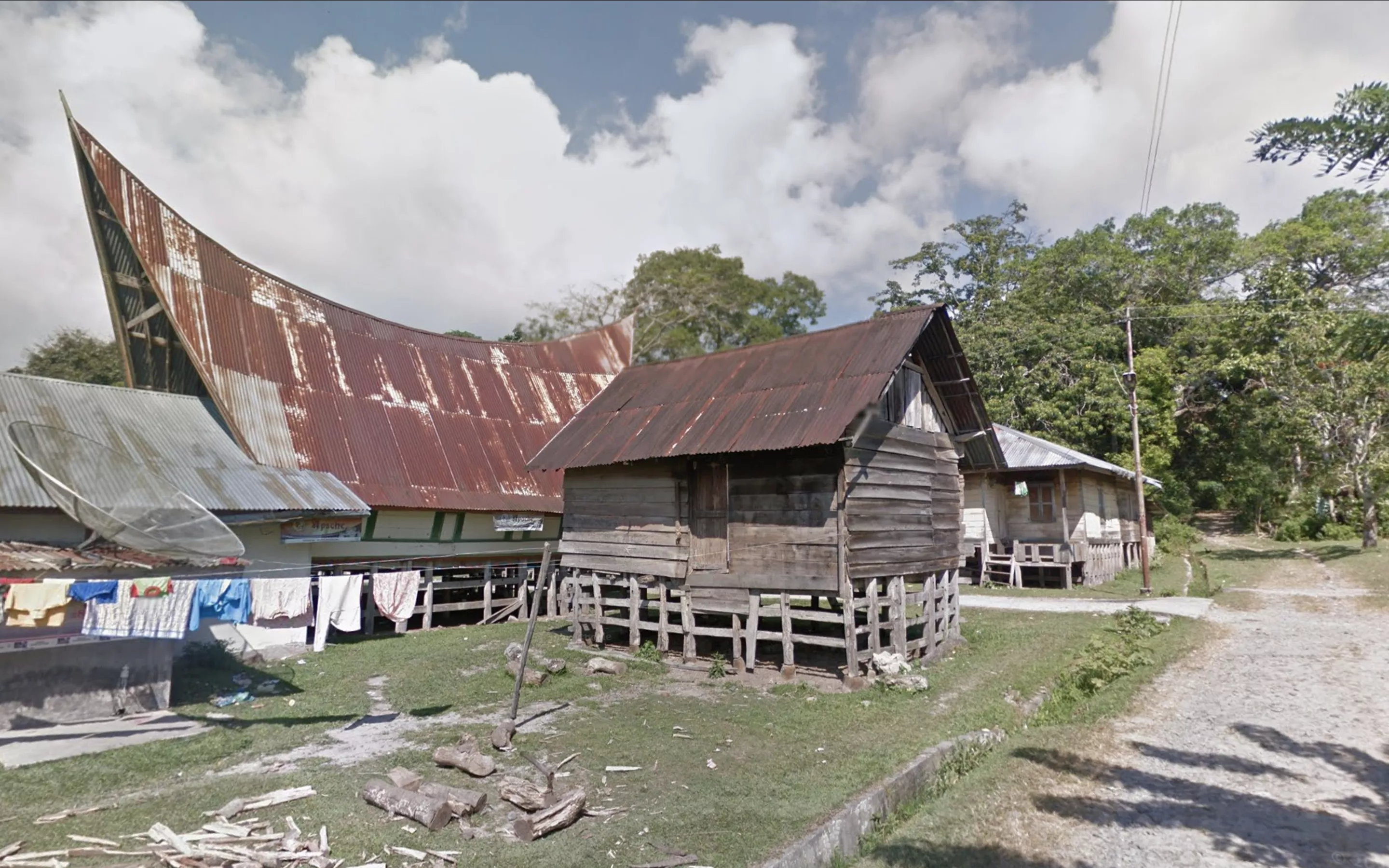
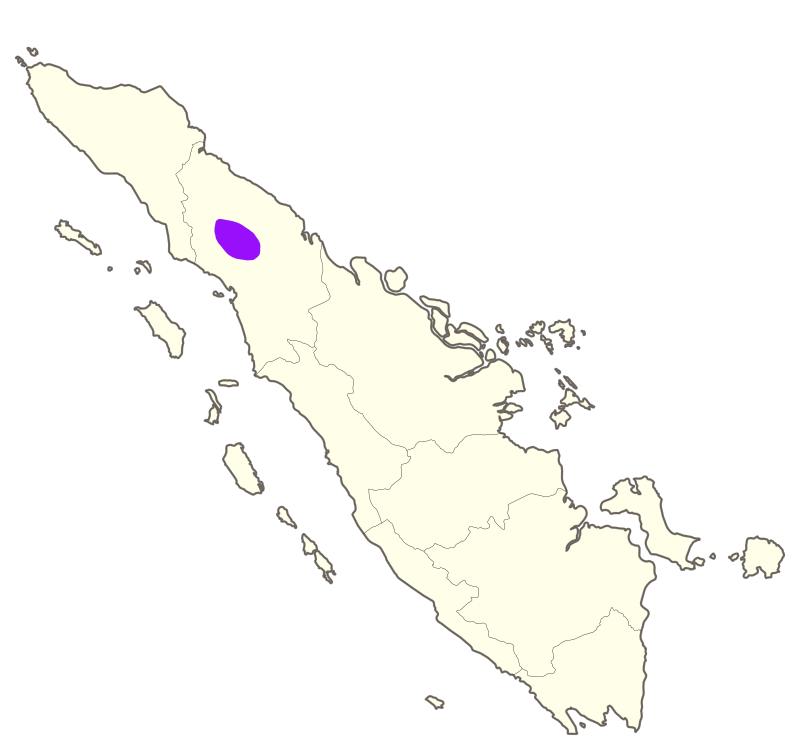
In addition to the traditional Batak Toba boat-shaped houses, there are also palm-wood houses in the Toba area, particularly on Samosir Island. Some of the houses have highly recognisable criss-crossed stilts, while others have foundations.
Aceh
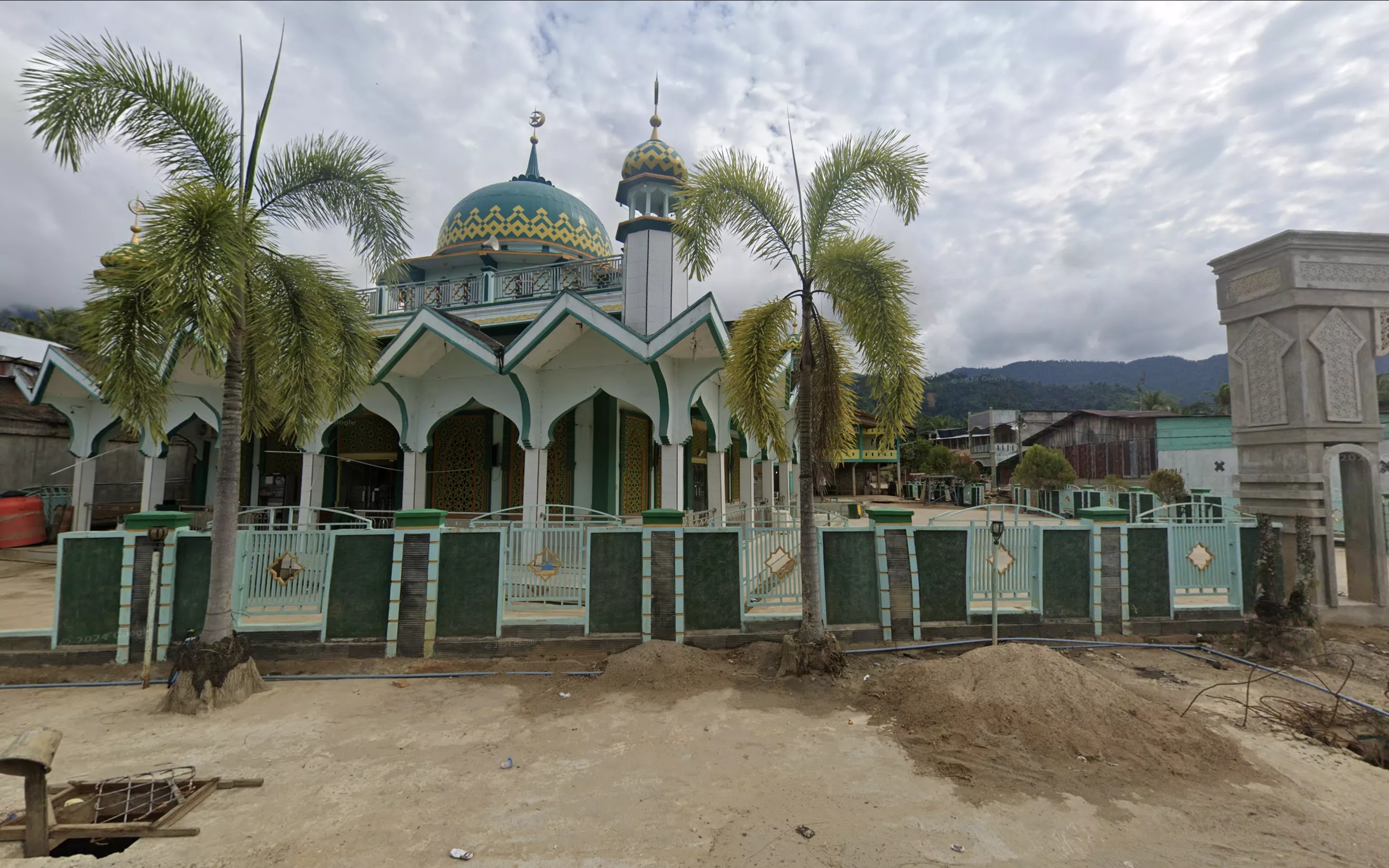
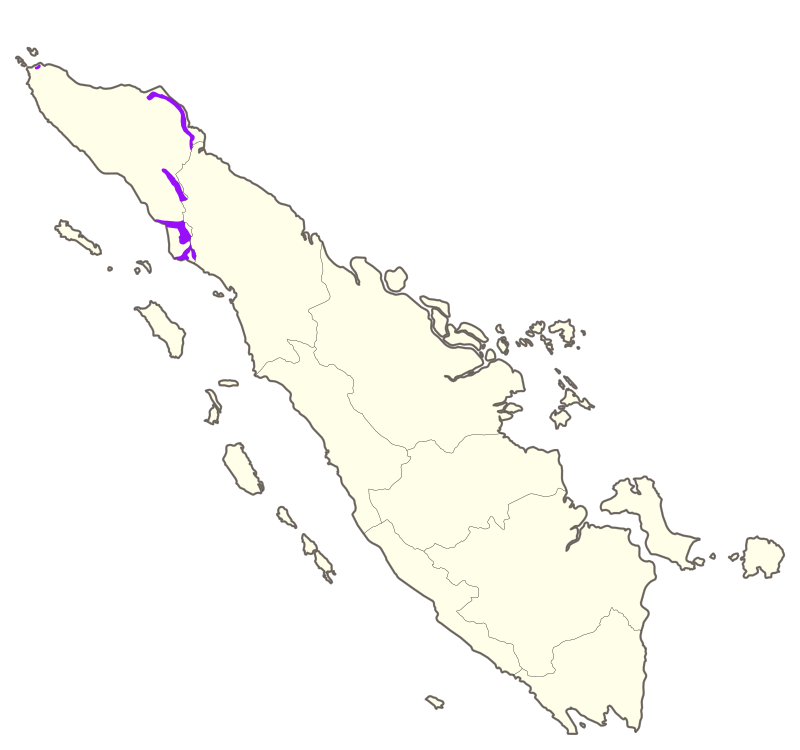
Aceh is a uniquely autonomous province and the only one where Sharia Law is officially applied. Mosques are, therefore, more common, large and ornate in this region than other parts of Indonesia.
Riau Islands
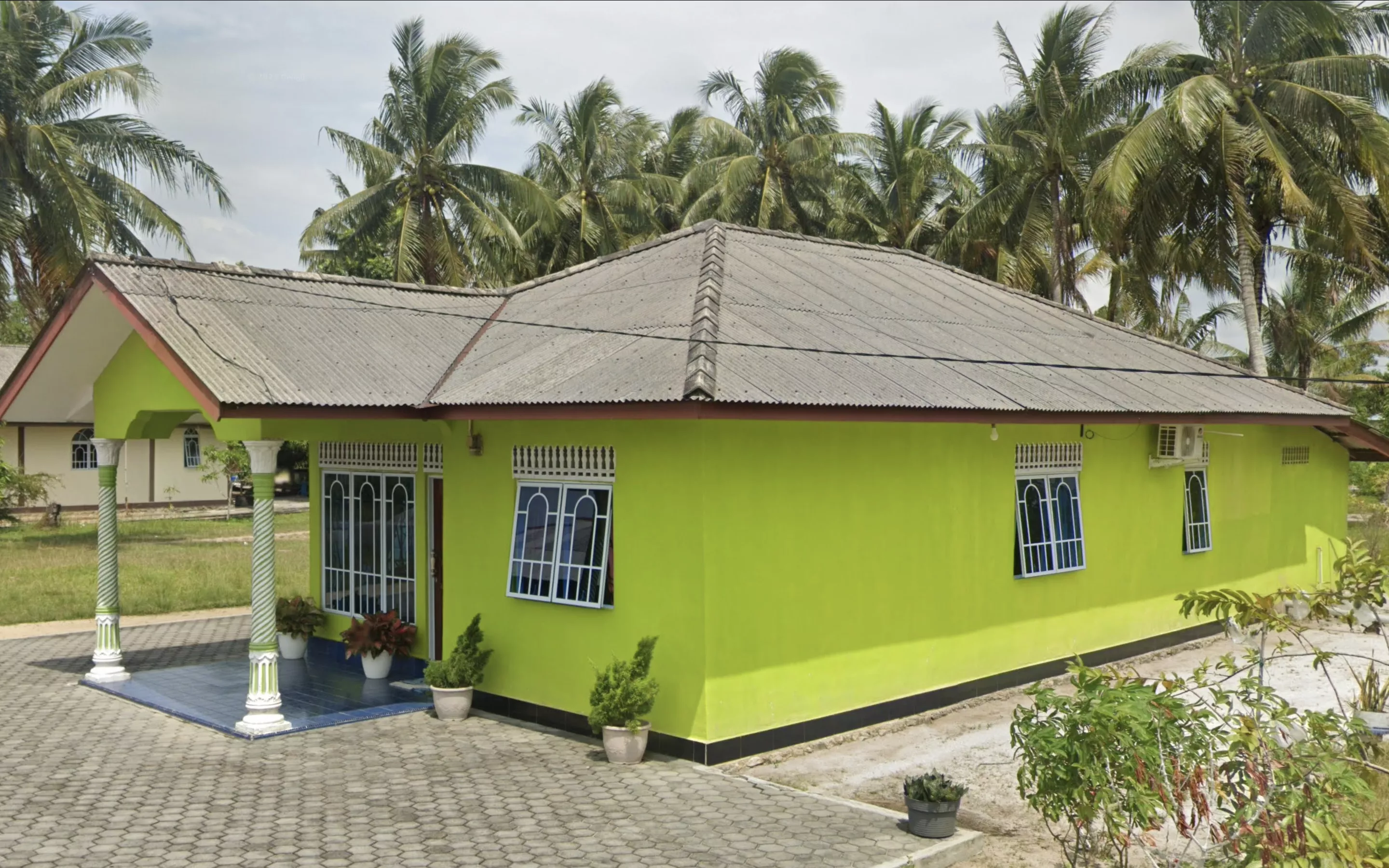
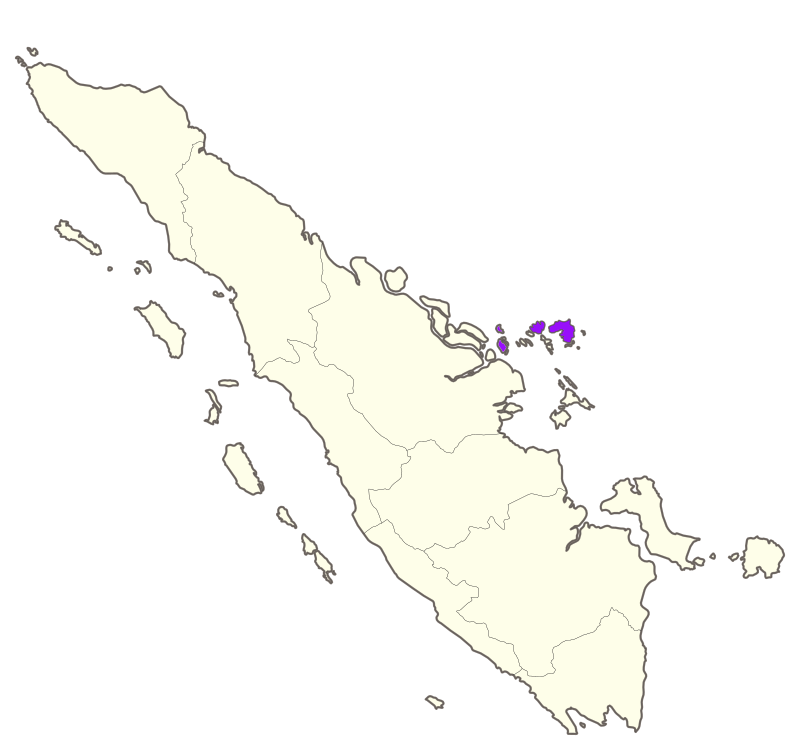
Roofs similar to those found in Bangka Island are very common in the Riau Islands. These roofs typically consist of fibre cement sheets with grey tiles lining the edges.
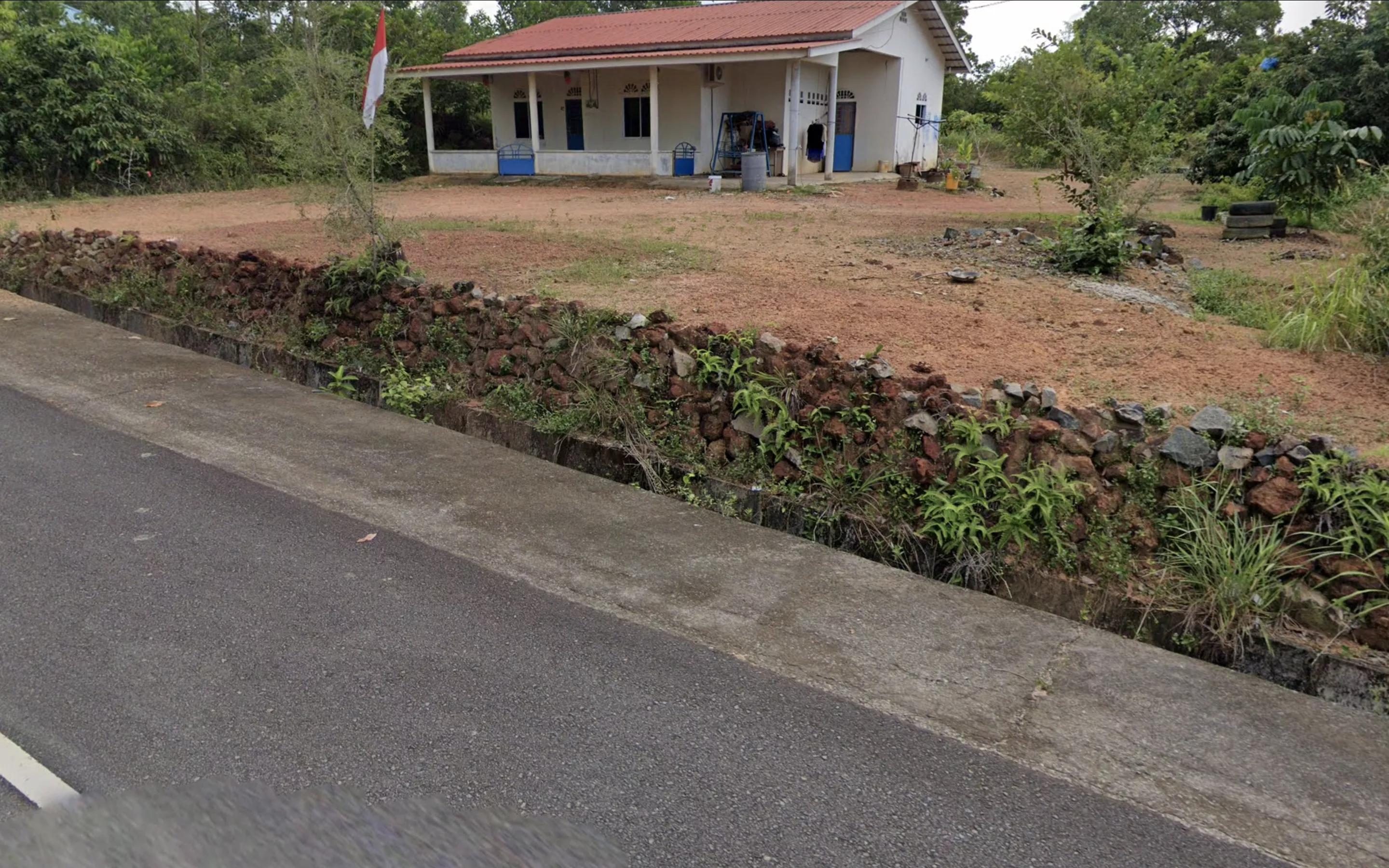
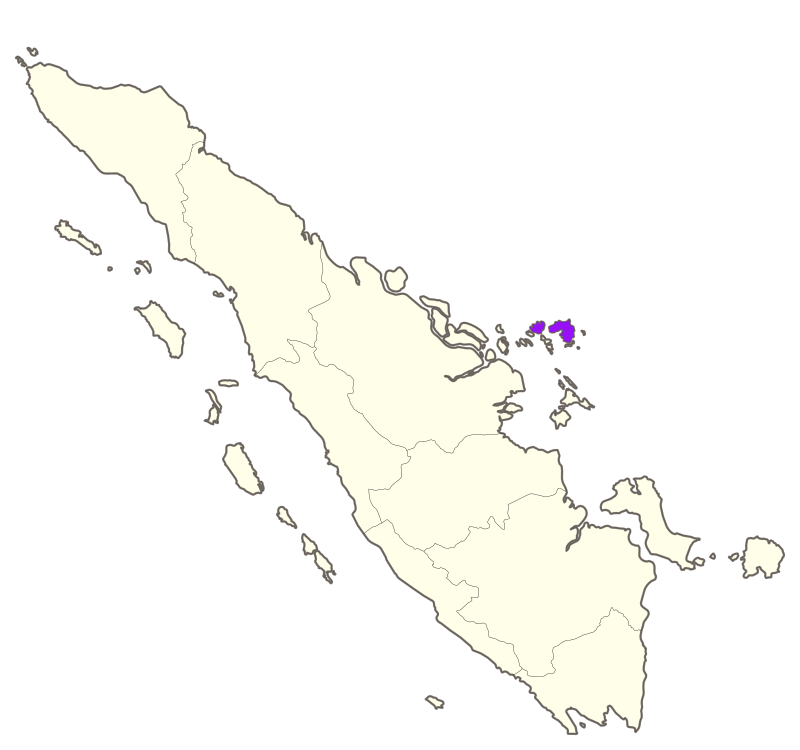
Low walls made of these dark red stones can be found along property borders, mostly in the south of Bintan Island, as well as very rarely on Batam Island.
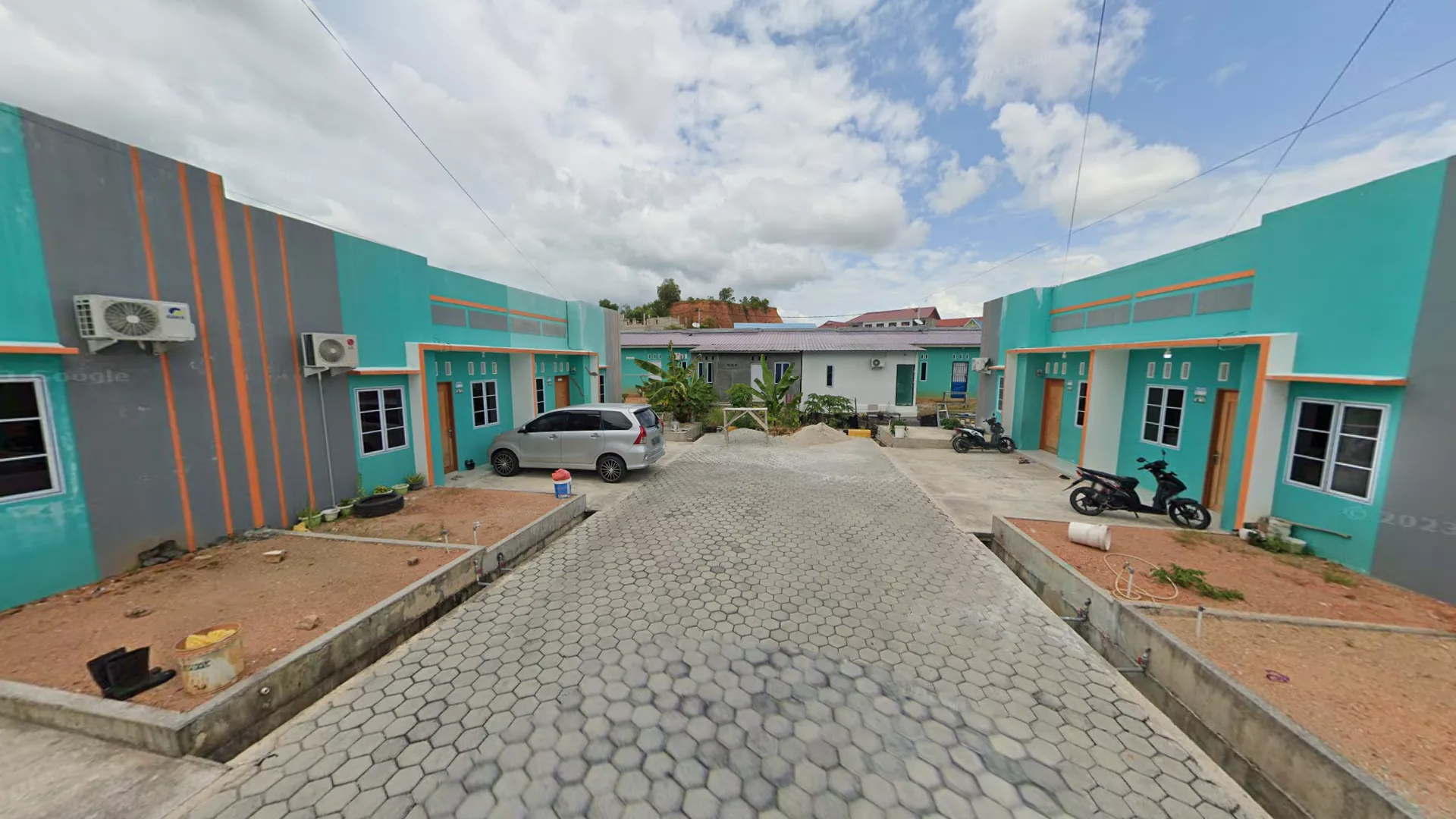
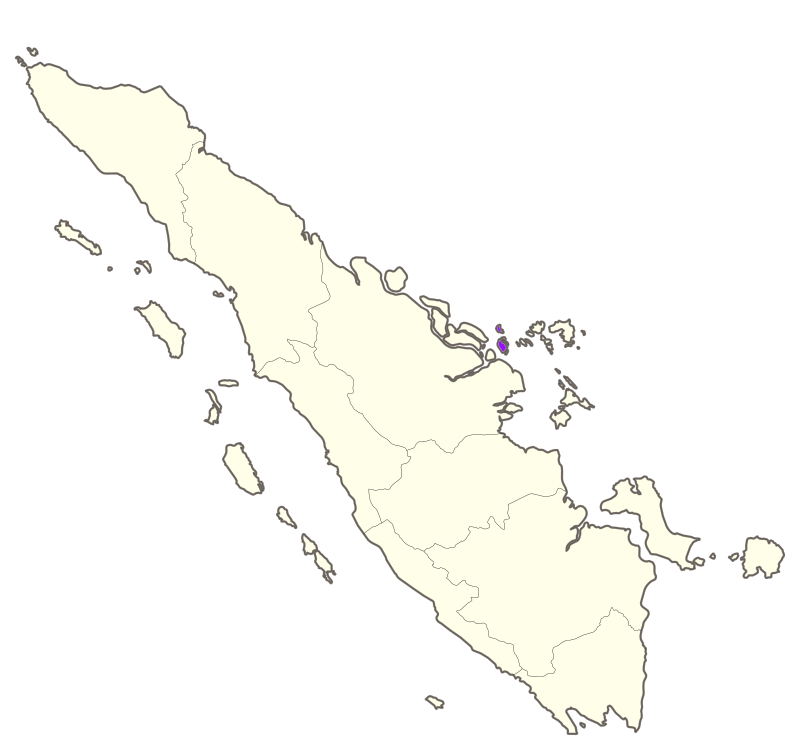
New residential areas with rows of modern houses and paved with hexagonal paving stones are common on Kundur Island and Karimunbesar Island.
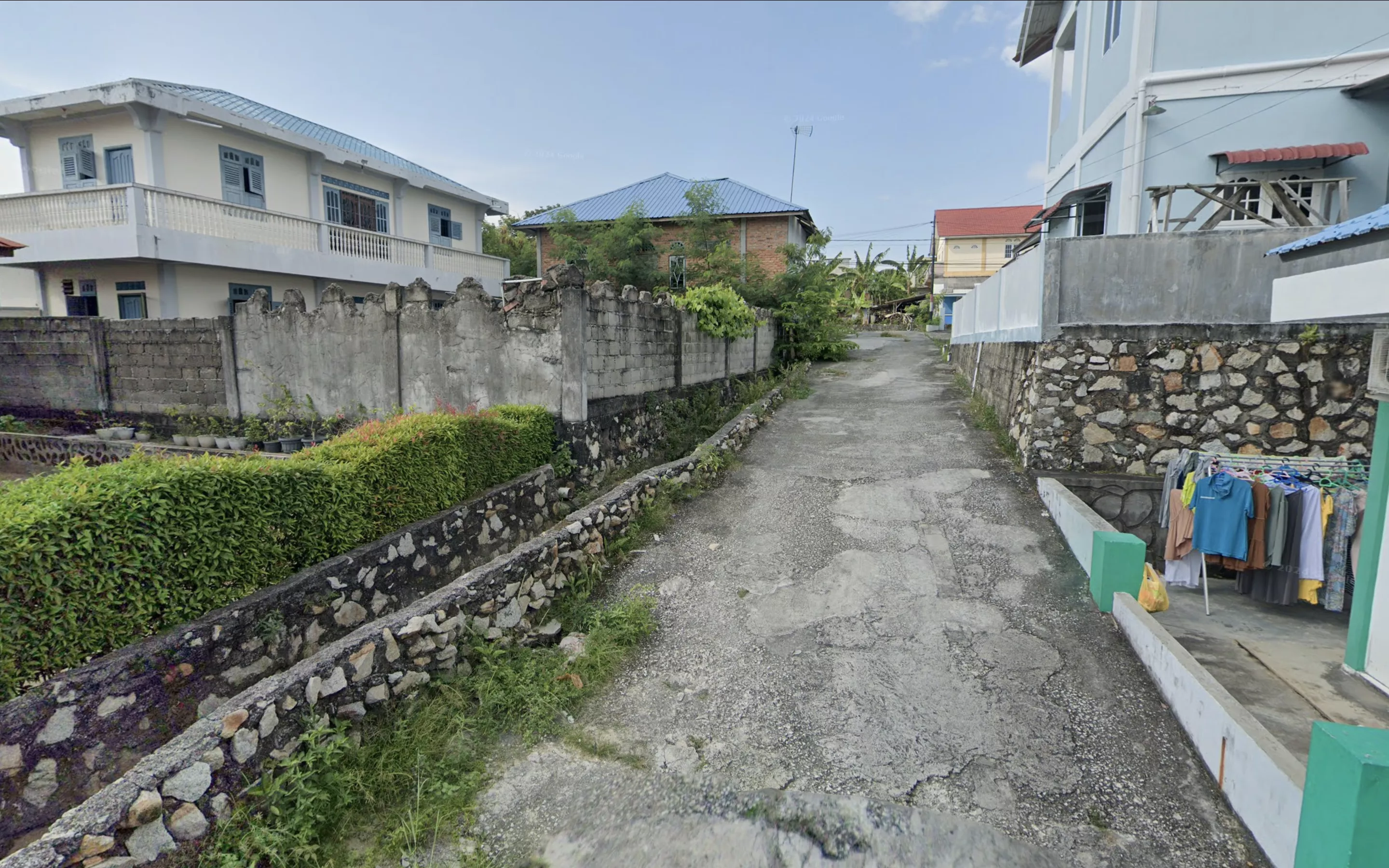
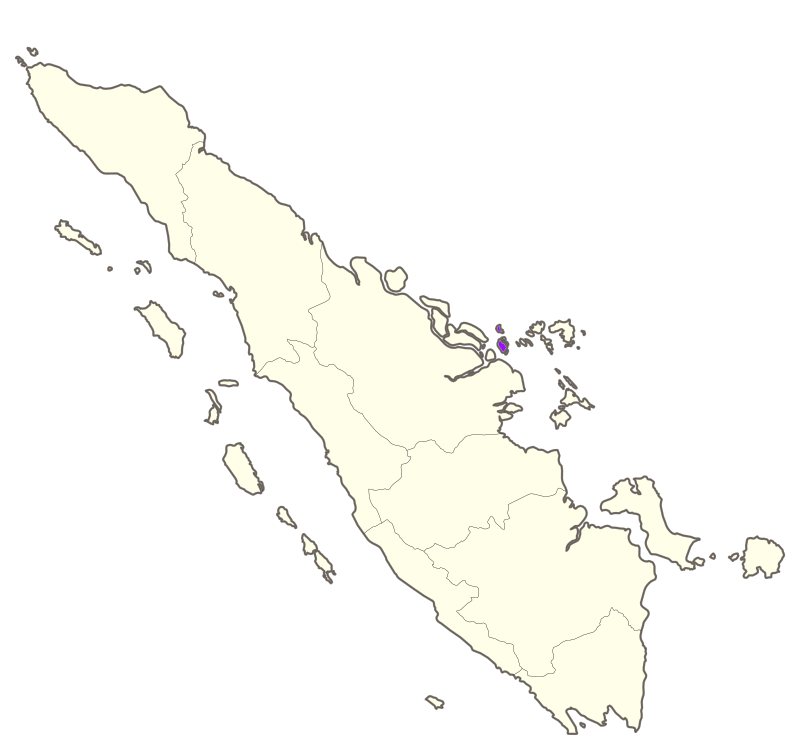
Black walls with light-coloured rocks are common on Kundur Island and Karimunbesar Island.
Circular Vents
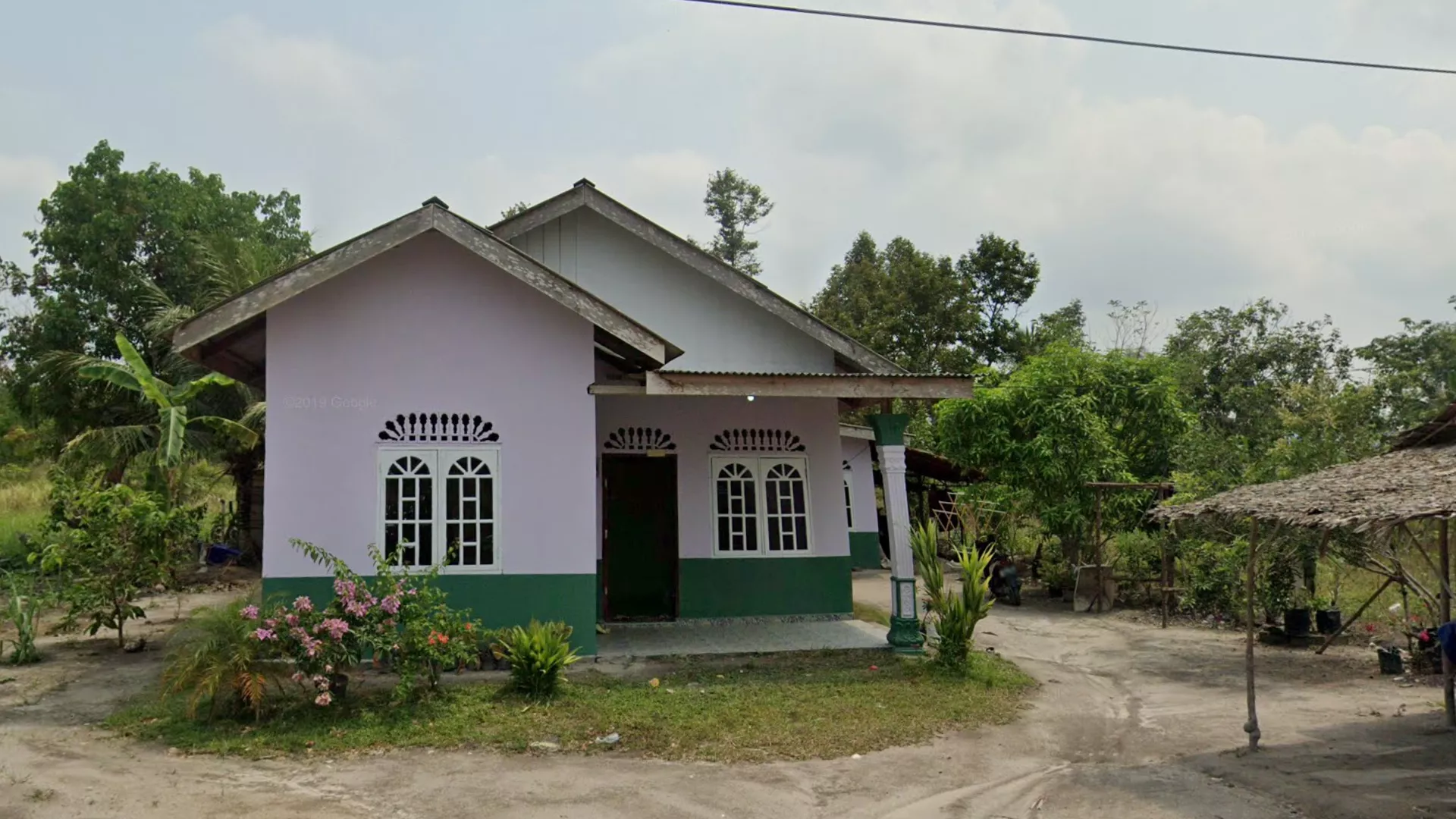
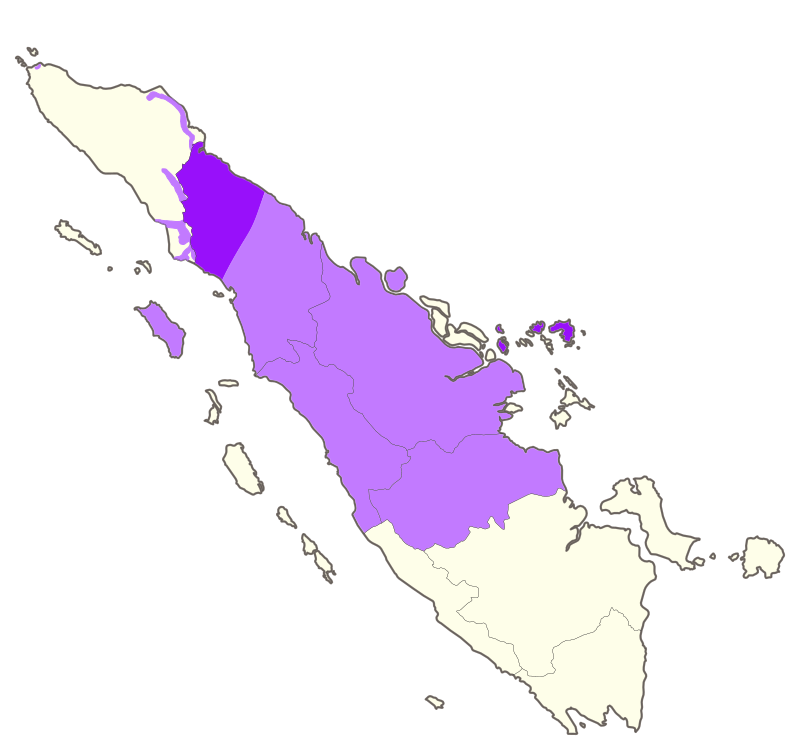
In the Riau Islands as well as in Northern Sumatra, houses often feature circular or semi-circular vents and windows with “spokes” radiating out from the centre . These are typically featured on the gable or above doors and windows. Similar windows and vents can be found elsewhere in Sumatra.
Nias Island
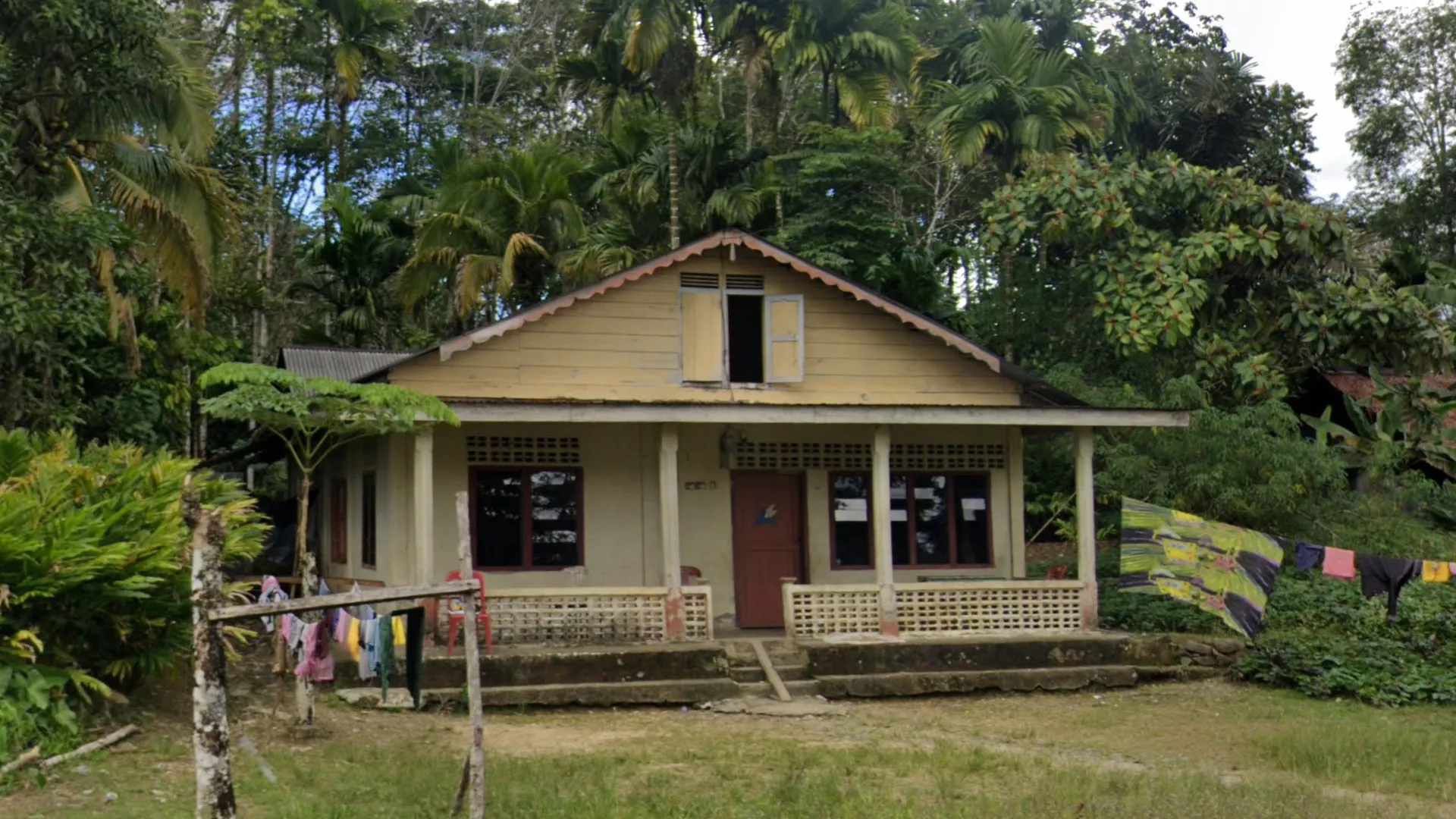
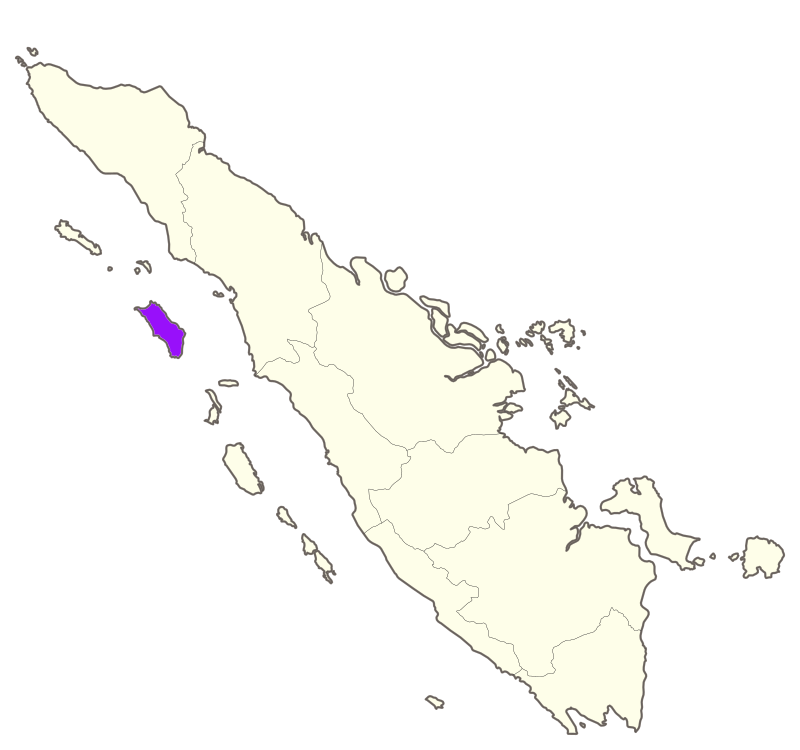
On Nias Island, you will commonly find houses that have windows in the gable end with wooden shutters that swing open.
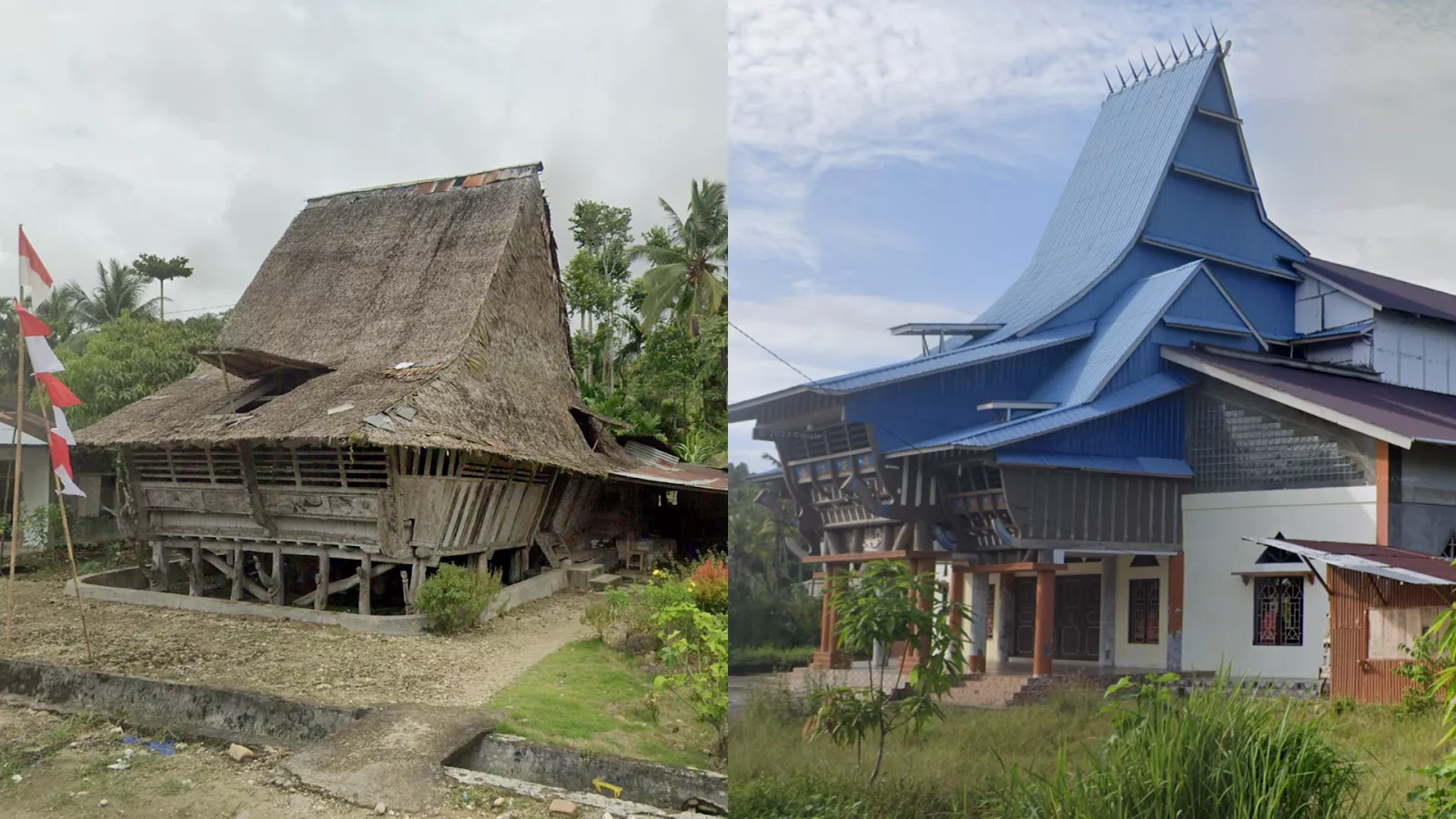
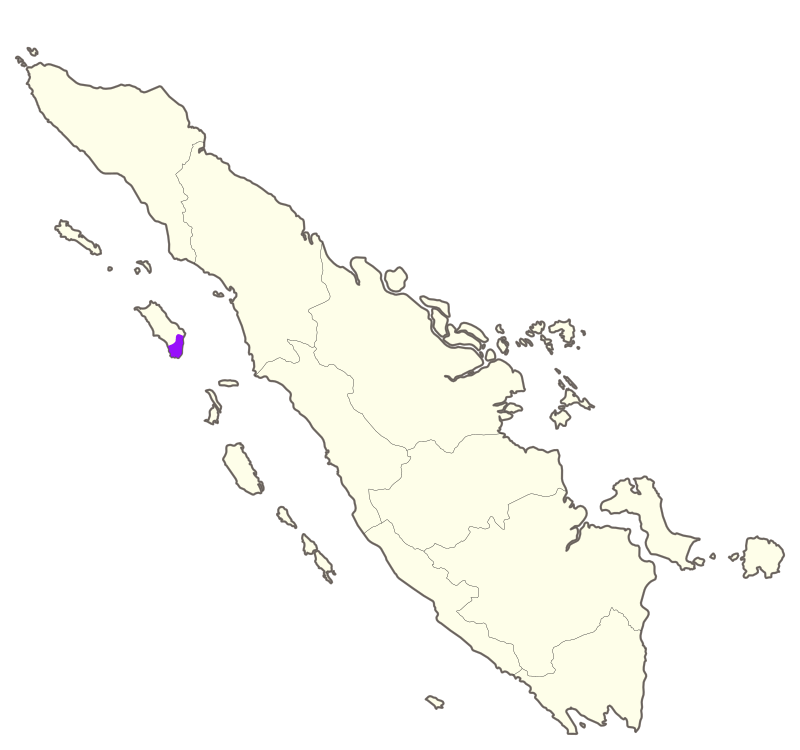
The Omo Sebua Chief’s House, built on pillars with towering thatched roofs (or sheet metal roofs in modern versions), is characteristic of Nias Island. It is particularly common in the southern half of the island.
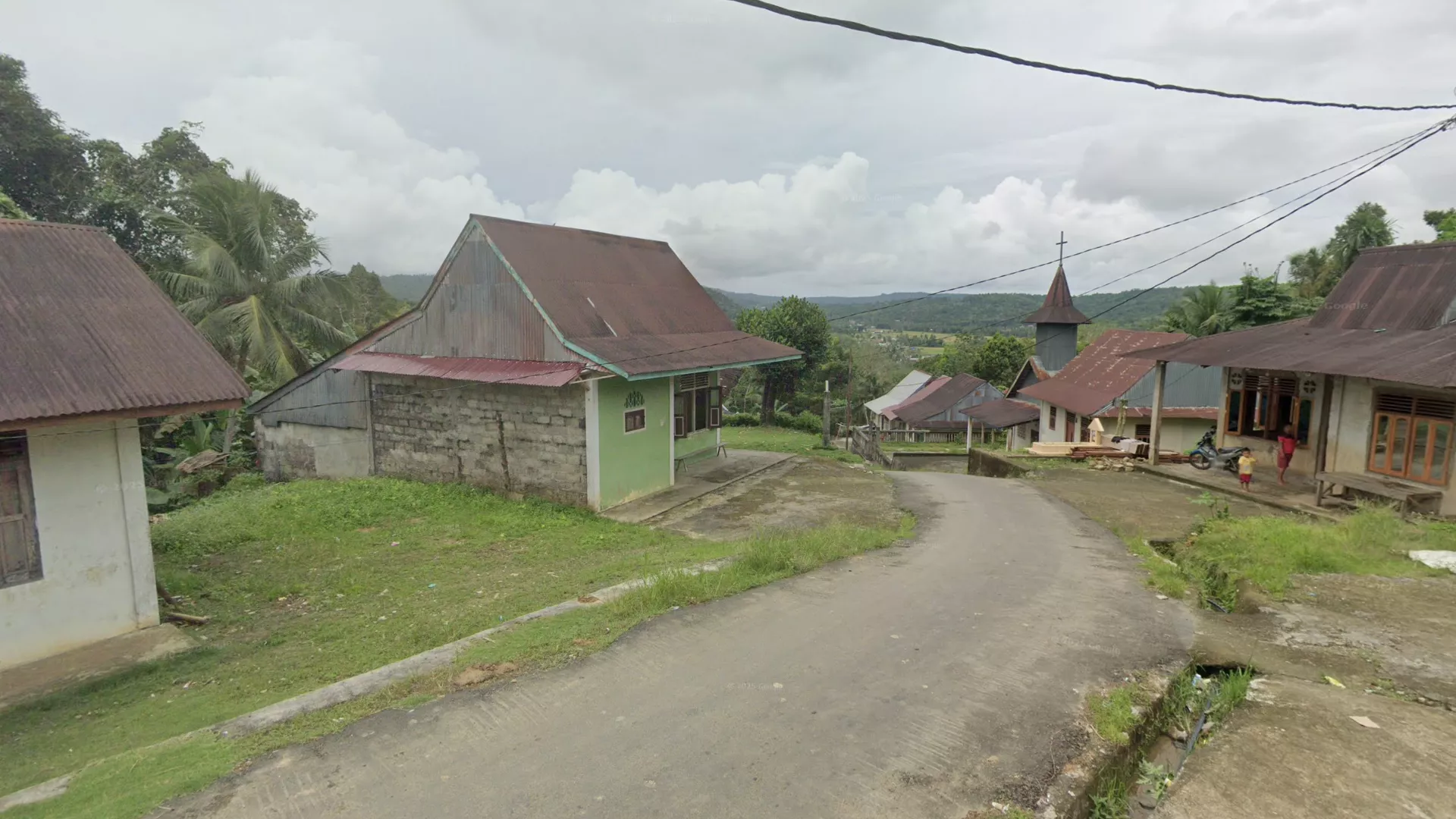
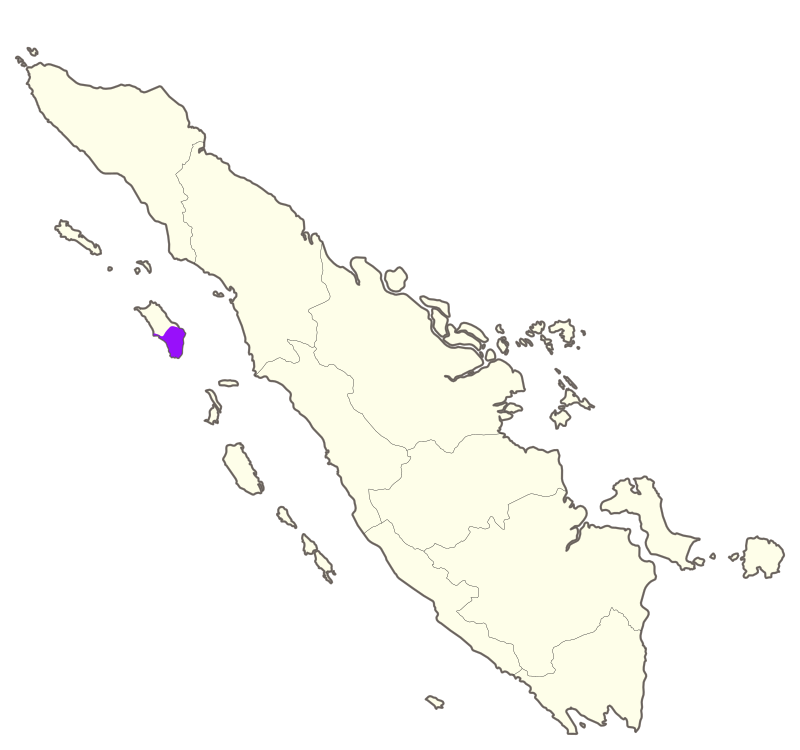
Everyday houses with roofs that curve outwards to the side can be found as detached houses or in rows of houses in the southern half of Nias Island. The roof shape is a partial imitation of the Chief's House.
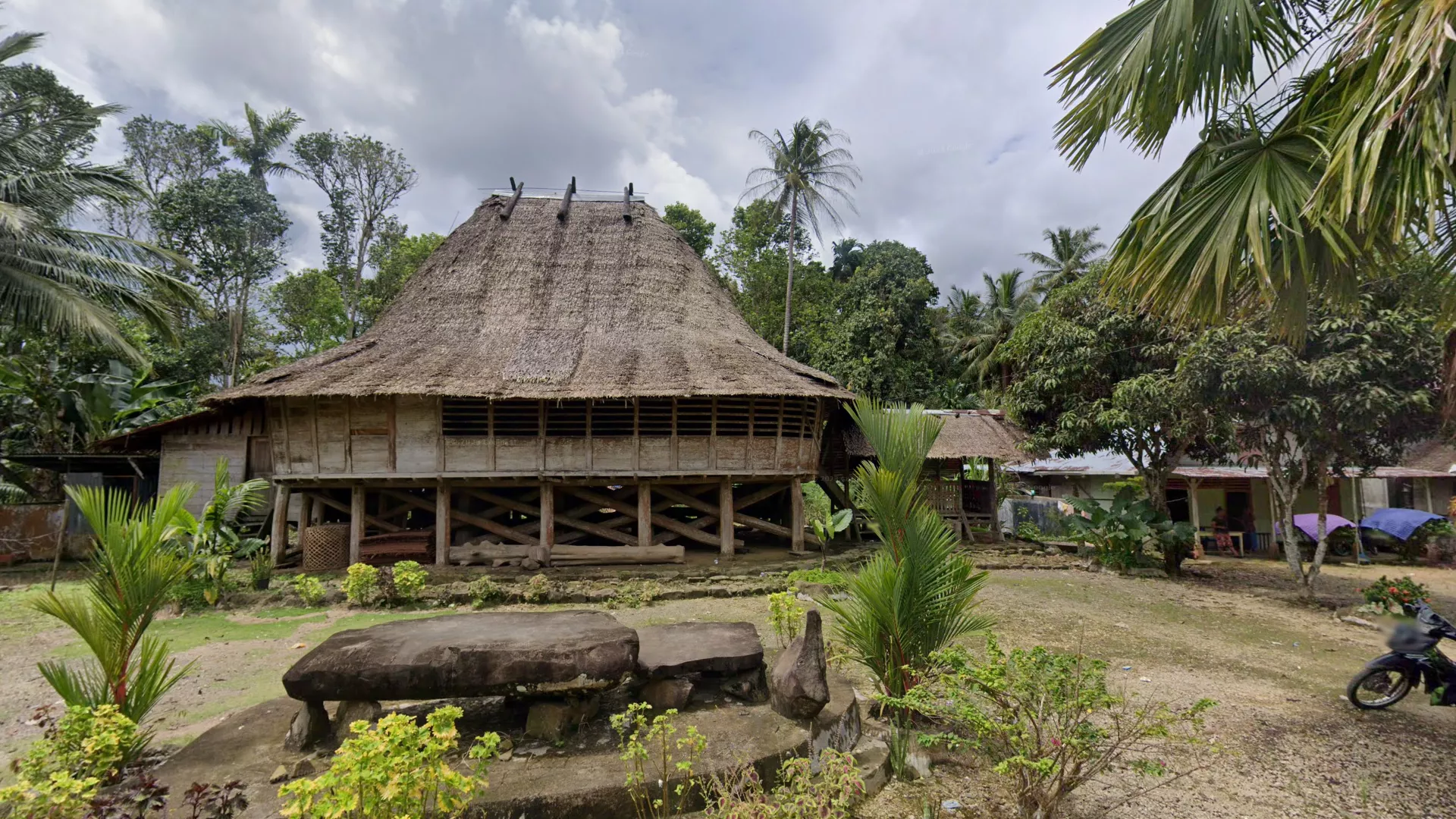
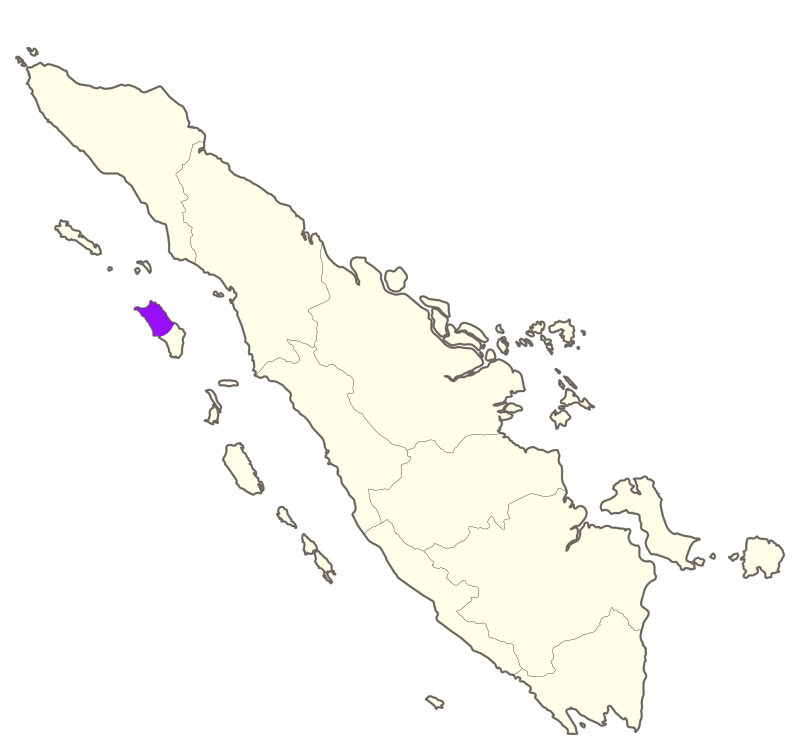
In the northern half of Nias Island, chieftain houses found have roofs with a significantly more rounded shape.
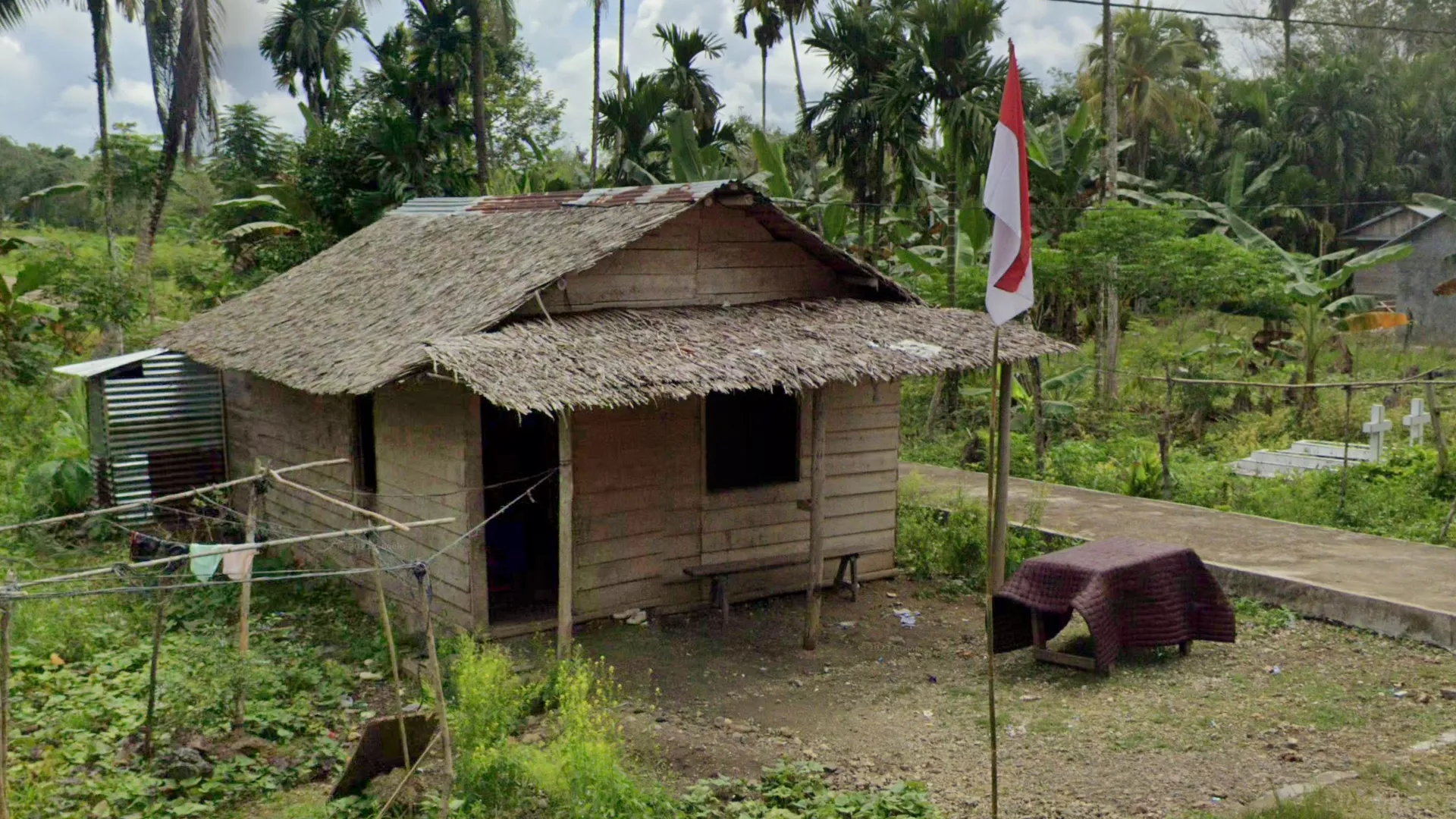
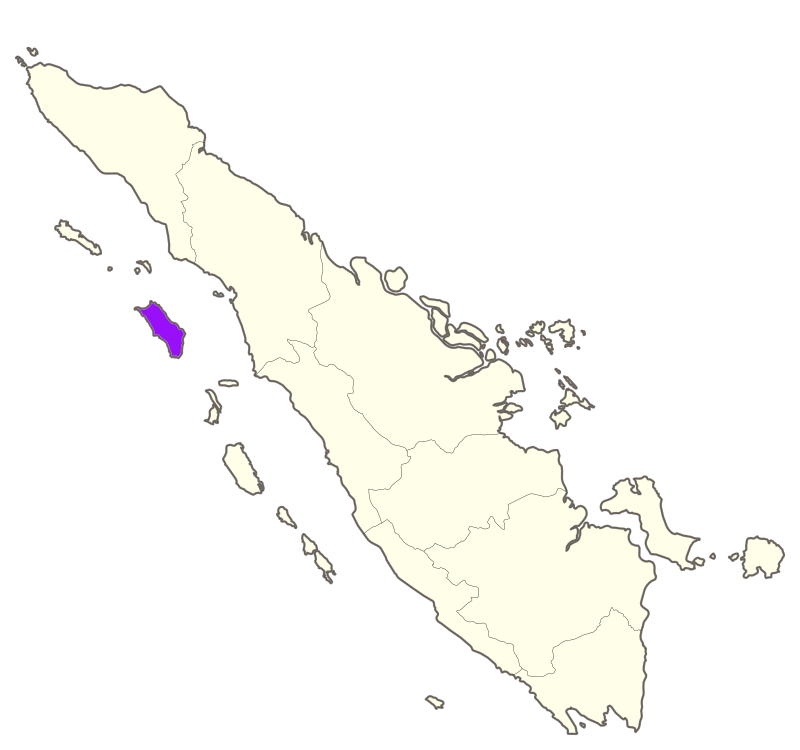
Another widespread type of house on Nias Island is simple houses built from wooden planks and equipped with thatched roofs and thatched canopies over the front. The same combination of thatched roofs and canopies can also be found on other islands in Indonesia, but usually in different shapes.
Culture & Language
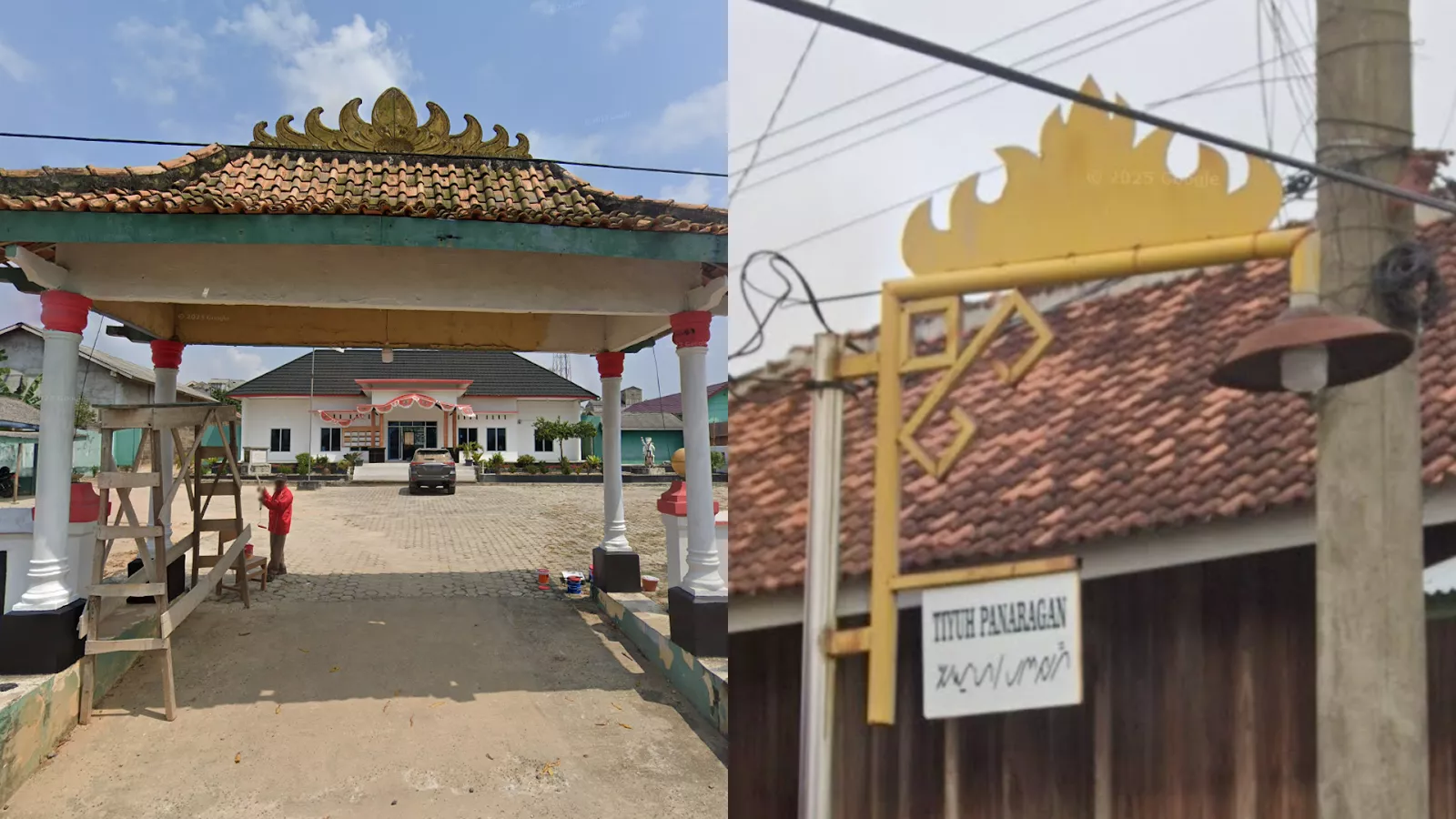
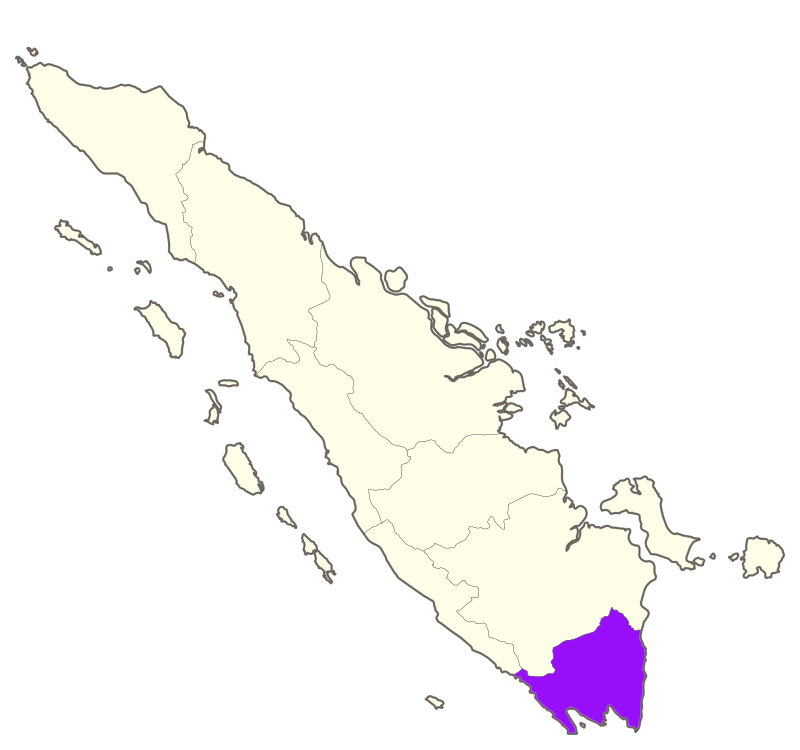
The Siger crown is a symbol of Lampung. Its design features a curved shape with seven or nine peaks. It can be found on gates, lamps, bridge stones, street signs and in other places.
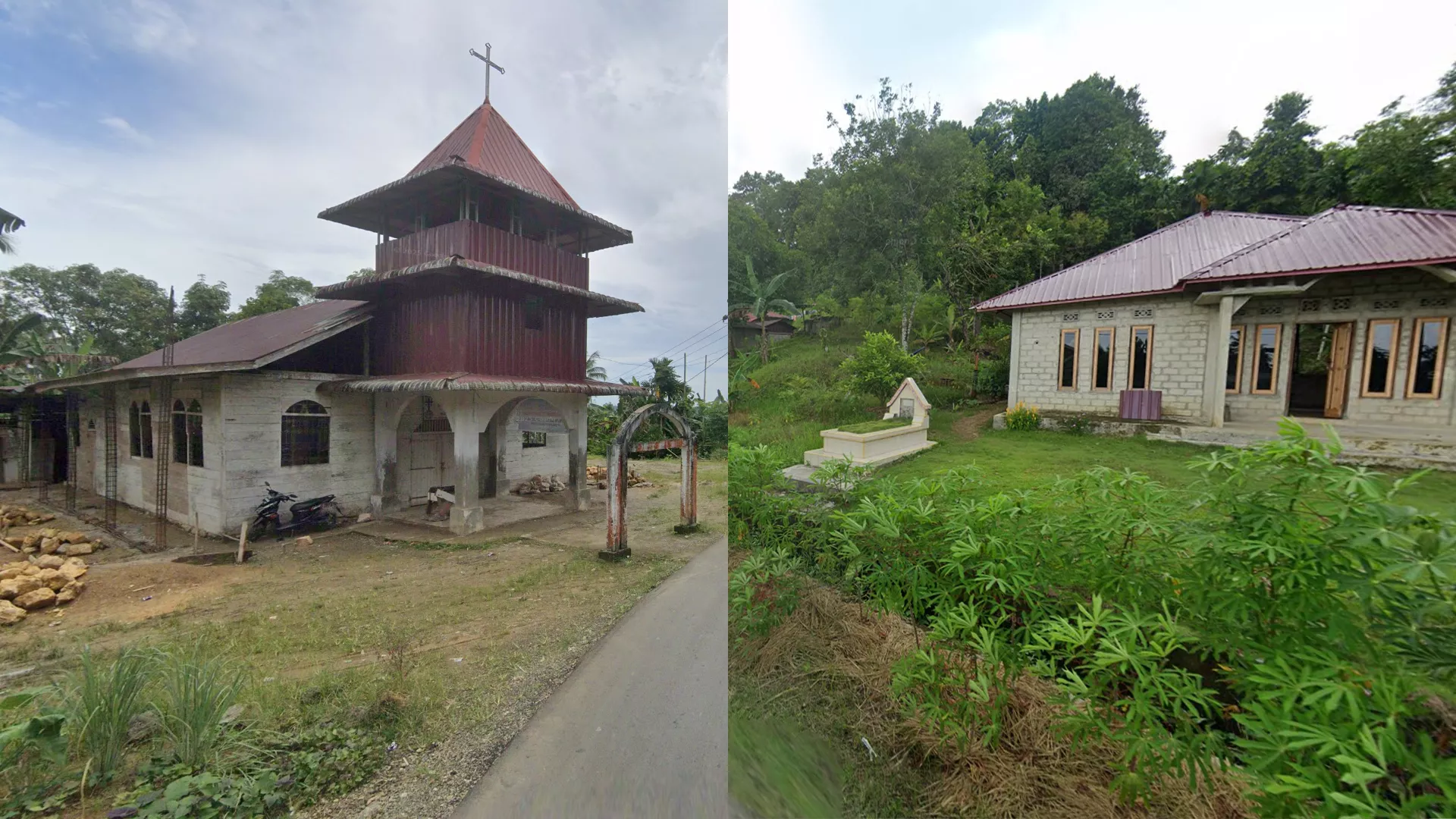
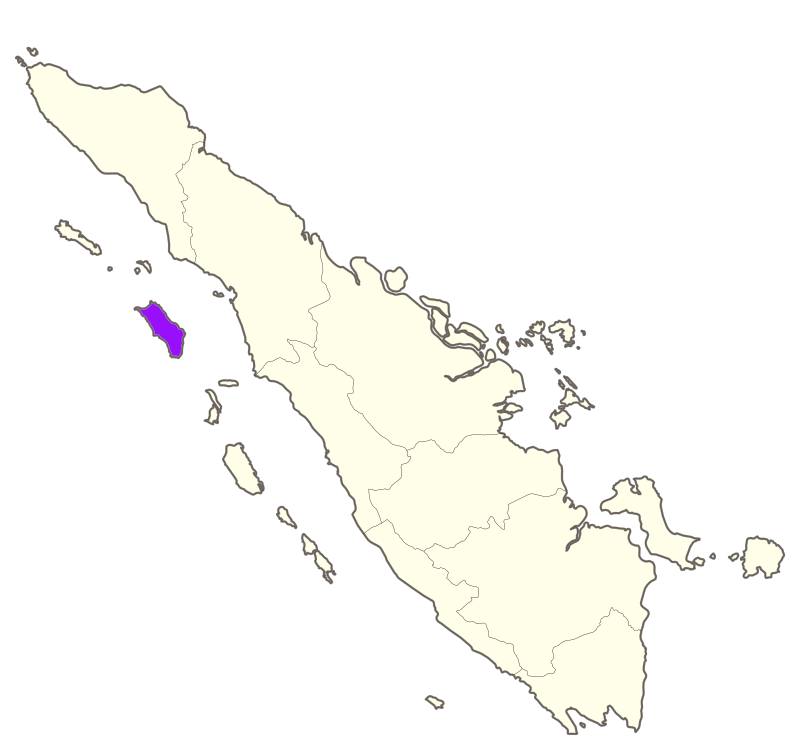
The vast majority of the population of Nias Island are adherents of Protestant Christianity. Churches are common and graves on private property are not unusual.
Infrastructure
Lampung
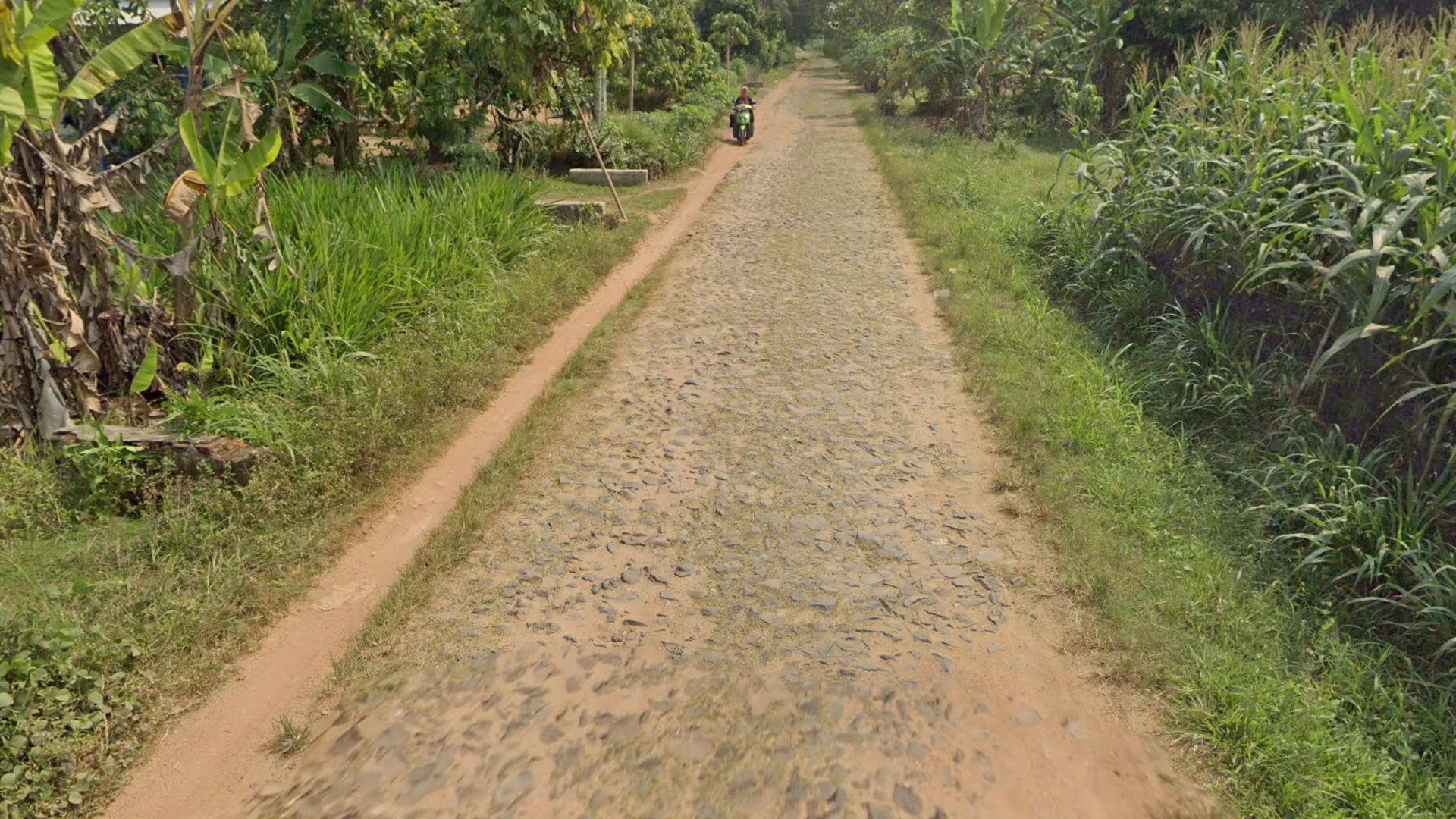
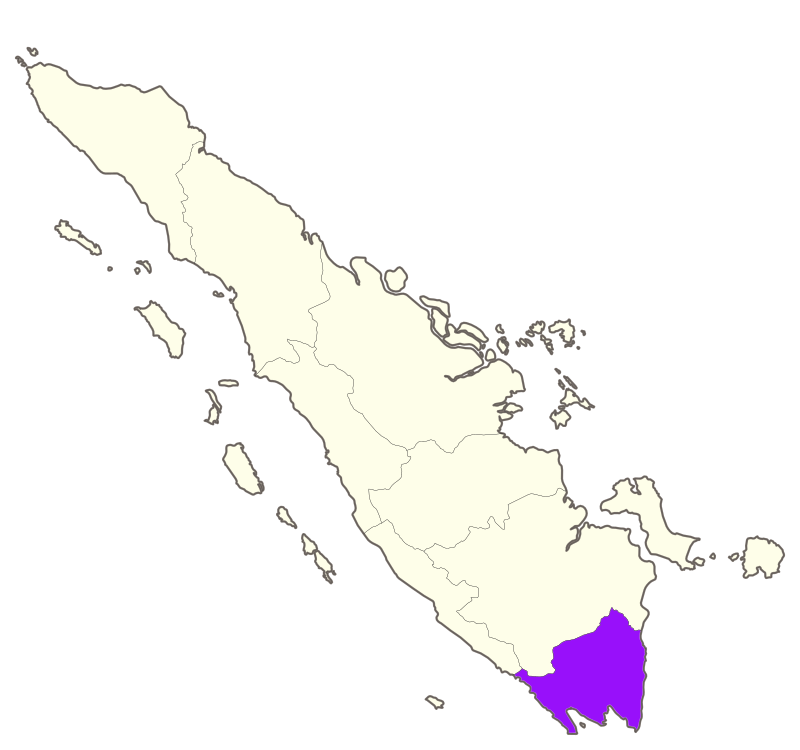
Lampung pavement typically consists of random, irregular rocks of uneven sizes, often paired with reddish soil.
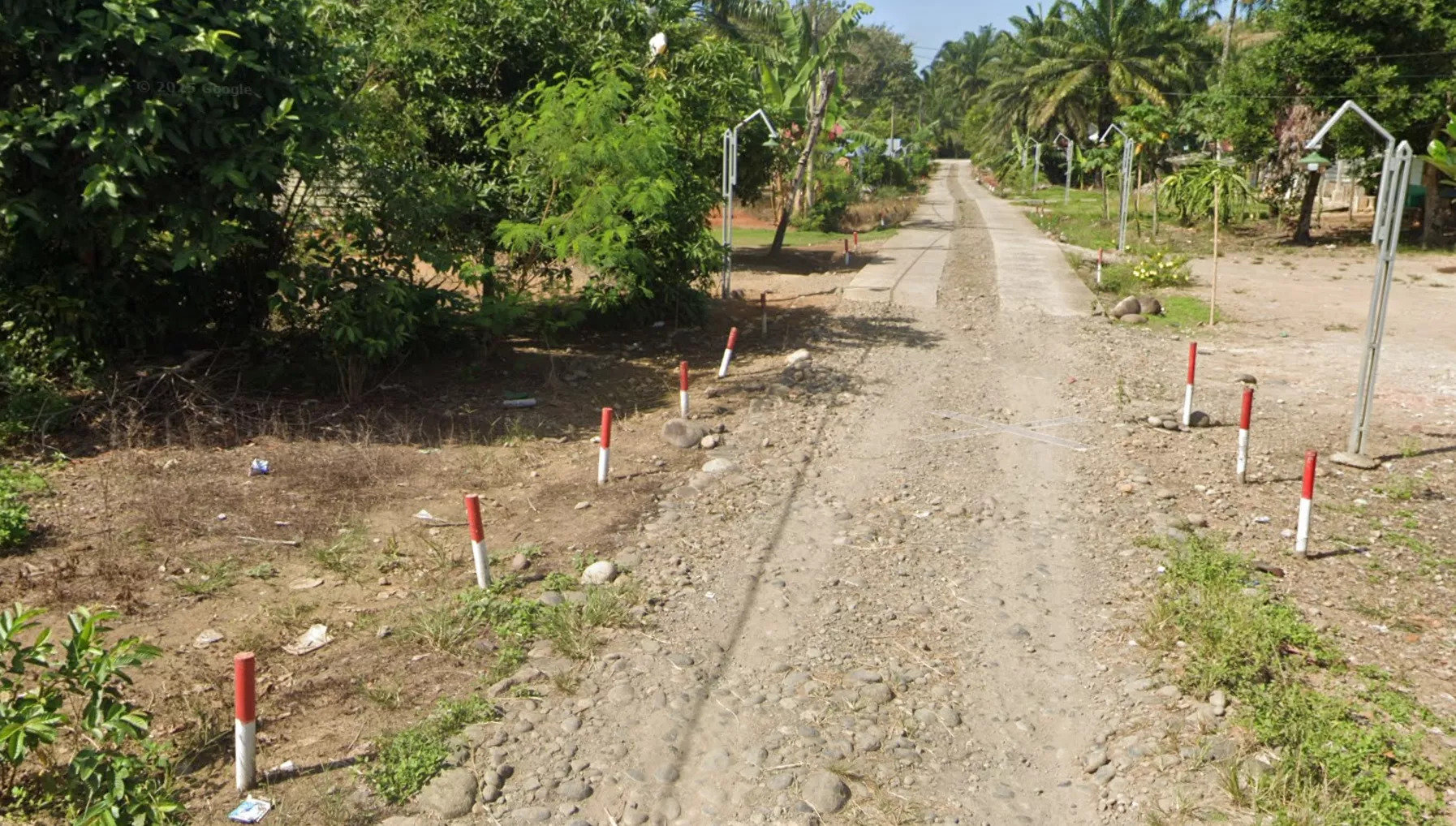
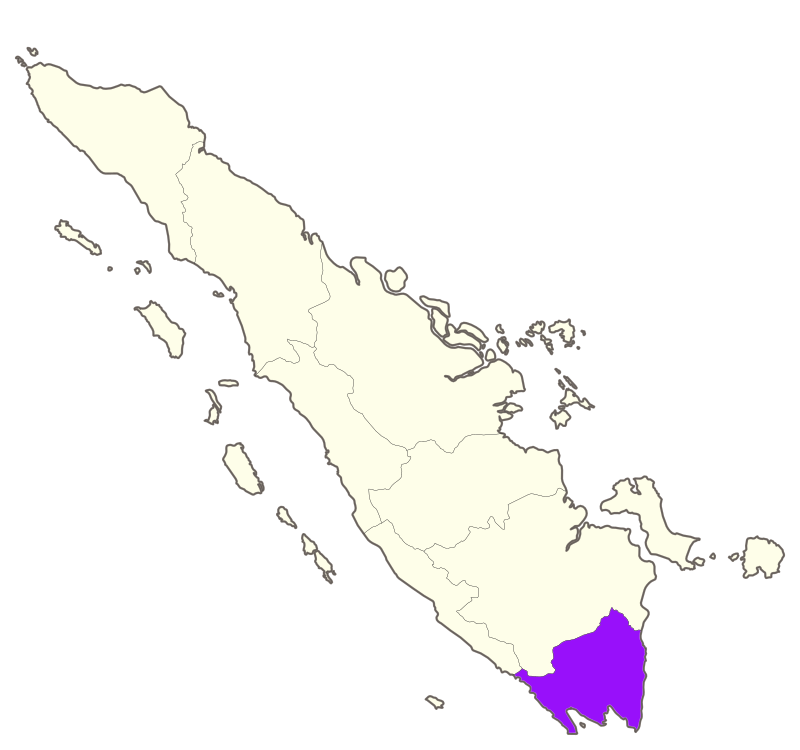
Medium-sized sticks frequently serve as bollards along streets in Lampung. They can rarely be found elsewhere. Red and white sticks are common for these bollards but the colour may vary.
Bangka-Belitung
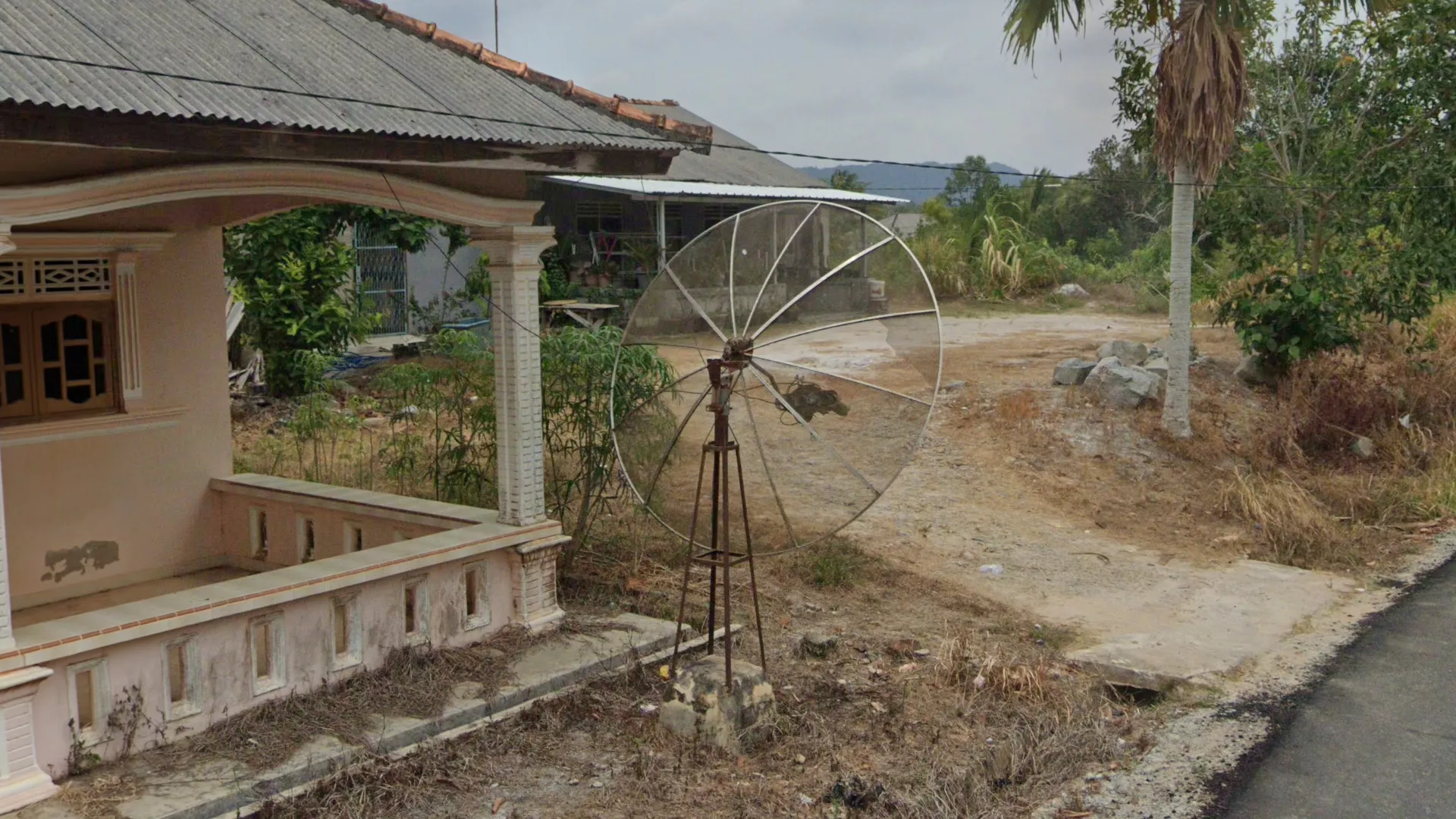
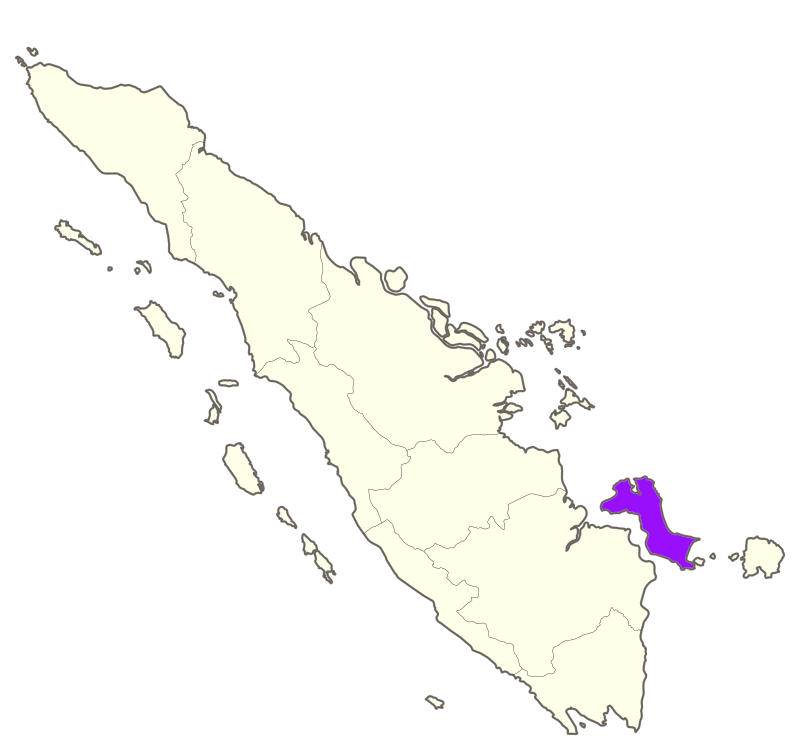
Another very good identifying feature for Bangka Island is satellite dishes with metal quadpod mounts. On Belitung Island, satellite dishes are mounted on metal poles.
Riau
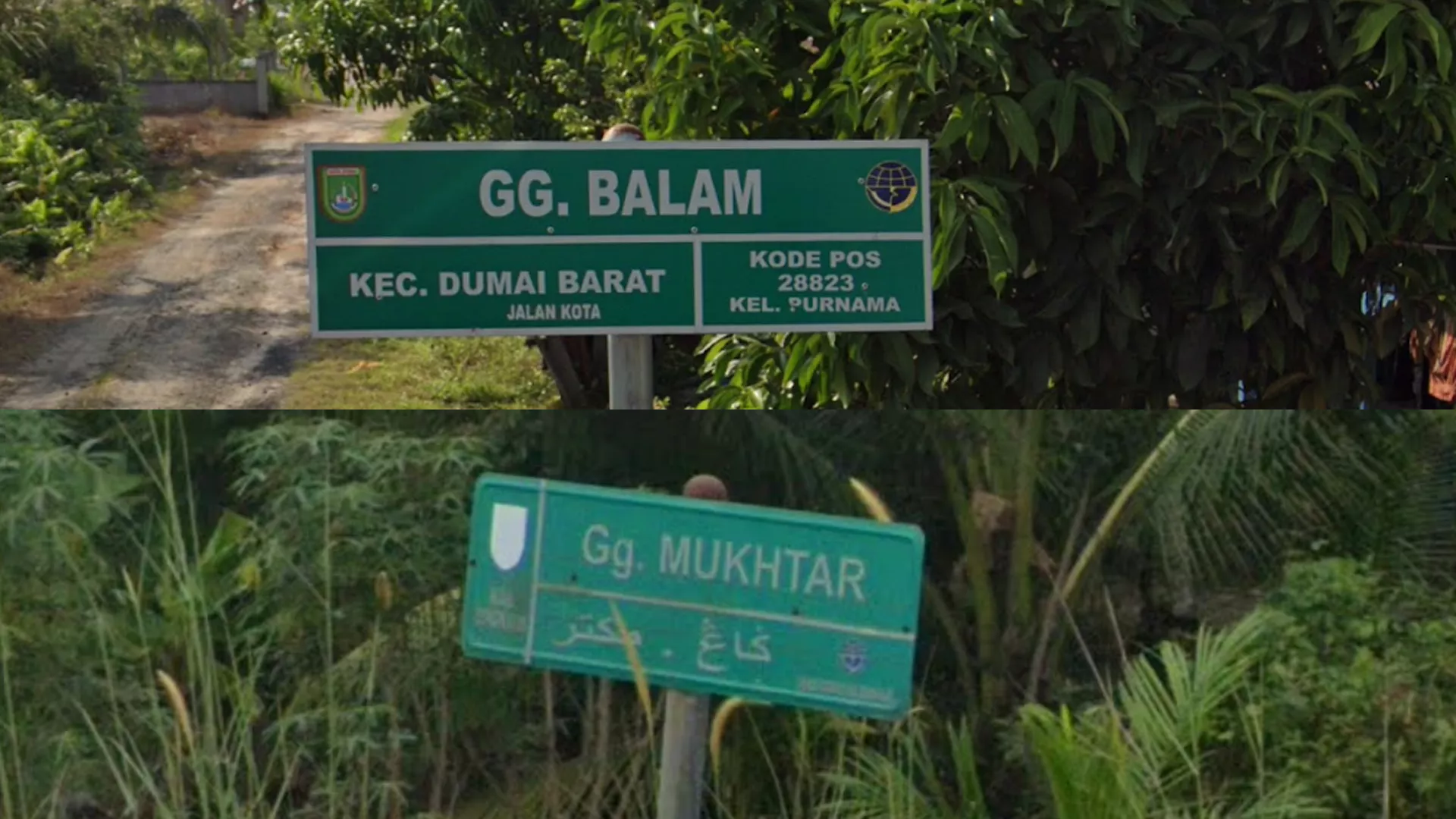
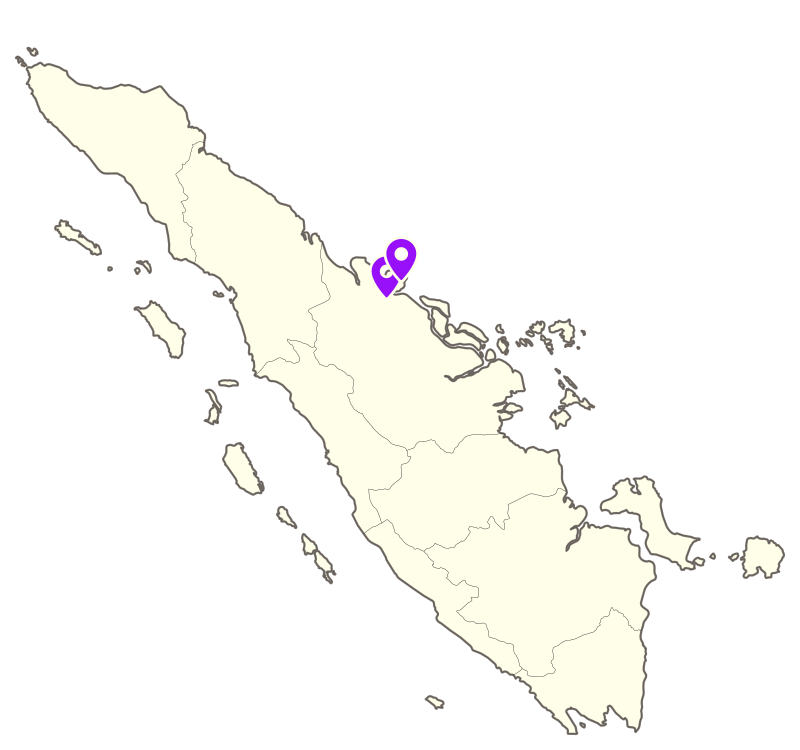
This street sign design consisting of three sections, with an emblem and an earth logo (possibly in a different layout) is found in the coastal city of Dumai. A similar design can be found on Rupat Island.
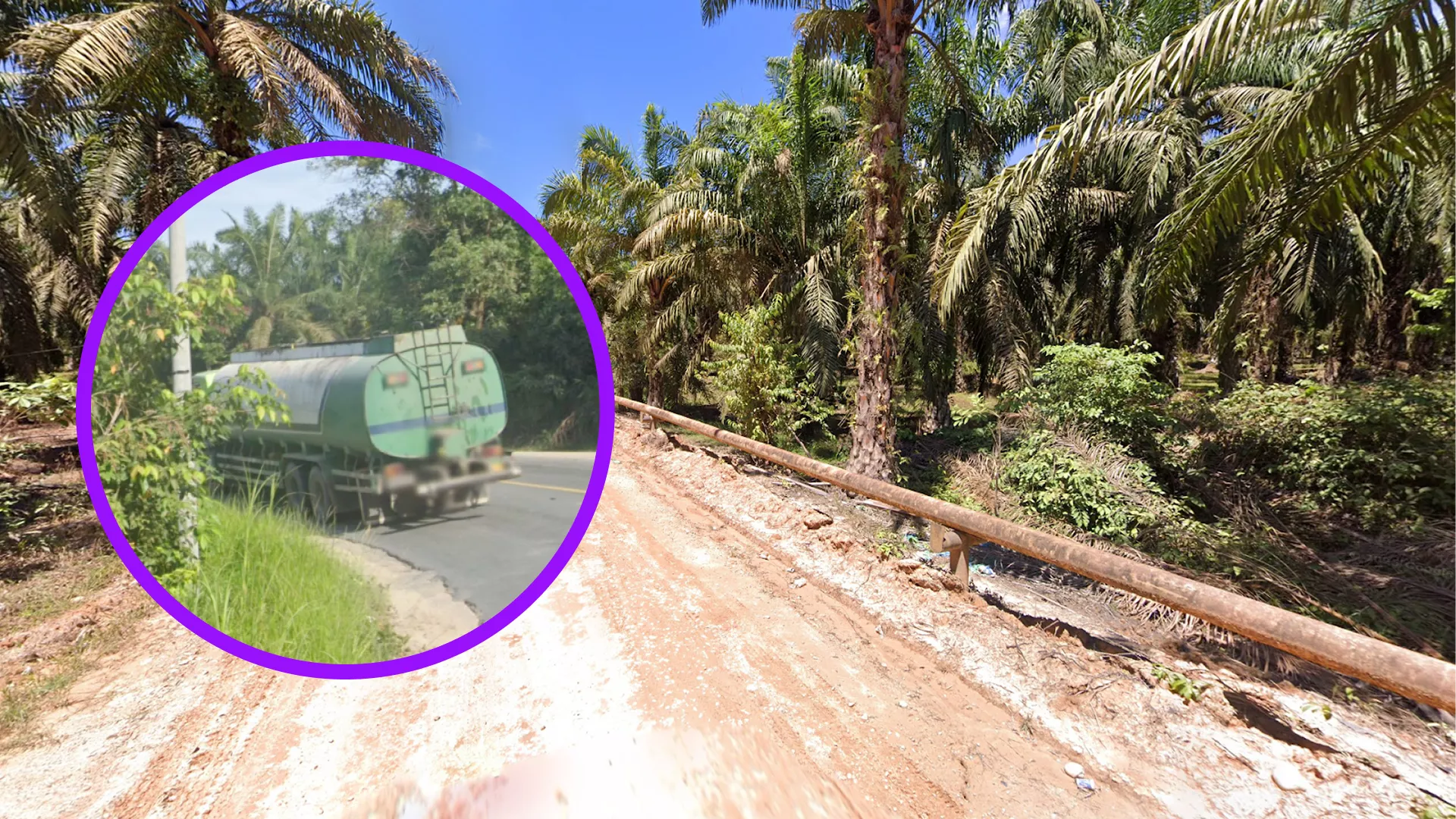
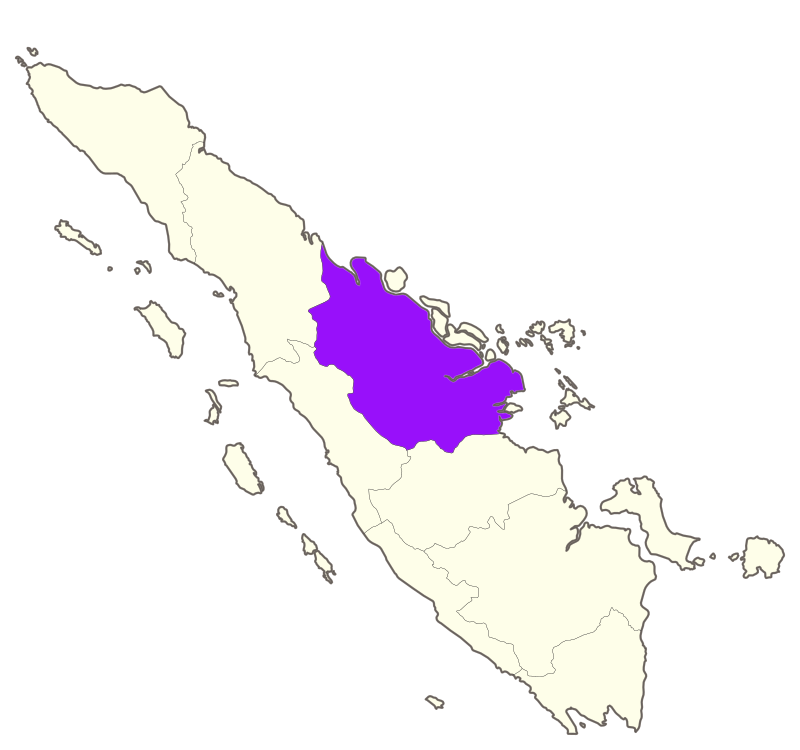
Oil wells are mainly found in the heavily industrial province of Riau. As a result you will often find gas pipelines, oil pumps, and oil tankers here.
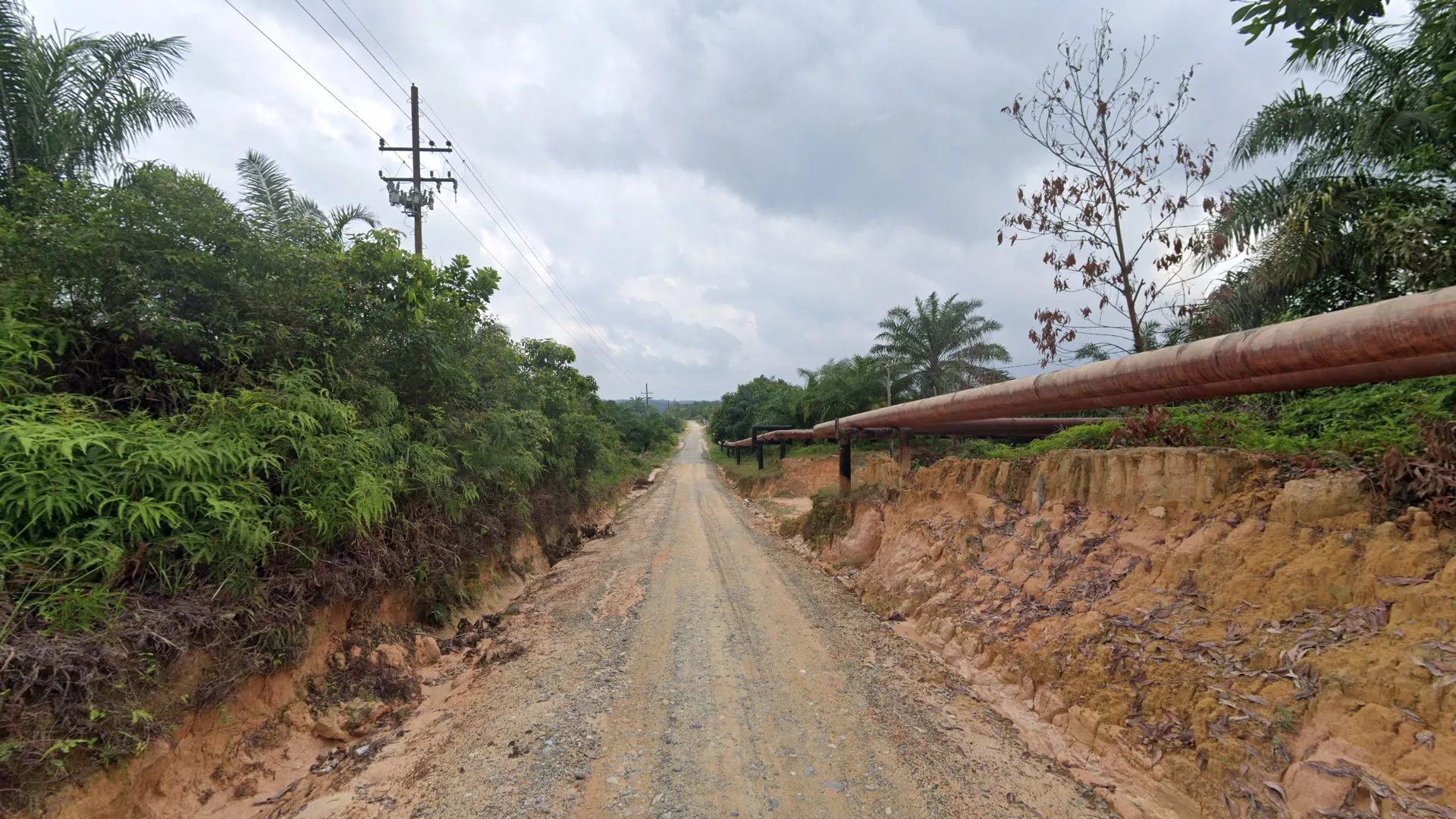
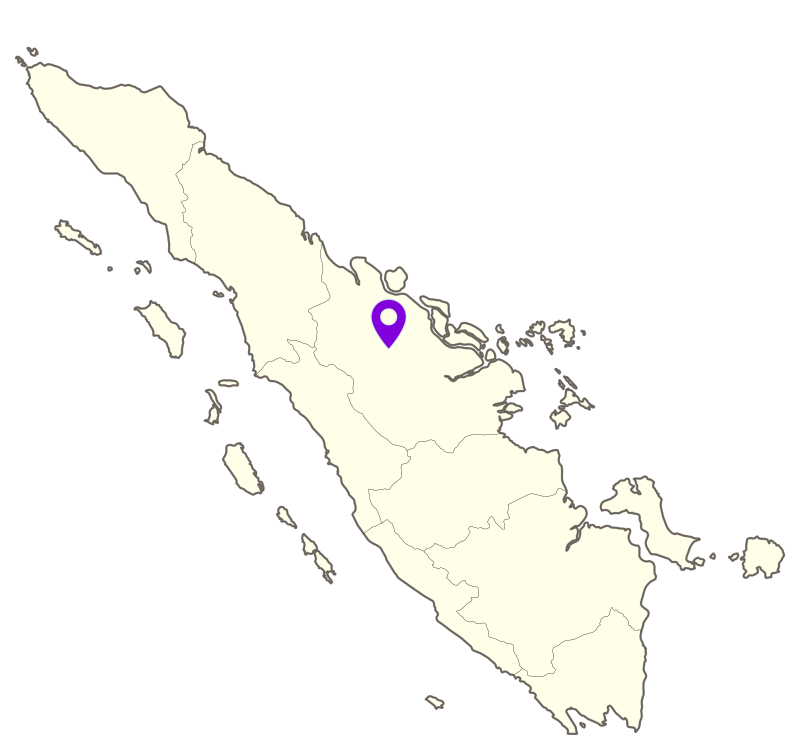
Situated in a hilly landscape, Minas oil field is currently the largest oil field in Indonesia. Numerous unpaved paths with oil pipelines running alongside them cross dense oil palm plantations in this area.
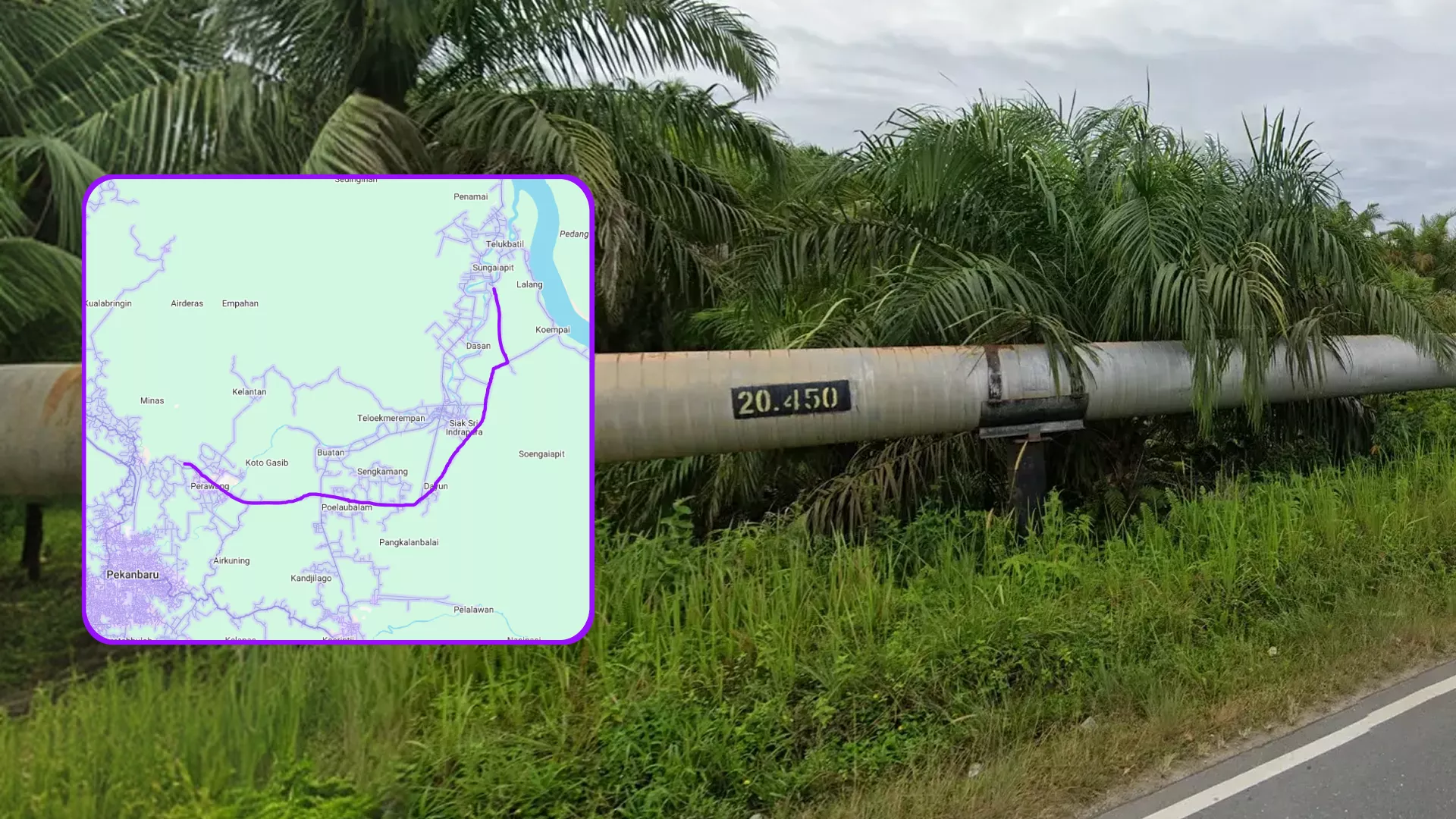
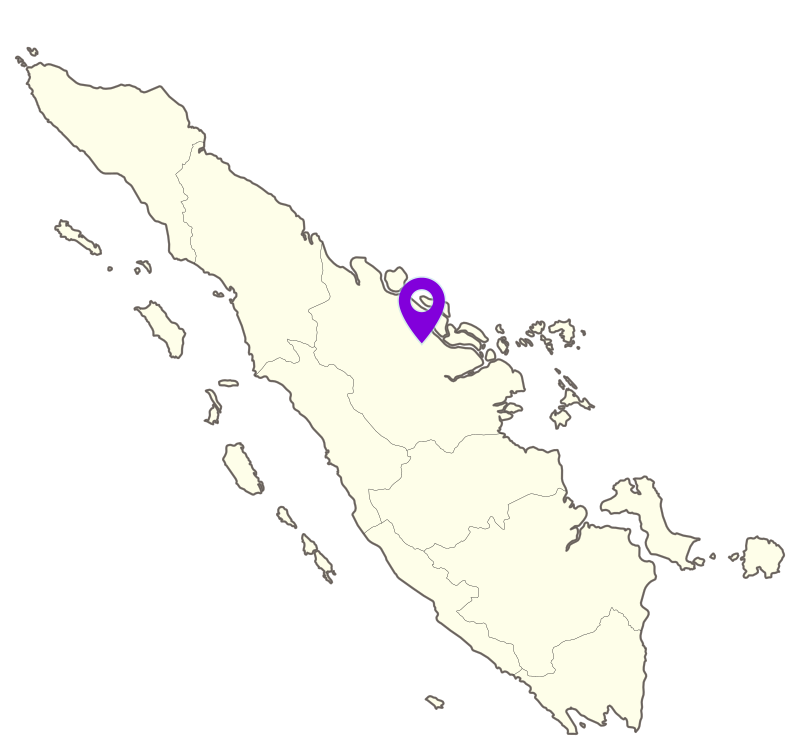
Pipelines in Riau can also help narrow down the location. For example, this pipe with ring-like sections and yellow numbers in the format 'XX.XXX' on a black background can be seen on the stretch of road shown on the map.
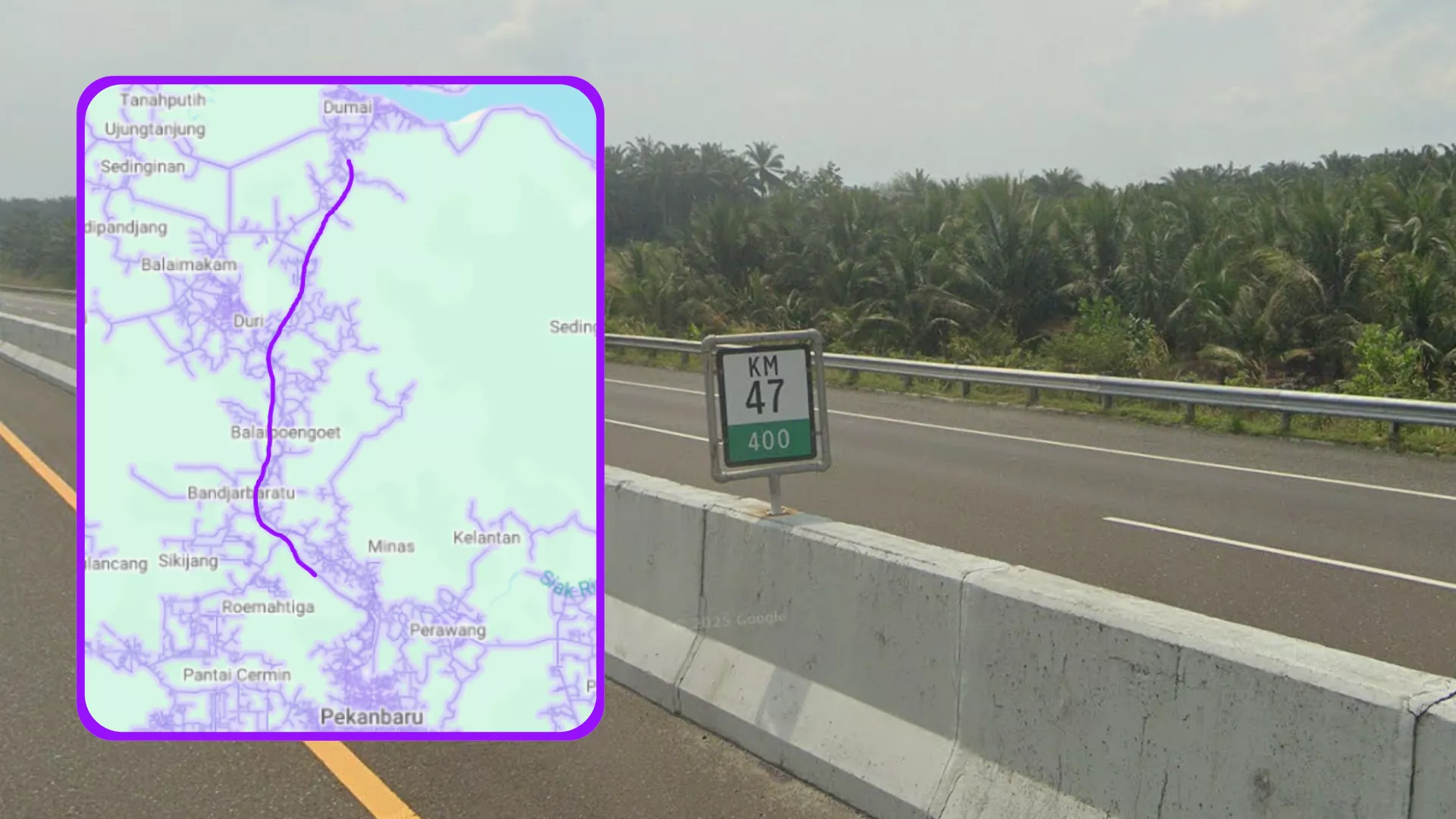
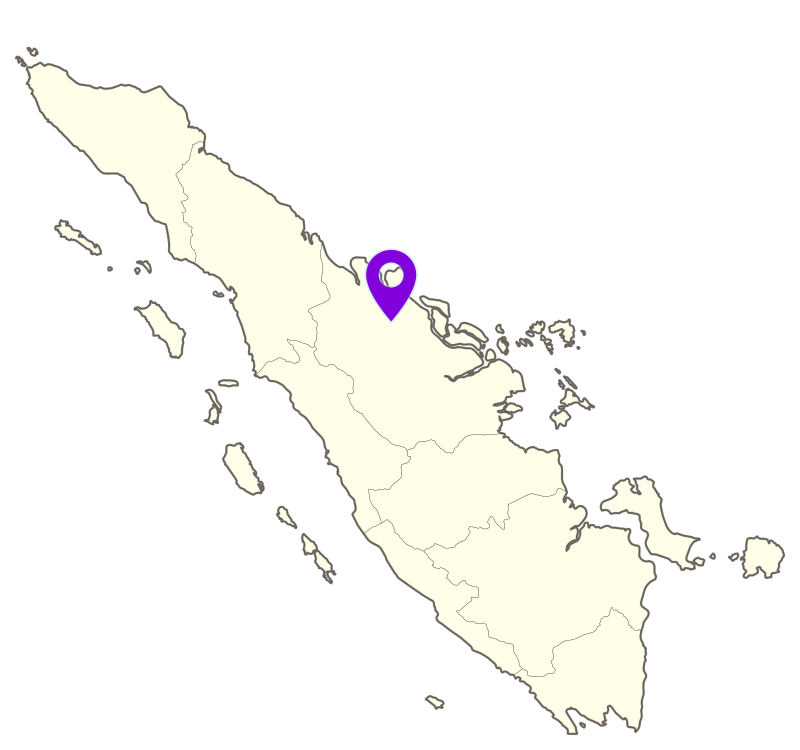
Kilometre markers with a black border can be found on the Pekanbaru-Dumai Highway, which cuts across hills of dense oil palm plantations. Note the southernmost section of road does not use this design.
North Sumatra
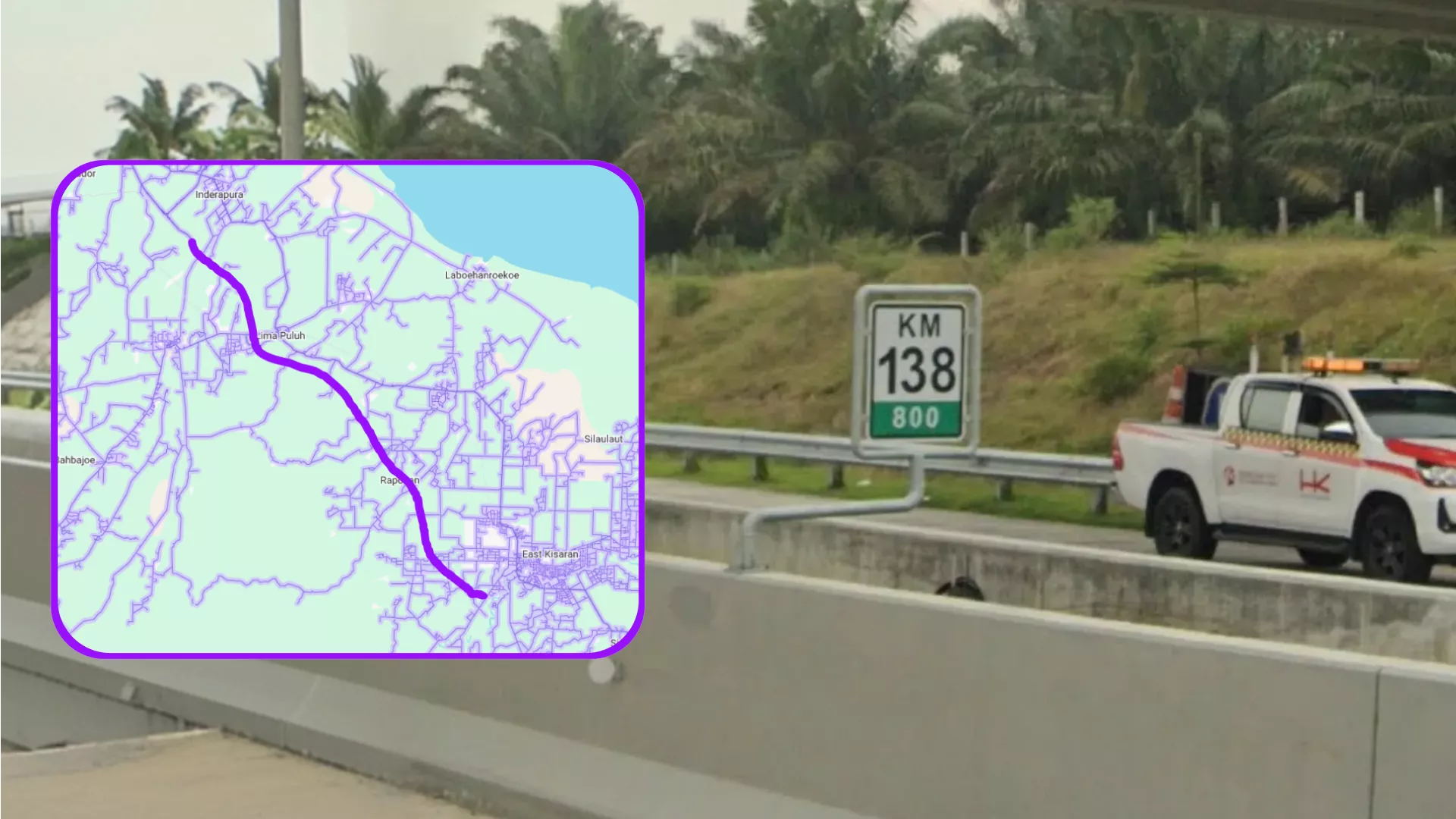
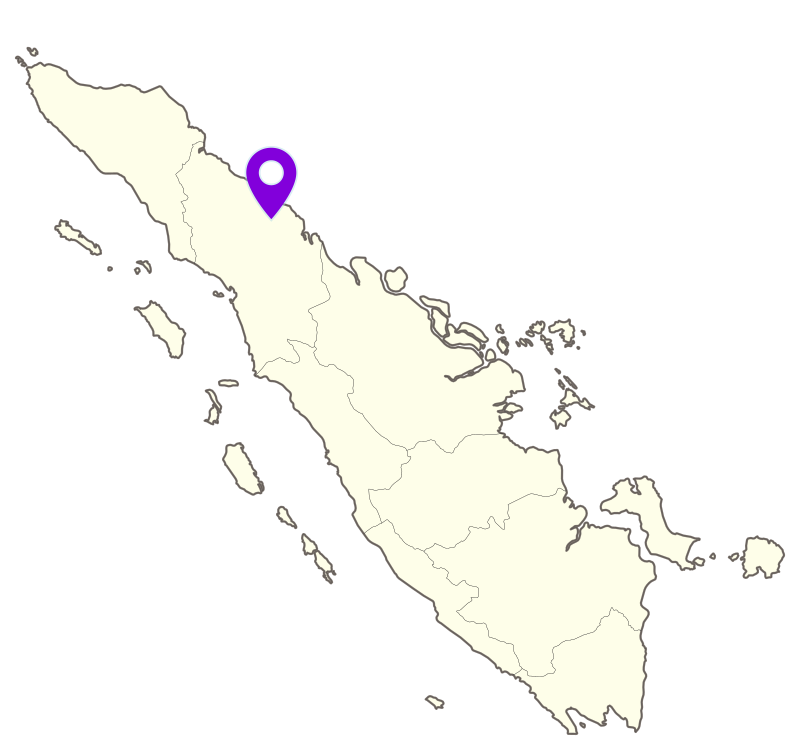
The Kisaran-Indrapura Highway has kilometre markers mounted on on bent rods jutting out into the central reservation.
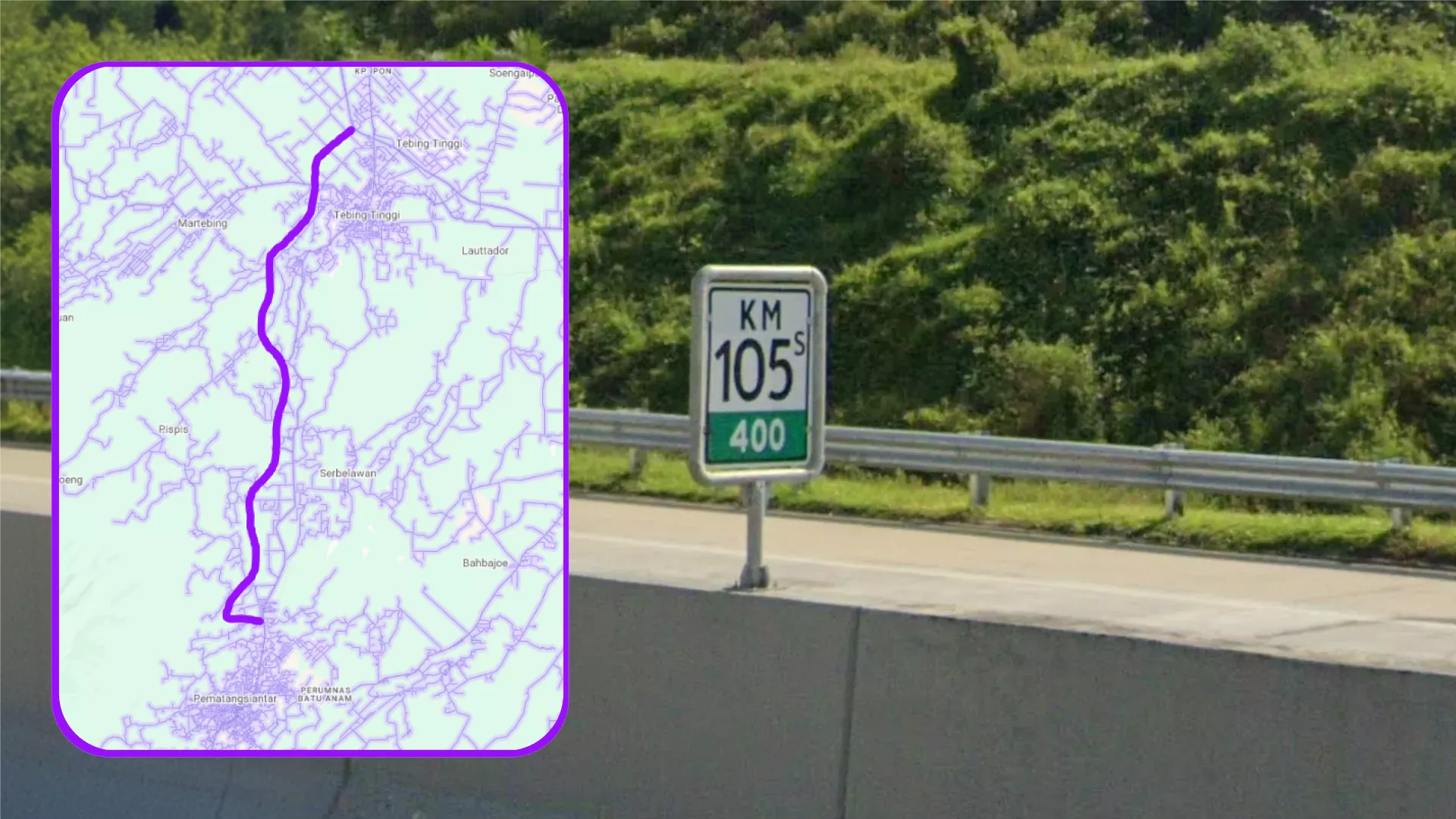
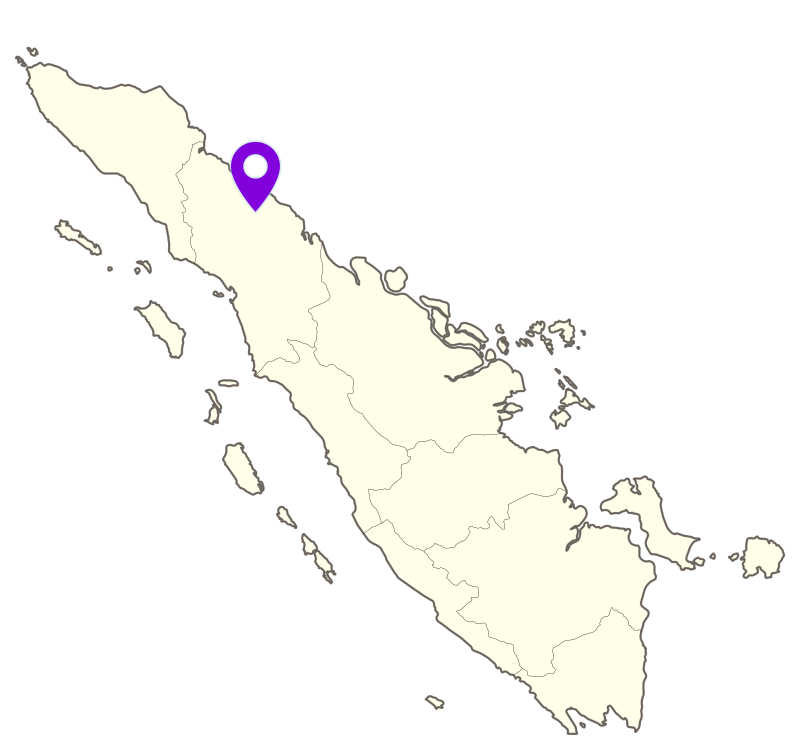
This highway in North Sumatra shown on the map can be recognised by the additional "S" on the right-hand side of kilometre markers.
Aceh
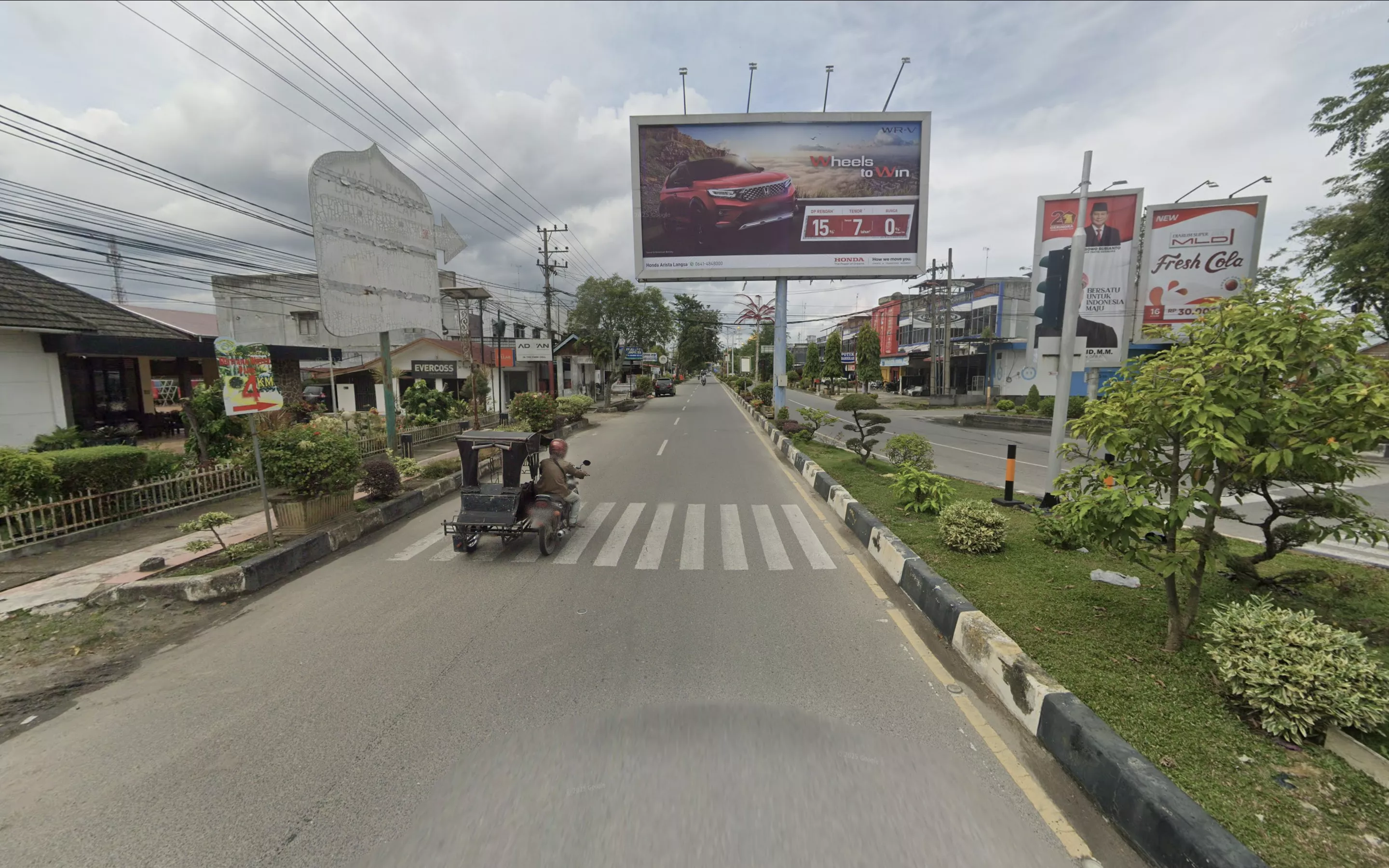
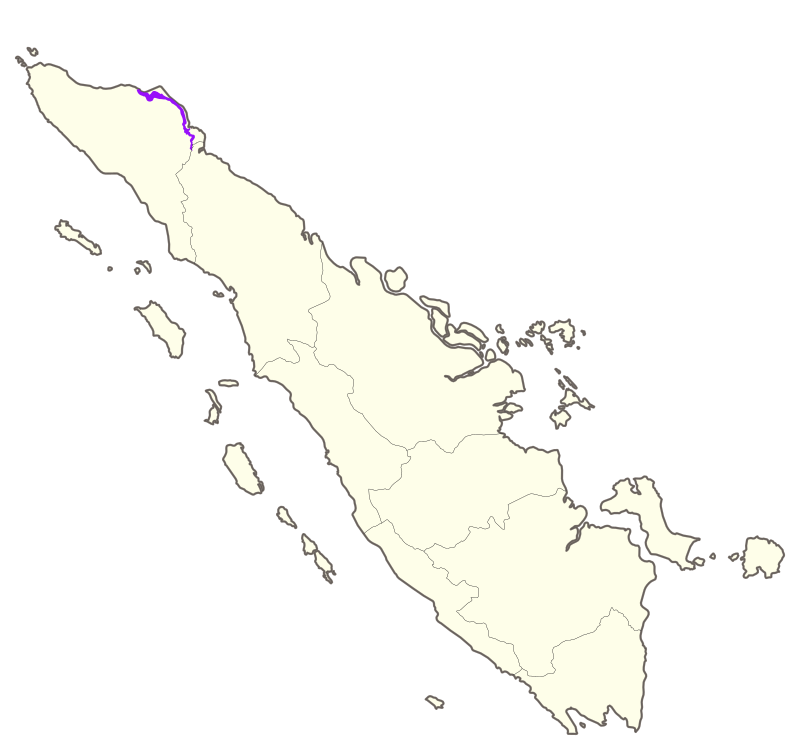
The northeastern part of Aceh around Langsa appears quite urban with a lot of road traffic.
Poles have three or four crossbars which is unusual for Indonesia.
Boxy tuk-tuks can be seen in Langsa but can also rarely be found elsewhere in Aceh.
Poles have three or four crossbars which is unusual for Indonesia.
Boxy tuk-tuks can be seen in Langsa but can also rarely be found elsewhere in Aceh.
Batam-Bintan
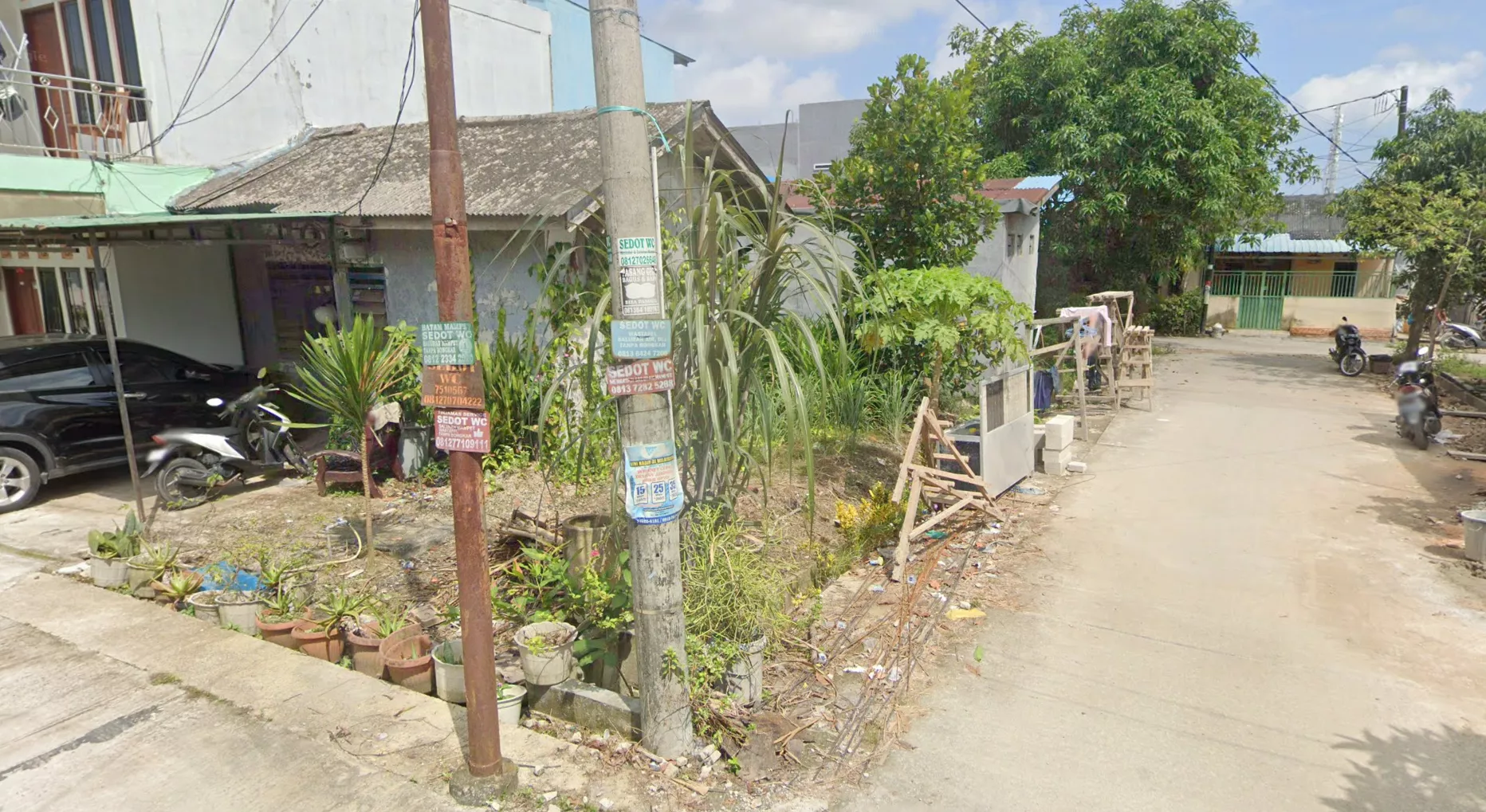
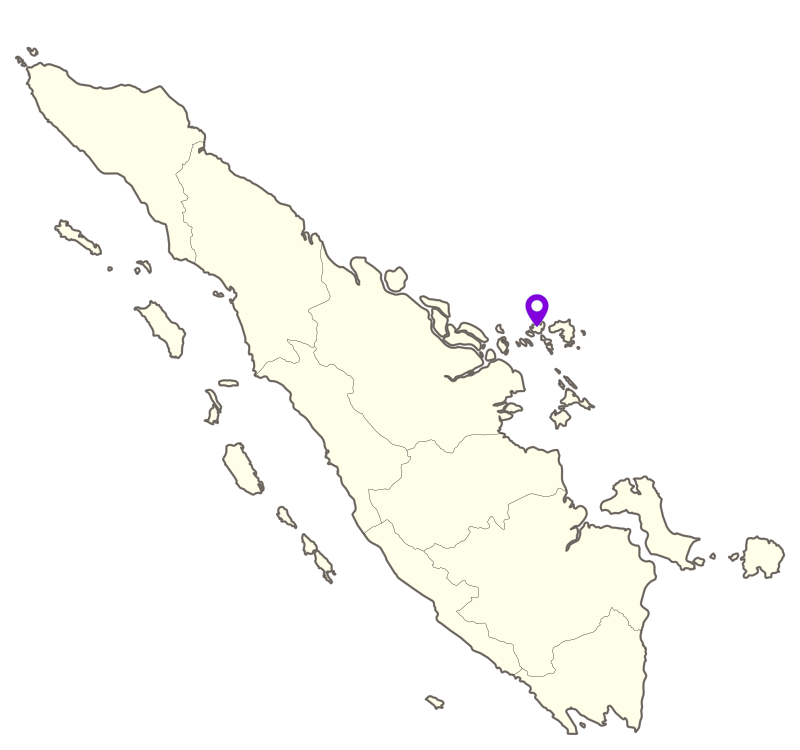
Throughout Batam city, you will find utility poles covered with small metal signs advertising plumbing services. They often feature the phrases “SEDOT WC”, “WASTAFEL”, and/or “MAMPET.” These are extremely common in Batam but can also rarely appear in Bintan.
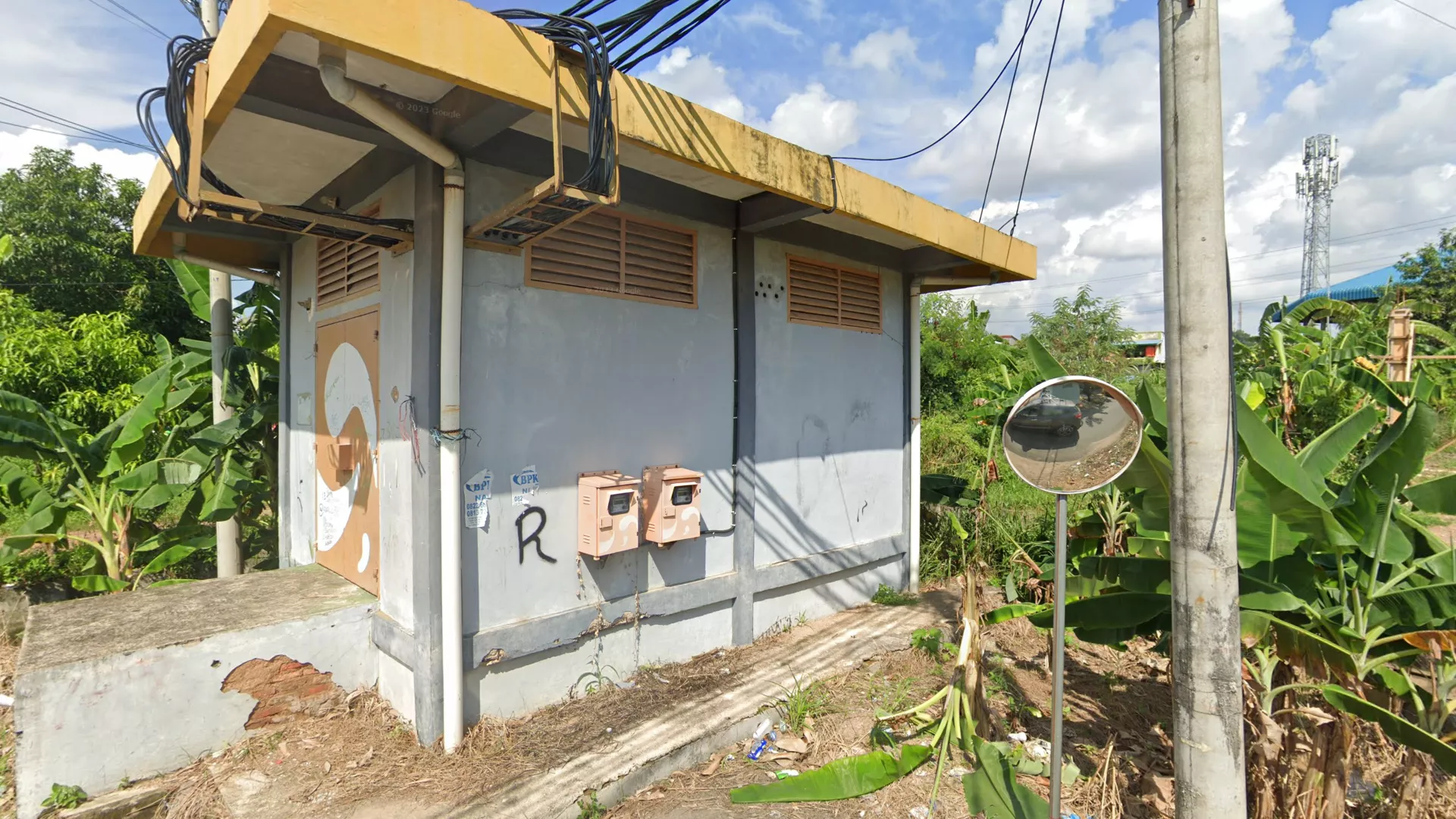
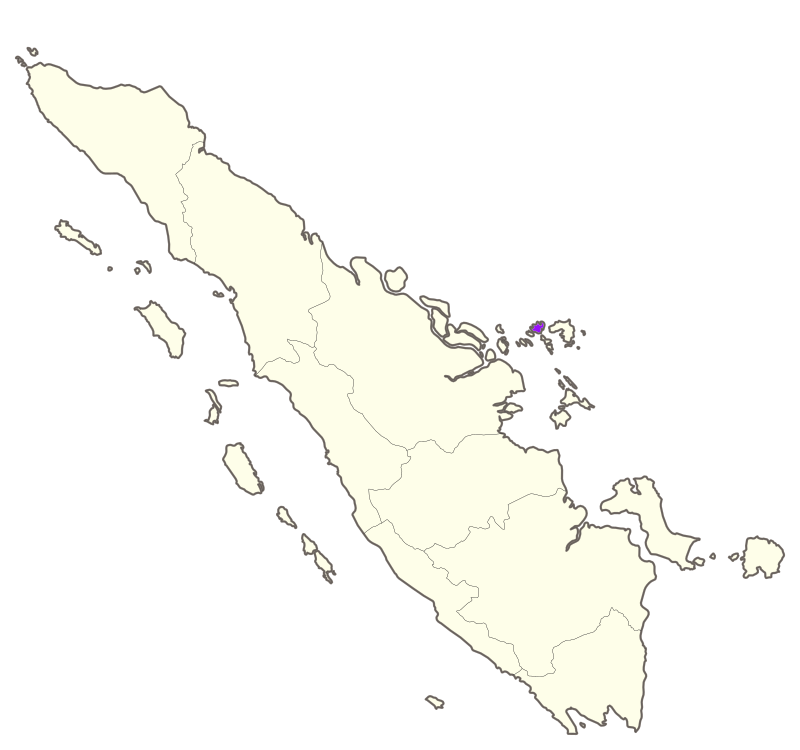
Batam Island's electricity provider, Bright PLN, uses this orange and white logo. In addition to appearing on electricity meter boxes, this logo can be spotted from a distance on the sides of other electrical infrastructure on the island.
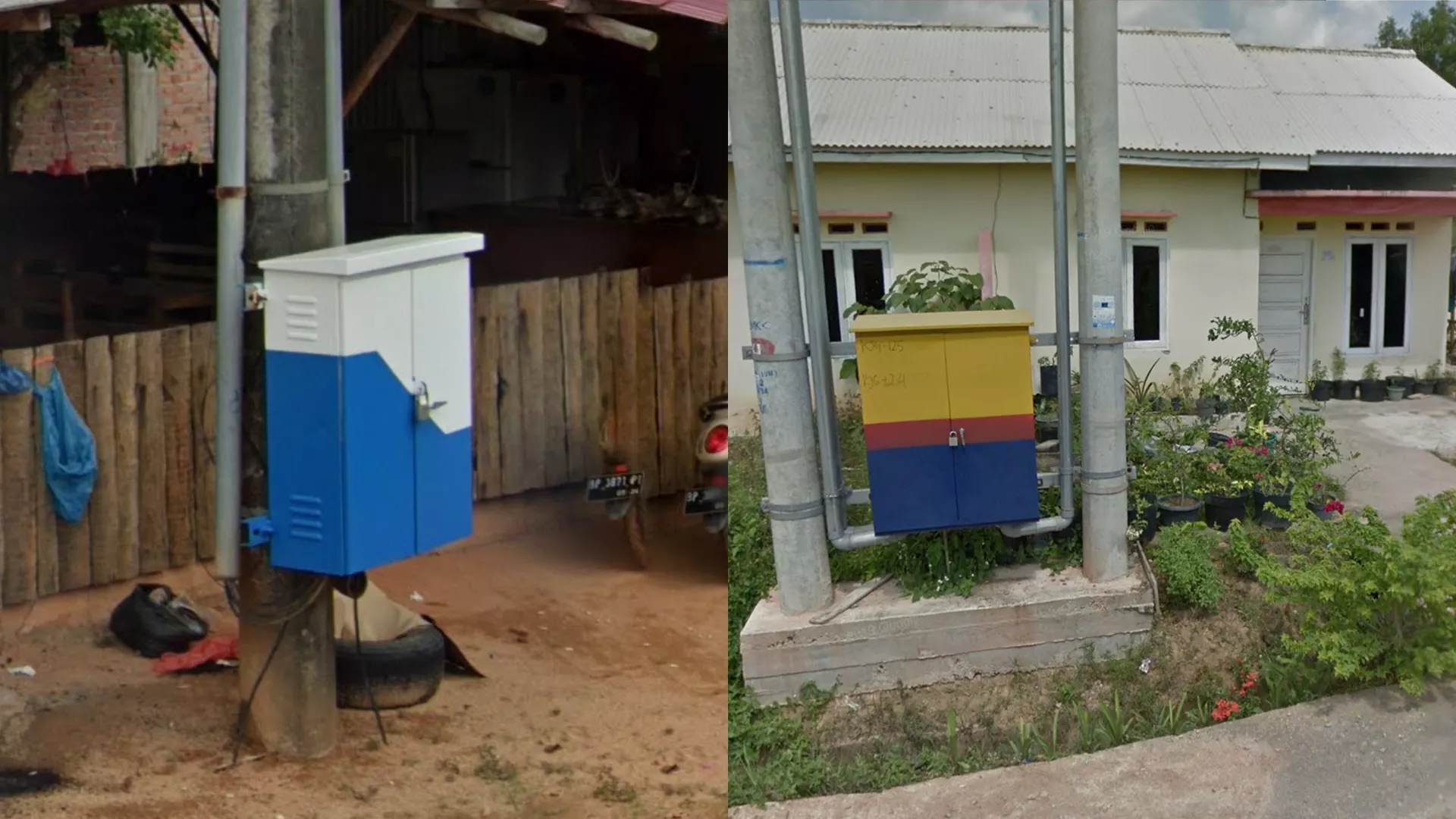
Electrical boxes painted blue and white or blue and yellow can be used to identify Bintan Island over Batam Island.
Blue and white electrical boxes are unique to Bintan, whereas blue and yellow electrical boxes, while widespread in other parts of Indonesia, are not found on Batam Island. Note that plain beige or black electrical boxes also appear on both islands.
Blue and white electrical boxes are unique to Bintan, whereas blue and yellow electrical boxes, while widespread in other parts of Indonesia, are not found on Batam Island. Note that plain beige or black electrical boxes also appear on both islands.
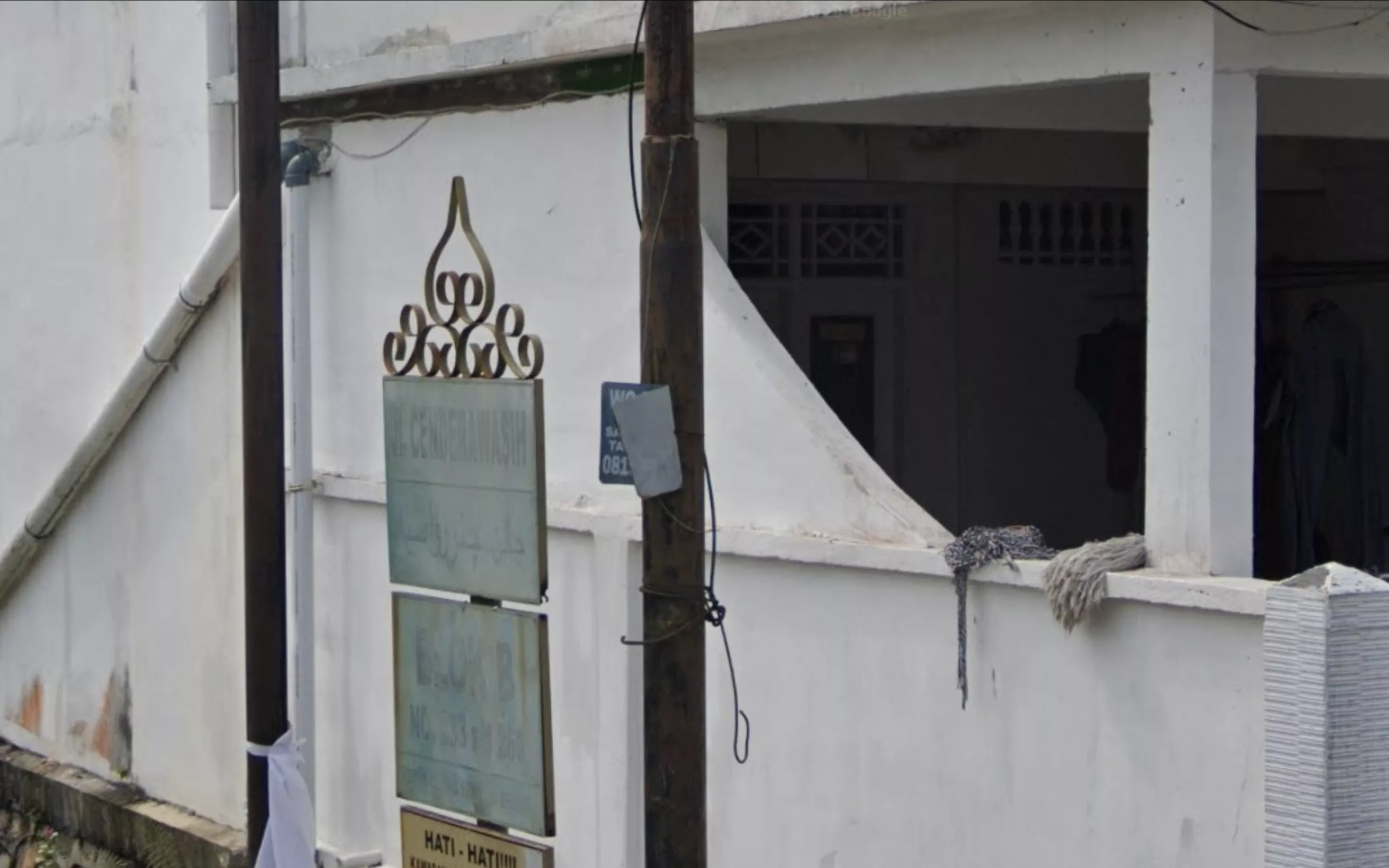
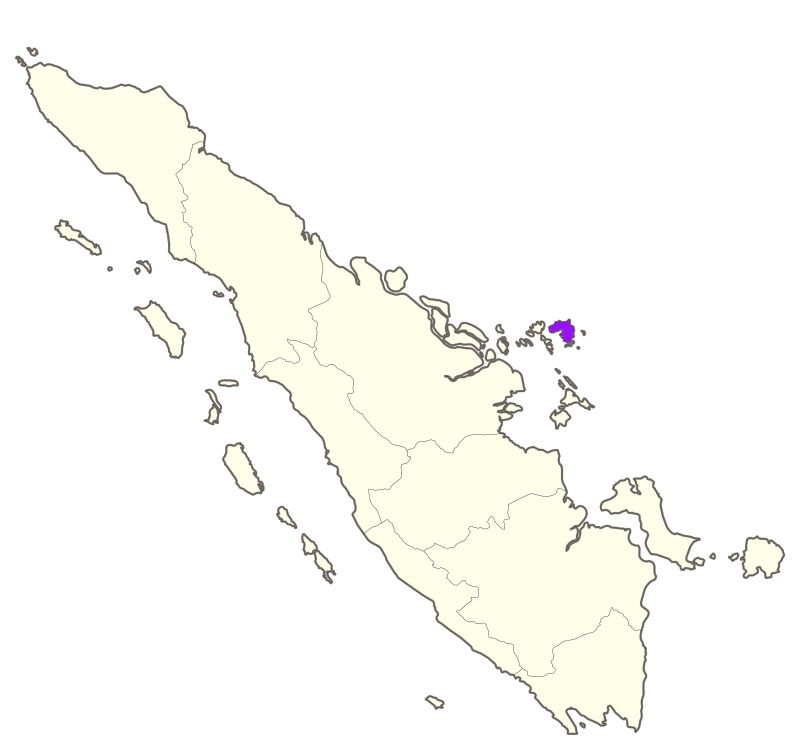
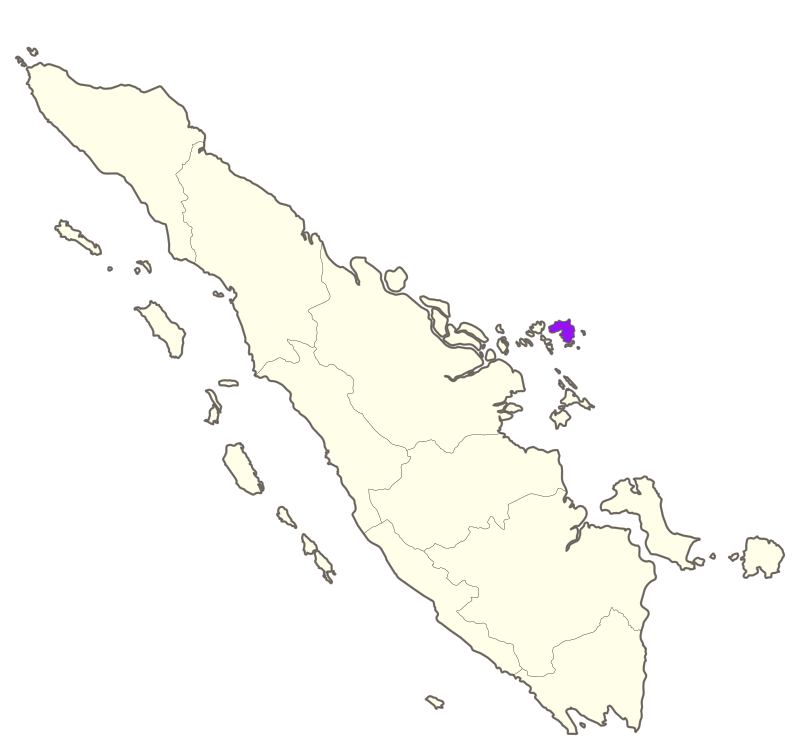
These distinctive decorations on top of street signs are found on Bintan Island, mostly in and around Tanjung Pinang.
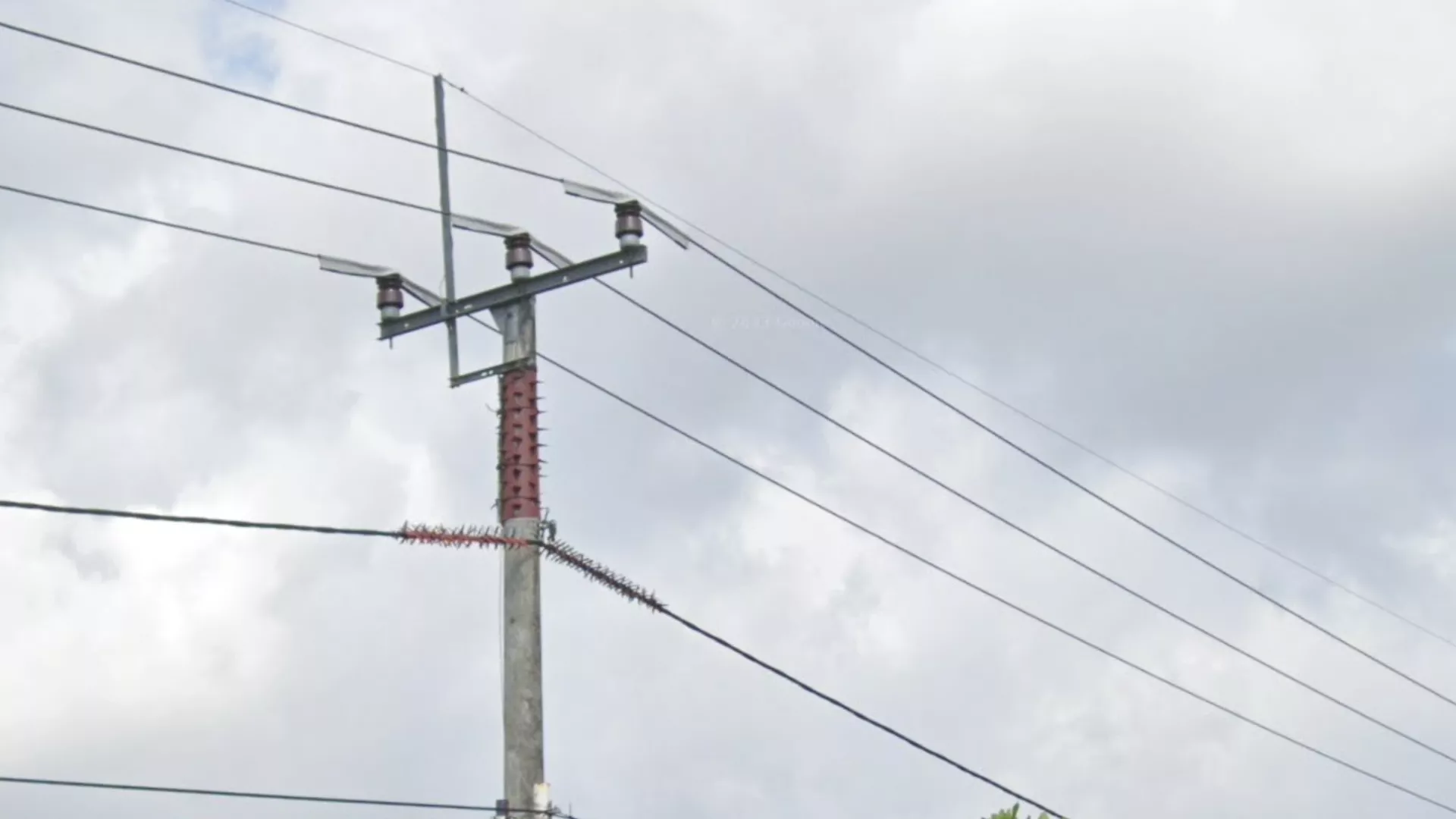
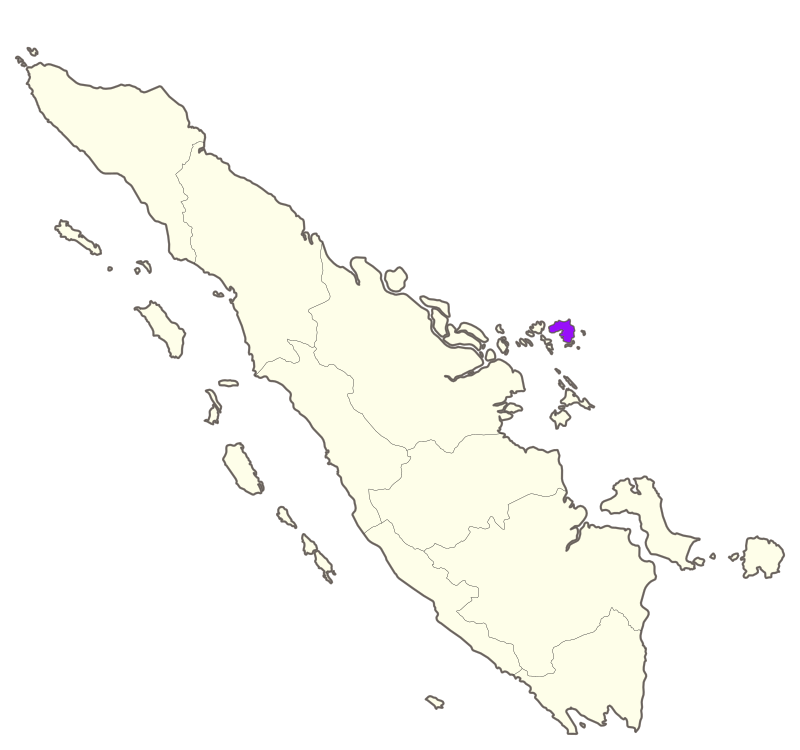
Dark red pole spikes are specific to Bintan Island.